1917. People have had enough of the war. Behind the scenes, uprisings are brewing, like the one that toppled the Tsar in Russia; on the front soldiers begin to mutiny as they did at Chemin des Dames in France. German submarine attacks in the Atlantic will finally pull the Americans into the war, but they arrive too late to help prevent the carnage of the Battle of Passchendaele.
Hope you're finding these documentaries fascinating and eye-opening. It's just me, working hard behind the scenes to bring you this enriching content.
Running and maintaining a website like this takes time and resources. That's why I'm reaching out to you. If you appreciate what I do and would like to support my efforts, would you consider "buying me a coffee"?
BTC: bc1q8ldskxh4x9qnddhcrgcun8rtvddeldm2a07r2v
ETH: 0x5CCAAA1afc5c5D814129d99277dDb5A979672116
With your donation through , you can show your appreciation and help me keep this project going. Every contribution, no matter how small, makes a significant impact. It goes directly towards covering server costs.
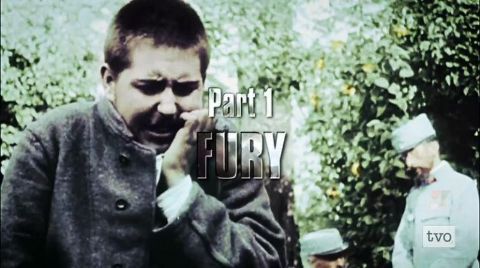
The French army stops the German advance at the battle of the Marne, while the Germans halt the Russians at Tannenberg on the eastern front. In France, the warring parties dig themselves in for 4 years in the trenches. Soldiers from the colonies come lend a hand to their colonizers and the war becomes global.
2014 • History
1916. The war is raging in Europe and stretches from the trenches in France to the Italian Alps and the Balkans, and beyond to the gates of the Eastern world. The conflict becomes industrial, and millions of shells rain down on the battlefields; Verdun and the Somme are the deadliest battles in this second year of the war. Who can stop this infernal machine?
2014 • History
1917. People have had enough of the war. Behind the scenes, uprisings are brewing, like the one that toppled the Tsar in Russia; on the front soldiers begin to mutiny as they did at Chemin des Dames in France. German submarine attacks in the Atlantic will finally pull the Americans into the war, but they arrive too late to help prevent the carnage of the Battle of Passchendaele.
2014 • History
All seems lost for the Allies. The Italians are defeated at Caporette, and a Bolshevik Russia pulls out of the war. But the American reinforcements are decisive, and the Allies emerge victorious. The Allies are unable to negotiate an honorable peace agreement, and the Treaty of Versailles, 20 years later, will have disastrous consequences.
2014 • History
Forty years ago, hundreds of skeletons were unearthed in a mass grave in an English village. Bioarchaeologist Cat Jarman believes these bones are the last remains of the “Great Heathen Army,” a legendary Viking fighting force that invaded England in the ninth century and has long been lost to history. Armed with the latest scientific methods, Cat’s team uncovers extraordinary human stories from the front line, including evidence of women fighters and a lost warrior reunited with his son in death
The Jazz Age, the 1920 bombing of Wall Street, the market crash, and other seminal moments of America's Roaring 20s - carefully colorised, frame by frame, for the first time.
S1E1 • America in Colour • 2017 • History
In a little under three months, residents of what was a thriving city witnessed the deaths of women and children in a maternity hospital and bodies left abandoned on the streets of Mariupol. Filmed and told by many of the citizens of Mariupol, this powerful documentary records the deaths of thousands and daring escapes, and is the story of their loss, bravery and determination.
2022 • History
See how Osama bin Laden's journey unfolds; from his roots as a privileged young Saudi boy to becoming the formidable leader of al-Qaeda, and his lifetime commitment to violent jihad against the West, which results in the horrific attacks in 2001.
8/10 • Evolution of Evil • 2015 • History
Michael Buerk looks at the transformation of the nation during the Victorian era, telling the surprising stories behind famous landmarks and the hidden heroes behind epic constructions. He begins by revealing how the Victorians created public transport and sewerage systems. Michael Buerk looks at how the Victorians created what is now known as the modern home, exploring the huge rise in house-building during the period. He travels to Fakenham, Norfolk, to visit the last remaining gasworks in England, and discovers how the Victorians mastered the art of producing `town gas" from coal. He also investigates how the kitchen was transformed with the advent of gas cookers, as more complex meals including the Sunday roast steadily became the norm across the nation.
2018 • History
Dr Helen Castor explores the life - and death - of Joan of Arc. Joan was an extraordinary figure - a female warrior in an age that believed women couldn't fight, let alone lead an army. But Joan was driven by faith, and today more than ever we are acutely aware of the power of faith to drive actions for good or ill. Since her death, Joan has become an icon for almost everyone - the left and the right, Catholics and Protestants, traditionalists and feminists. But where in all of this is the real Joan - the experiences of a teenage peasant girl who achieved the seemingly impossible? Through an astonishing manuscript, we can hear Joan's own words at her trial, and as Helen unpicks Joan's story and places her back in the world that she inhabited, the real human Joan emerges.
2015 • History