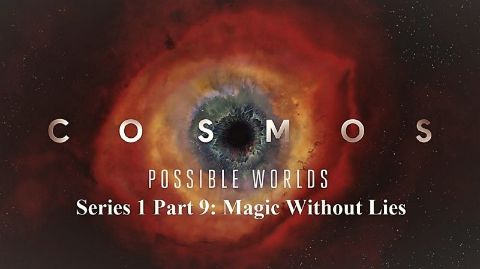
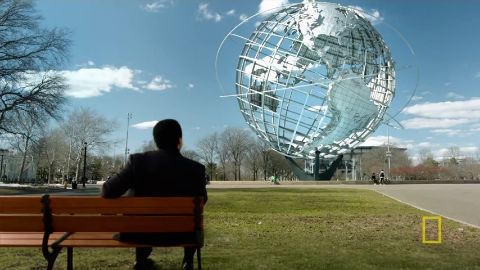
A visit to the 2039 New York World's Fair, where intractable problems may have been solved.
Hope you're finding these documentaries fascinating and eye-opening. It's just me, working hard behind the scenes to bring you this enriching content.
Running and maintaining a website like this takes time and resources. That's why I'm reaching out to you. If you appreciate what I do and would like to support my efforts, would you consider "buying me a coffee"?
BTC: bc1q8ldskxh4x9qnddhcrgcun8rtvddeldm2a07r2v
ETH: 0x5CCAAA1afc5c5D814129d99277dDb5A979672116
With your donation through , you can show your appreciation and help me keep this project going. Every contribution, no matter how small, makes a significant impact. It goes directly towards covering server costs.
An adventure spanning billions of years into the evolution of life.
2020 • Astronomy
A long-term vision of humanity's future worlds is explored.
2020 • Astronomy
Explore the story behind the man who found the first clues to life's beginnings on Earth.
2020 • Astronomy
An abandoned orphan's dream opens the way to understanding the architecture of thought.
2020 • Astronomy
A young Carl Sagan realizes his childhood dreams, carrying his mentors' research forward.
2020 • Astronomy
A hidden underground network, a collaboration of four kingdoms of life, is revealed.
2020 • Astronomy
A scientist figures out how to go to the moon while fighting for his life in a war trench.
2020 • Astronomy
The man who stumbled on a hole in the reality of quantum mechanics and the still-unfolding technology that made it possible.
2020 • Astronomy
How a deadly embrace between science and state altered the fate of the world, and a gripping cautionary tale of mass casualty and unlikely survival.
2020 • Astronomy
From the birth of the devil in ancient Persia, where a beloved family dog becomes a seething beast, to a searing story of saintliness among macaque monkeys, join an exploration into the human potential for change. One of history's greatest monsters is transformed into one of its shining lights.
2020 • Astronomy
In what kind of world can a child born in 2020 expect to grow up? When did our slide into planetwide environmental destruction begin? Enter the possible world that awaits a 2020 baby in her twenties: one darkened by our refusal to confront the real and mounting challenges we face but one which still offers a message of hope.
2020 • Astronomy
A visit to the 2039 New York World's Fair, where intractable problems may have been solved.
2020 • Astronomy
Look up at the night sky, and you see countless shining stars. Our galaxy has 100 billion of them. Astronomers are now hunting for clues that will reveal "the first star" that transformed the ancient universe and led to the creation of everything that followed: galaxies, planets and life itself.
6 • Cosmic Front • 2014 • Astronomy
Could human settlements on Mars become reality as early as 100 years from now? Artificial micro organisms created with the latest techniques in synthetic biology could be used to produce resources such as iron, energy, and food directly on the planet itself. What would this new "Earth" look like?
1 • Cosmic Front • 2014 • Astronomy
The expanding universe is a complicated place. During inflation the universe expanded faster than light, but that's something that actually happens all the time, it's happening right now. This doesn't violate Einstein's theory of relativity since nothing is moving through space faster than light, it's just that space itself is expanding such that far away objects are receding rapidly from each other. Common sense would dictate that objects moving away from us faster than light should be invisible, but they aren't. This is because light can travel from regions of space which are superluminal relative to us into regions that are subluminal. So our observable universe is bigger than our Hubble sphere - it's limited by the particle horizon, the distance light could travel to us since the beginning of time as we know it.
Veritasium • 2014 • Astronomy
The oceans define the earth. They are crucial to life and we used to think that they were unique to our blue planet. But we were wrong. It has recently been discovered that there are oceans all over our solar system, and they are very similar to our own. And now scientists are going on an epic journey in search of new life in places that never seemed possible. Nasa is even planning to dive to the depths of a strange, distant ocean in a remarkable submarine. Horizon discovers that the hunt for oceans in space is marking the dawn of a new era in the search for alien life.
When a team of scientists have launched a space probe to the heart of our solar system in brand-new mission to our Sun, it makes fresh discoveries reveal how it works; along the way, experts uncover a surprise find on Mercury.
S1E3 • Mysteries of our Universe: Our Solar System • 2019 • Astronomy
The universe is hiding something. In fact, it is hiding a lot. Everything we experience on Earth, the stars and galaxies we see in the cosmos—all the “normal” matter and energy that we understand—make up only 5% of the known universe. The other 95% is made up of two mysterious components: “dark matter” and “dark energy.” We can’t see them, but we know they’re there. And what’s more—these two shadowy ingredients are locked in an epic battle to control the very fate of the universe. Now, scientists are trying to shed light on the so-called “dark sector” as the latest generation of detectors rev up, and powerful telescopes peer deeper into space than ever before to observe how it behaves. Will the discoveries help reveal how galaxies formed? In the series finale, NOVA Wonders journeys to the stars and back to investigate what we know—and don’t know. Find out how scientists are discovering new secrets about the history of the universe, and why they’re predicting a shocking future.
6 • Nova Wonders • 2018 • Astronomy