Slow Down and Enjoy Life • 2020

Category: Nature | Torrent: | Subtitle:

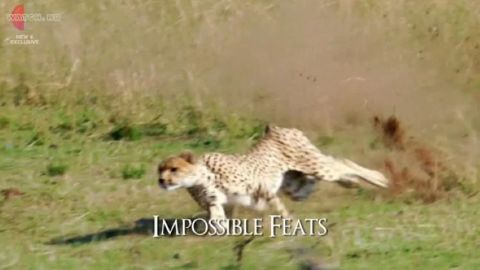
In our hectic world so much seems to pass us by. All around us dramas are playing out, but they often happen so fast that we don’t even see it: blink and you’ll miss it. But when you slow down the action a whole new world is revealed.

Make a donation

Buy a brother a hot coffee? Or a cold beer?

Hope you're finding these documentaries fascinating and eye-opening. It's just me, working hard behind the scenes to bring you this enriching content.

Running and maintaining a website like this takes time and resources. That's why I'm reaching out to you. If you appreciate what I do and would like to support my efforts, would you consider "buying me a coffee"?

Donation addresses

Buy Me a Coffee at ko-fi.com

patreon.com

BTC: bc1q8ldskxh4x9qnddhcrgcun8rtvddeldm2a07r2v

ETH: 0x5CCAAA1afc5c5D814129d99277dDb5A979672116

With your donation through , you can show your appreciation and help me keep this project going. Every contribution, no matter how small, makes a significant impact. It goes directly towards covering server costs.
You might also like

Toughest Spring

The story of animals surviving one of the harshest seasonal changes on the planet continues. As winter turns to spring, temperatures rise and Yellowstone bursts into life. Beavers feast on new green shoots, baby bison take their first faltering steps and grizzly bear cubs emerge from dens to explore this new green world. But spring is also a perilous time. Wolves are hungrier than usual after slim winter pickings. And rising temperatures melt the vast mountain snow pack, sending a million tons of water flooding into the rivers. Only the toughest will survive.

S1E2Yellowstone: Wildest Winter to Blazing Summer • 2016 • Nature

What Killed The Giant Insects

Giant insects once dominated the earth before the dinosaurs. Thanks to new technologies combining genetics, ethology, geology and even particle physics, paleontologists can now recreate the missing branches of the tree of life. Assumptions have been shattered and all the rules are changing.

S1E1Ancient Earth: Series 2 • 2018 • Nature

Penguins: Meet the Family

A unique celebration of one of Earth's most iconic birds. For the first time, we meet the entire penguin family - all 18 species. This colourful cast of characters may seem familiar, but their incredible diversity won't fail to surprise. New Zealand's lush green forests might not be the first place you would expect to find penguins, but it was here the penguin family first evolved 60 million years ago, and there are now more species living here than anywhere else on earth. One quirky-looking resident is the Snares penguin, which likes nothing more than a spa treatment. In Cape Town, the African penguin has adapted to the modern world, strolling the city streets with all the other commuters. And, against all the odds, one of the smallest members in the family, the Galapagos penguin, has found a way to survive the sweltering heat of the equator. One of the biggest secrets to the penguin success story is their remarkable parenting skills. Adelie penguins perform the longest penguin migration on earth, over 6,000 miles, to find the perfect nesting site. Ninety-nine per cent of them return to the same nests each year, but after a hard winter their stone nests need some serious renovation. Other species are sneakier, stealing their neighbours stones the moment they turn their backs. The fastest penguin on the planet is the gentoo, reaching speeds of 22mph and diving to 200 metres. Short feet that act like rudders and a streamlined body allows them to shoot through the water, while fused muscular wings act like paddles. Penguins are supremely adapted to an aquatic life, spending 75 per cent of their lives in water, but all penguins have to walk at some point, so to get around they have developed the infamous waddle. This bizarre locomotion may look inefficient, but surprisingly it actually works in their favour. Whilst we get 65 per cent of the energy back with each step, penguins can get up to 80 per cent, so the waddle is more efficient that our own walk. Over millions of years, penguins have mastered life on land and in the sea, but we are now changing the planet faster than ever before, and some penguins are struggling to keep up, so technology is being used to locate and observe new colonies from the equator to Antarctica. This is the family penguin as you have never seen them before.

2020 • Nature

Alaskan Dinosaurs

A team of intrepid paleontologists discovers that dinosaurs thrived in the unlikeliest of places—the cold and dark of winter in the Arctic Circle. How did they survive year-round and raise their young in frigid and dark winter conditions?

NOVA PBS • 2021 • Nature

Wilderness

Simon discusses the challenge of preserving unspoilt wildernesses, from the icy expanses of Siberia to the tropical forests of central and South America. Simon reflects on how his past series have dealt with the causes and impact of climate change, as well as remembering a memorable report exposing the extent of plastic pollution in the ocean. He also recalls meeting indigenous people around the world and hearing their first-hand experiences of ecological damage.

S1E4Incredible Journeys with Simon Reeve • 2021 • Nature

Last of the Giants

Even after thousands of years of ice crushing the northern hemisphere and temperatures of 20 degrees lower than those of today, many of the great giants of the ice age still walked the earth. It was only when the world had warmed up again that mammoths, woolly rhinos, sabre-toothed cats, giant ground sloths and glyptodonts finally became extinct. Professor Alice Roberts sets off on her last voyage back to the Ice Age to discover why.

S1E3Ice Age Giants • 2013 • Nature