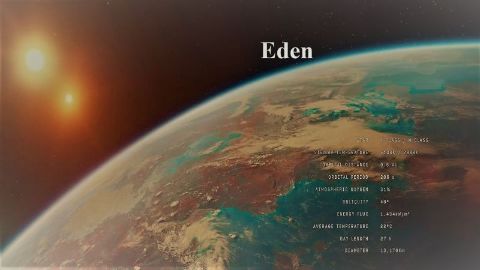
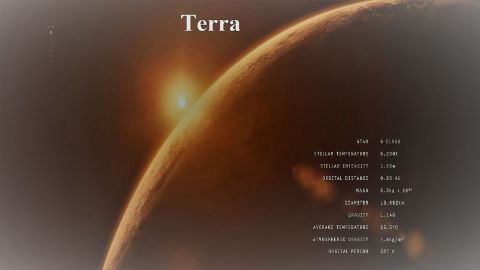
A hyperadvanced species makes their home on doomed exoplanet Terra, which orbits an aging star. Now they must colonize another world, using robots.
Hope you're finding these documentaries fascinating and eye-opening. It's just me, working hard behind the scenes to bring you this enriching content.
Running and maintaining a website like this takes time and resources. That's why I'm reaching out to you. If you appreciate what I do and would like to support my efforts, would you consider "buying me a coffee"?
BTC: bc1q8ldskxh4x9qnddhcrgcun8rtvddeldm2a07r2v
ETH: 0x5CCAAA1afc5c5D814129d99277dDb5A979672116
With your donation through , you can show your appreciation and help me keep this project going. Every contribution, no matter how small, makes a significant impact. It goes directly towards covering server costs.
The fourth planet from the sun and the outermost of the terrestrial planets, Mars has long been a popular spot for missions and imagination. Phil walks you through the planet's topography, core, and features. We'll take a look back to Mars's past and makes predictions for its future, including the possibilities for human life.
15 • Crash Course Astronomy • Astronomy
NASA's brand-new Mars rover is on the hunt for alien life, and with the help of cutting-edge engineering, scientists embark on a search for fossilized remains, which might prove the Red Planet was once home to a vast ocean and extraterrestrial life.
Space's Deepest Secrets • 2020 • Astronomy
Relive some of the most unexpected accidents in spaceflight and meet the astronauts who had to fix them on the fly
S1E3 • Space Disasters • 2020 • Astronomy
In the fall of 2020, a NASA spacecraft called OSIRIS-REx attempts to reach out and grab a piece of an asteroid named Bennu and bring it back to Earth. The OSIRIS-REx team has just three chances to extend its spacecraft's specialized arm, touch down for five seconds, and collect material from the surface of Bennu. Can they pull it off? NOVA takes you inside the mission as the team plans its approach: They must map the asteroid's surface, choose possible collection sites, and rehearse the risky maneuver. If the collection is successful, scientists could gain great insight into Earth's own origins—and even learn to defend against rogue asteroids that may one day threaten our planet.
In just one generation, our ability to search for planets beyond our solar system has transformed. With modern techniques and telescopes, planetary scientists have found thousands of exoplanets in our universe, and many of them have the perfect conditions for life. Are we about to find Earth’s twin?