Nearly 80 years after her death, Marie Curie remains by far the best known female scientist. In her lifetime, she became that rare thing: a celebrity scientist, attracting the attention of the news cameras and tabloid gossip. They were fascinated because she was the first woman to win the Nobel Prize and is still the only person to have won two Nobels in two different sciences. But while the bare bones of her scientific life, the obstacles she had to overcome, the years of painstaking research, and the penalty she ultimately paid for her discovery of radium have become one of the iconic stories of scientific heroism, there is another side to Marie Curie: her human story. This multi-layered film reveals the real Marie Curie, an extraordinary woman who fell in love three times, had to survive the pain of loss, and the public humiliation of a doomed love affair. It is a riveting portrait of a tenacious mother and scientist, who opened the door on a whole new realm of physics, which she discovered and named: radioactivity. Full title - The Genius of Marie Curie: The Woman Who Lit Up the World
Hope you're finding these documentaries fascinating and eye-opening. It's just me, working hard behind the scenes to bring you this enriching content.
Running and maintaining a website like this takes time and resources. That's why I'm reaching out to you. If you appreciate what I do and would like to support my efforts, would you consider "buying me a coffee"?
BTC: bc1q8ldskxh4x9qnddhcrgcun8rtvddeldm2a07r2v
ETH: 0x5CCAAA1afc5c5D814129d99277dDb5A979672116
With your donation through , you can show your appreciation and help me keep this project going. Every contribution, no matter how small, makes a significant impact. It goes directly towards covering server costs.

A year of revolution around the world; Soviet leader Mikhail Gorbachev's new policies lead to the fall of the Berlin Wall; a government crackdown follows protests in Beinjing's Tiananmen Square; a power shift sweeps across Eastern Europe.
S1E1 • 1989: The Year that Made the Modern World • 2019 • People
Marco Polo: World's Greatest Overland Explorer? Or World's Biggest Liar? Perhaps no land journey in human history is more famous than Marco Polo's legendary 24 year trek across Asia. But was it all just a big lie? As described in his 1299 book, the peripatetic Venetian merchant encountered such wonders as the "singing sand dunes" of Dunhuang, China, "mountains of salt" in present-day Afghanistan, and the glories of the Mongol court of Kublai Khan. Generations of Europeans were spellbound by Polo's account, yet in recent years some scholars have questioned its authenticity. National Geographic Photographer Mike Yamashita sets out to visually document one of the greatest overland journeys ever made: the 24-year odyssey of Marco Polo. 700 years ago a young Venetian set out on what was to become one of the most influential journeys ever made. His adventures took him well beyond the boundaries of the known world of Persia to a land that was almost completely unexplored - the mysterious Middle Kingdom. But ever since he returned there were those who doubted Marco Polo. Did he really see what he described in his legendary book, 'Description of the World' or did he merely describe what others told him. In this film, Mike Yamashita follows Marco's book from the lofty heights of the Pamir Mountains to the fabled city of Xanadu in Mongolia. In so doing he attempts to unravel some of the age old mystery: Did Marco Polo really go to China? In the course of this incredible journey Mike stumbles onto a nomadic Kazak wedding in Aksai and investigates the controversy of the Great Wall - why did Polo never mention this in his famous travelogue "The Description of the World"? And why did he never mention tea or chopsticks? Yamashita talks to noted Chinese historian Professor Liu Yingsheng about these and many other Polo conundrums. In Yunnan province, he visits the bound feet women, and travels to inner Mongolia to film the famous herds of the Mongolian horsemen. As Yamashita reaches Xanadu he ponders on how Polo became a trusted confidant to the Khan and spent 17 years in his service. What sights he must have seen. But did he? The mystery slowly but surely reveals itself.
2022 • People
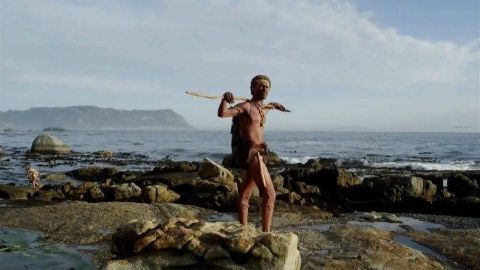
Alice Roberts explores the latest discoveries in the study of human origins, revealing the transformation that has been brought about in this field by genetics. Traditional paleo-anthropology, based on fossils, is being transformed by advanced genome sequencing techniques. We now know that there were at least four other distinct species of human on the planet at the same time as us - some of them identified from astonishingly well-preserved DNA extracted from 50,000-year-old bones, others hinted at by archaic sections of DNA hidden in our modern genome. What's more, we now know that our ancestors met and interacted with these other humans, in ways that still have ramifications today. Alice uses these revelations to update our picture of the human family tree.
Our ancient human ancestors once lived only in Africa, in tiny bands of a few thousand hunter-gatherers. Then we moved out of our African cradle, spreading rapidly to every corner of the planet. How did we acquire the skills, technology and talent to thrive in every environment on earth? How did our prehistoric forebears cross the Sahara on foot, survive frigid ice ages, and sail to remote Pacific islands? “Great Human Odyssey” is a spectacular global journey following their footsteps out of Africa along a trail of fresh scientific clues. With unique glimpses of today’s Kalahari hunters, Siberian reindeer herders, and Polynesian navigators, we discover amazing skills that hint at how our ancestors survived and prospered long ago.
What will humanity look like in 1000 years? Watch as we cover some cutting-edge innovations happening today. Thanks to the National Geographic Channel for sponsoring this video!
AsapSCIENCE • 2015 • People
70,000 years ago humans were insignificant animals. The most important thing to know about prehistoric humans is that they were unimportant. Their impact on the world was very small, less than that of jellyfish, woodpeckers or bumblebees.