George Lucas • 2011 • episode "S1E8" Prophets of Science Fiction

Category: People | Download:

From Luke Skywalker's light sabre to Darth Vader's Death Star, the Star Wars franchise is one of the defining science fiction works of the later 20th century. George Lucas' prolific imagination has already inspired two generations of scientists and engineers to push the envelope of technology. By introducing computers into the filmmaking process, he changed the way movies are made, and the way we all see the future.

Make a donation

Buy a brother a hot coffee? Or a cold beer?

Hope you're finding these documentaries fascinating and eye-opening. It's just me, working hard behind the scenes to bring you this enriching content.

Running and maintaining a website like this takes time and resources. That's why I'm reaching out to you. If you appreciate what I do and would like to support my efforts, would you consider "buying me a coffee"?

Donation addresses

Buy Me a Coffee at ko-fi.com

patreon.com

BTC: bc1q8ldskxh4x9qnddhcrgcun8rtvddeldm2a07r2v

ETH: 0x5CCAAA1afc5c5D814129d99277dDb5A979672116

With your donation through , you can show your appreciation and help me keep this project going. Every contribution, no matter how small, makes a significant impact. It goes directly towards covering server costs.


Prophets of Science Fiction • 2011 • 6 episodes •

Philip K Dick

Literary genius, celebrated visionary, paranoid outcast: Writer Philip K. Dick lived a life of ever-shifting realities straight from the pages of his mind-bending sci-fi stories. His books have inspired films like Blade Runner, Total Recall, and Minority Report. His work confronts readers with a deceptively simple question: What is reality?

2011 • People

H G Wells

"I told you so..." H.G. Wells' self penned epitaph underscores a lifetime of grim yet uncanny prophecy. With stories like The Time Machine, The Invisible Man, The World Set Free, and The War of the Worlds, H.G. Wells established himself as a sci-fi writer of almost clairvoyant talent.

2011 • People

Isaac Asimov

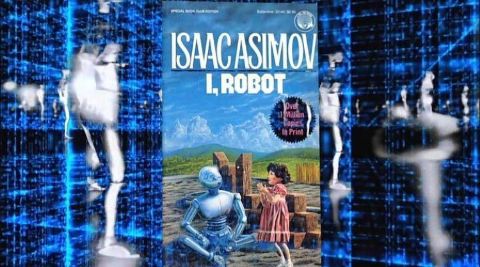
He saved the future from Evil Robots! Isaac Asimov dreamed a better future where we need not fear our own technology. His I, Robot stories of a sci-fi future where robots can do our jobs for us lead to the creation of real-life industrial robots and paved the way for a robo-friendly world.

2011 • People

Jules Verne

He put a man on the Moon in the Victorian Era. He criticized the Internet...in 1863. Jules Verne is the ultimate futurist, with a legacy of sci-fi stories predicting everything from fuel cell technology to viral advertising. The extraordinary voyages of Jules Verne have inspired art, industry, culture, and technology.

2011 • People

Robert Heinlein

Sci-fi legend Robert Heinlein is a walking contradiction. His stories address themes of patriotism, and duty while stressing the importance of personal freedom and expression. His groundbreaking stories like Starship Troopers and Stranger in a Strange Land continue to challenge readers with a steadfast theme: what is freedom?

2011 • People

George Lucas

From Luke Skywalker's light sabre to Darth Vader's Death Star, the Star Wars franchise is one of the defining science fiction works of the later 20th century. George Lucas' prolific imagination has already inspired two generations of scientists and engineers to push the envelope of technology. By introducing computers into the filmmaking process, he changed the way movies are made, and the way we all see the future.

2011 • People

You might also like

Episode I

Flashbacks chronicle Michael Jordan's college and early NBA days. The Bulls make a preseason trip to Paris amid tension with GM Jerry Krause.

1/10The Last Dance • 2020 • People

If It Bleeds It Leads

A look at tabloid journalism in the late 1980s; sensational TV shows focus on sex, scandal and celebrities, instead of politics; TV show hosts Larry King, Connie Chung and Maury Povich reveal how this new format blurred the lines.

S1E21989: The Year that Made the Modern World • 2019 • People

Professor Richard Dawkins

Dawkins discusses his book, the Selfish Gene, which divided the scientific community and made him the most influential evolutionary biologist of his time. Professor Richard Dawkins is one of the most well-known and controversial scientists in Britain. A passionate atheist he believes science rather than religion offers us the best way to appreciate the wonders of the Universe we live in. In the last 10 years he has become notorious for his outspoken views on religion, but at the heart of his success is his explosive first book -- The Selfish Gene -- which put forward a radical rewriting of evolutionary theory and divided the scientific community. Much of the controversy comes from its provocative title.

S2E3Beautiful Minds • 2012 • People

14-Year-Old Prodigy Programmer Dreams In Code

Fourteen-year-old programmer and software developer Santiago Gonzalez might just be the next Steve Jobs. He already has 15 iOS apps to his name and dreams of designing for Apple. At age 12, Santiago became a full-time college student and is on track to earn his bachelor's degree in computer science and electrical engineering by age 16. By 17, when most teenagers are excited to just have their driver's license, Santiago will have his masters degree.

2013 • People

Part 2

Bin Laden's on the run and plotting an audacious plan to strike at the US. Bin Laden returns to Saudi Arabia from Afghanistan, where he is hailed as a war hero after the Soviets left because he believes he made a significant contribution to the military victory. 18 months later, Saddam Hussein invades Kuwait, prompting worried Saudi authorities to turn to the US for protection. Horrified by what he perceives as an invasion of the holy places by the American army, bin Laden publicly opposes the Saudi royal family declaring Jihad against the US and is eventually forced to flee to Sudan. There he reinvents himself as a major agricultural producer of sunflowers and watermelons, while expanding al-Qaeda's work and setting up training camps that attract recruits from across the region. Under pressure from Saudi Arabia and the United States, bin Laden finally has to give up his refuge in Sudan. Stateless and without much prospect of alternative quarters, he returns to Afghanistan in 1996. Just a few months later, he issued a 30-page fatwa declaring holy war against the Americans who occupied the Arabian Peninsula. He surrounded himself with increasingly radical extremists, and in the summer of 1996 finally suggested piloting planes to American targets. The plan to attack the Twin Towers is born. This compelling history documentary looks at the factors that transformed Bin Laden from a renowned freedom fighter to a devoted enemy of America and the West. What drove him to plot his most audacious attack?

S1E2Bin Laden: The Road to 9.11 • 2021 • People

Crazy, not Insane

An examination of the research by forensic psychiatrist Dorothy Otnow Lewis who investigated the psychology of murderers.

2020 • People