Sci-fi legend Robert Heinlein is a walking contradiction. His stories address themes of patriotism, and duty while stressing the importance of personal freedom and expression. His groundbreaking stories like Starship Troopers and Stranger in a Strange Land continue to challenge readers with a steadfast theme: what is freedom?
Hope you're finding these documentaries fascinating and eye-opening. It's just me, working hard behind the scenes to bring you this enriching content.
Running and maintaining a website like this takes time and resources. That's why I'm reaching out to you. If you appreciate what I do and would like to support my efforts, would you consider "buying me a coffee"?
BTC: bc1q8ldskxh4x9qnddhcrgcun8rtvddeldm2a07r2v
ETH: 0x5CCAAA1afc5c5D814129d99277dDb5A979672116
With your donation through , you can show your appreciation and help me keep this project going. Every contribution, no matter how small, makes a significant impact. It goes directly towards covering server costs.

Literary genius, celebrated visionary, paranoid outcast: Writer Philip K. Dick lived a life of ever-shifting realities straight from the pages of his mind-bending sci-fi stories. His books have inspired films like Blade Runner, Total Recall, and Minority Report. His work confronts readers with a deceptively simple question: What is reality?
2011 • People
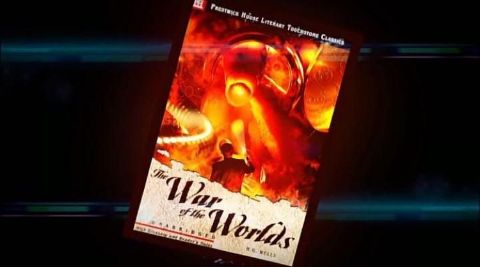
"I told you so..." H.G. Wells' self penned epitaph underscores a lifetime of grim yet uncanny prophecy. With stories like The Time Machine, The Invisible Man, The World Set Free, and The War of the Worlds, H.G. Wells established himself as a sci-fi writer of almost clairvoyant talent.
2011 • People
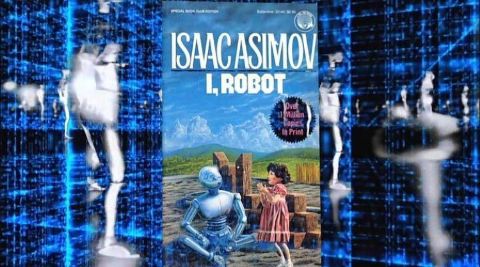
He saved the future from Evil Robots! Isaac Asimov dreamed a better future where we need not fear our own technology. His I, Robot stories of a sci-fi future where robots can do our jobs for us lead to the creation of real-life industrial robots and paved the way for a robo-friendly world.
2011 • People
He put a man on the Moon in the Victorian Era. He criticized the Internet...in 1863. Jules Verne is the ultimate futurist, with a legacy of sci-fi stories predicting everything from fuel cell technology to viral advertising. The extraordinary voyages of Jules Verne have inspired art, industry, culture, and technology.
2011 • People
Sci-fi legend Robert Heinlein is a walking contradiction. His stories address themes of patriotism, and duty while stressing the importance of personal freedom and expression. His groundbreaking stories like Starship Troopers and Stranger in a Strange Land continue to challenge readers with a steadfast theme: what is freedom?
2011 • People
From Luke Skywalker's light sabre to Darth Vader's Death Star, the Star Wars franchise is one of the defining science fiction works of the later 20th century. George Lucas' prolific imagination has already inspired two generations of scientists and engineers to push the envelope of technology. By introducing computers into the filmmaking process, he changed the way movies are made, and the way we all see the future.
2011 • People
Early humans eventually colonized Australia, the South Pacific, and the Americas. But how did our ancestors master the oceans? Learn how new discoveries in ancient DNA research are changing our understanding of the earliest sea voyages, from Easter Island to the Bering Strait.
S1E3 • The Great Human Odyssey • 2015 • People
The second episode delves into the moral framework that religions are often cited as providing and argues against the indoctrination of children. Dawkins compares religious faith to a virus, being passed from parents to offspring and teachers to pupils. He visits a London Hasidic Jewish school, where students are largely isolated from outside ideas, and Phoenix Academy, a semi-independent city academy following the American Accelerated Christian Learning curriculum. Dawkins interviews the headteacher about the integration of biblical stories into various academic subjects and explores the differences between secular ethics and morality based on religious law. He also discusses concepts from evolutionary biology, such as reciprocal altruism and kin selection, as explanations for morality.
S1E2 • The Root of All Evil • 2006 • People
Marco Polo: World's Greatest Overland Explorer? Or World's Biggest Liar? Perhaps no land journey in human history is more famous than Marco Polo's legendary 24 year trek across Asia. But was it all just a big lie? As described in his 1299 book, the peripatetic Venetian merchant encountered such wonders as the "singing sand dunes" of Dunhuang, China, "mountains of salt" in present-day Afghanistan, and the glories of the Mongol court of Kublai Khan. Generations of Europeans were spellbound by Polo's account, yet in recent years some scholars have questioned its authenticity. National Geographic Photographer Mike Yamashita sets out to visually document one of the greatest overland journeys ever made: the 24-year odyssey of Marco Polo. 700 years ago a young Venetian set out on what was to become one of the most influential journeys ever made. His adventures took him well beyond the boundaries of the known world of Persia to a land that was almost completely unexplored - the mysterious Middle Kingdom. But ever since he returned there were those who doubted Marco Polo. Did he really see what he described in his legendary book, 'Description of the World' or did he merely describe what others told him. In this film, Mike Yamashita follows Marco's book from the lofty heights of the Pamir Mountains to the fabled city of Xanadu in Mongolia. In so doing he attempts to unravel some of the age old mystery: Did Marco Polo really go to China? In the course of this incredible journey Mike stumbles onto a nomadic Kazak wedding in Aksai and investigates the controversy of the Great Wall - why did Polo never mention this in his famous travelogue "The Description of the World"? And why did he never mention tea or chopsticks? Yamashita talks to noted Chinese historian Professor Liu Yingsheng about these and many other Polo conundrums. In Yunnan province, he visits the bound feet women, and travels to inner Mongolia to film the famous herds of the Mongolian horsemen. As Yamashita reaches Xanadu he ponders on how Polo became a trusted confidant to the Khan and spent 17 years in his service. What sights he must have seen. But did he? The mystery slowly but surely reveals itself.
2022 • People
On January 1947, Al Capone, the most notorious gangster in America is dead at the age of 48. After serving ten years prison sentence Paul Ricca takes his place alongside Tony Accardo as co-head of The Outfit, which is making more money than before thanks to the numbers racket. In order to hide their profits, the answer is a growing city in the middle of the Mojave Desert where gambling is legal—Las Vegas, Nevada. But for the mafia from Chicago it is difficult to get into the gambling paradise of Las Vegas, because the New York mafia is already there. But it turns out to be a well-organized partnership. The leadership around Tony Accardo expands rapidly and finances the construction of new casinos in the city. The money for this is provided, among others, by the boss of one of the country's largest unions, Jimmy Hoffa. But the connection flies.
S1E7 • The Making of the Mob: Chicago • 2016 • People
James May reveals a world of facts about Albert Einstein and his groundbreaking theories.
S2E1 • James May's Things You Need to Know • 2012 • People
Writer Will Millard visits the treehouse-dwelling Korowai tribe in Papua, Indonesia
S1E1 • My Year With the Tribe • 2018 • People