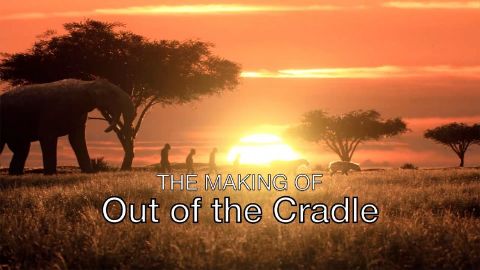
What is involved in creating a groundbreaking film that documents the latest paleoanthropological findings? This film will shed light on the talent, research, and scientific discoveries that made Out of the Cradle possible.
Hope you're finding these documentaries fascinating and eye-opening. It's just me, working hard behind the scenes to bring you this enriching content.
Running and maintaining a website like this takes time and resources. That's why I'm reaching out to you. If you appreciate what I do and would like to support my efforts, would you consider "buying me a coffee"?
BTC: bc1q8ldskxh4x9qnddhcrgcun8rtvddeldm2a07r2v
ETH: 0x5CCAAA1afc5c5D814129d99277dDb5A979672116
With your donation through , you can show your appreciation and help me keep this project going. Every contribution, no matter how small, makes a significant impact. It goes directly towards covering server costs.
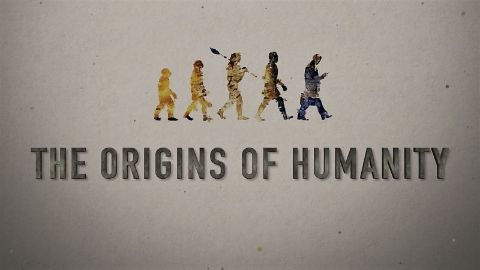
An extraordinary journey tracing the footsteps of early Homo sapiens leaving Africa, reaching the easternmost end of the Eurasian continent, and developing unique culture there. The latest paleoanthropological findings and CGI created by top game creators should stun the viewers.
2019 • History
What is involved in creating a groundbreaking film that documents the latest paleoanthropological findings? This film will shed light on the talent, research, and scientific discoveries that made Out of the Cradle possible.
2019 • History
Neil follows the clans as they rallied behind Robert the Bruce in his against-all-odds bid to win Scotland's crown. After their crucial role in crushing the English at Bannockburn in 1314, Bruce rewarded the loyal chiefs with land and titles. They rise to shape the fate of kingdom in the centuries to come.
S1E1 • Rise of the Clans • 2018 • History
We explore the legacies of the Ancient Greeks, what they have given us today, and asks why these legacies have lasted through time. Democracy, art, architecture, philosophy, science, sport, theatre - all can be traced back to ancient Greece. Travelling across the ancient Greek world, from Athens to Olympia, Macedon, Turkey and Sicily, Michael discovers why the ancient Greeks were so successful, why their culture and way of life spread across continents and through time and why they still have such a powerful hold over our imaginations today.
S1E2 • Who Were the Greeks? • 2013 • History
This episode of NEW YORK: A DOCUMENTARY FILM follows New York into a new century in the wake of an extraordinary wave of immigration and the birth of the skyscraper. As New York spilled into the new century, the extraordinary interplay of capitalism, democracy and transformation surged to a climax. During a single generation, over 10 million immigrants arrived in New York. The city itself became an even more dramatic lure with the construction of the first subways and skyscrapers. And arising from the plight of New York's most exploited citizens came landmark legislation that would eventually transform the lives of all Americans.
S1E4 • New York: A Documentary Film • 1999 • History
Tracy Borman examines the reign of Henry VIII, revealing his interests, clothing, taste in food and the accidents he survived during his life.Intricate details about the man, Henry VIII are revealed.
S1E2 • The Private Lives of the Tudors • 2016 • History
Today it is easy to see D-Day as inevitable - a straightforward victory against a German army that was already all but defeated. This film explodes that myth. It charts the careful planning of the campaign, the development of specialised equipment needed for the amphibious landing. It reveals the deception plan that wrong footed Hitler. It shows how the Americans were very nearly driven off Omaha beach. If that had happened, the whole operation might have failed. The film ends with the Liberation of Paris, as the Free French forces led by Charles de Gaulle matched down the streets of the capital.
9/13 • World War II In HD Colour • 2009 • History
In April 1944, two Jewish prisoners miraculously escaped from Auschwitz. When they recounted what they had left behind, their harrowing testimony revealed the true horror of the Holocaust to the outside world for the first time. They described in forensic detail the gas chambers and the full extent of the extermination programme. The news they brought presented the Allies with one of the greatest moral questions of the 20th century: Should we bomb Auschwitz? While the Allies deliberated in London and Washington, the killing machine ground on in southern Poland. One month after the men’s escape, almost 800,000 Hungarian Jews had been rounded up awaiting transport to Auschwitz. By early July 1944, the majority had been transported. Most of them were murdered on arrival. As the killing at Auschwitz reached its frenzied climax, the outcome of the Second World War hung in the balance. Millions of troops were fighting on both fronts and battling for supremacy in the air. Should the Allies use their resources to push on and win the war or to stop the industrial slaughter at Auschwitz? The request to bomb the camp, with 30,000 captive prisoners, was remarkable and came from a place of utter desperation. But it was a direct response to the destruction of an entire people. There were operational challenges - was it possible to reach the camp to bomb it? How many heavy bombers would it take? What would the Nazi propaganda machine say about such an attack? - as well as complex moral ones. How many prisoners would likely die in such a raid? Can you kill friendly civilians in order to save the lives of those being transported towards the death camp? These were the hard questions faced by Churchill, Allied Air Command and the Jewish Agency.
2019 • History