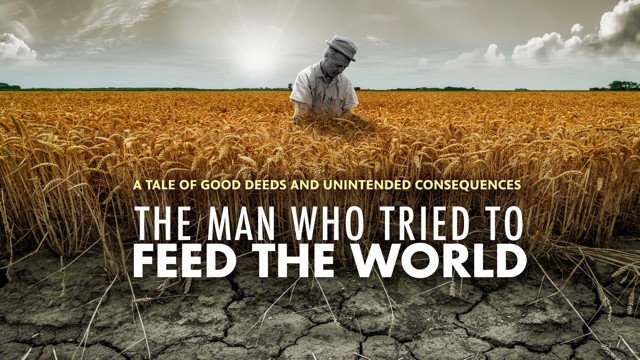
In 1966, drought and an exploding population confronted India with the imminent threat of a severe famine that many scientists and intellectuals feared was a harbinger of global catastrophes to come, as the world's population outstripped its ability to produce food. India turned to Norman Borlaug, an unassuming plant breeder from Iowa whose combination of scientific knowledge and raw determination had made him a legend among a small handful of fellow specialists. The Man Who Tried to Feed the World recounts the story of the man who would not only solve India's famine problem, but would go on to lead a "Green Revolution" of worldwide agriculture programs, saving countless lives. He was awarded the 1970 Nobel Peace Prize for his work but spent the rest of his life watching his methods and achievements come under increasing fire.
Hope you're finding these documentaries fascinating and eye-opening. It's just me, working hard behind the scenes to bring you this enriching content.
Running and maintaining a website like this takes time and resources. That's why I'm reaching out to you. If you appreciate what I do and would like to support my efforts, would you consider "buying me a coffee"?
BTC: bc1q8ldskxh4x9qnddhcrgcun8rtvddeldm2a07r2v
ETH: 0x5CCAAA1afc5c5D814129d99277dDb5A979672116
With your donation through , you can show your appreciation and help me keep this project going. Every contribution, no matter how small, makes a significant impact. It goes directly towards covering server costs.
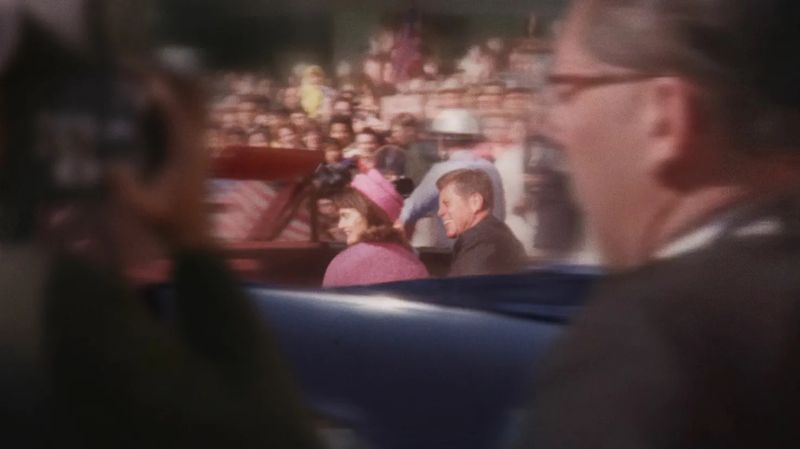
Crushed by the death of his father, a mentally exhausted Michael retires in 1993 — to play baseball. The Bulls move on with Scottie in the lead role.
7/10 • The Last Dance • 2020 • People
The life and work of M.C. Escher is presented primarily through his own words in the form of his writings being read against a backdrop of images associated to him, including archival footage of himself and images of his drawings. Many further details are provided by surviving family members. Escher himself considered what he did being caught between the worlds of art and mathematics - he not very good at either - his drawings always having an element of geometry. He made a conscious decision to work in monochromatic black and white realizing that he would be missing being able to convey ideas that are inherent with color. The evolution to two of his later periods is discussed, namely his series of drawings of the human eye, and what would become his ultimate fascination, that of the concept of infinity, whether it be real, as in the circle or the study of a man viewing a picture of himself viewing a picture of himself and so on, or perceived through illusions, such as his never-ending staircase. The documentary is buttressed by commentary from fan, musician Graham Nash who believes his brilliance has not yet been fully appreciated. Further Information
2021 • People
In less than two years, Al Capone has risen from a humble bookkeeper to second-in-command of Johnny Torrio's criminal empire in Chicago. The empire is worth the modern-day equivalent of S35 million. Capone purchases a home for his family and moves them from New York to Chicago. Torrio and Capone expand their empire from Chicago's South Side to the North Side, which is controlled by Chicago's second largest gang, the Irish. Violence erupts as ruthless Irish gang leader Dean O'Banion protects his territory and bootlegging business from Torrio and Capone.
S1E2 • The Making of the Mob: Chicago • 2016 • People
An examination of the research by forensic psychiatrist Dorothy Otnow Lewis who investigated the psychology of murderers.
2020 • People
A humorous essay on the Romanian odyssey from Communism to capitalism as seen from the perspective of one of Romania's most charismatic symbols: Dacia, a simple and discreet automobile, but also a mirror of Romanian society.
2009 • People
Feminism has ushered in sweeping changes to society, securing rights for women around the world. How much further do we have to go?
S1E7 • History 101 • 2020 • People