Across Iberia, food chains and ecosystems are being restored allowing endangered animals, including the rarest cat in the world, to flourish.
Hope you're finding these documentaries fascinating and eye-opening. It's just me, working hard behind the scenes to bring you this enriching content.
Running and maintaining a website like this takes time and resources. That's why I'm reaching out to you. If you appreciate what I do and would like to support my efforts, would you consider "buying me a coffee"?
BTC: bc1q8ldskxh4x9qnddhcrgcun8rtvddeldm2a07r2v
ETH: 0x5CCAAA1afc5c5D814129d99277dDb5A979672116
With your donation through , you can show your appreciation and help me keep this project going. Every contribution, no matter how small, makes a significant impact. It goes directly towards covering server costs.
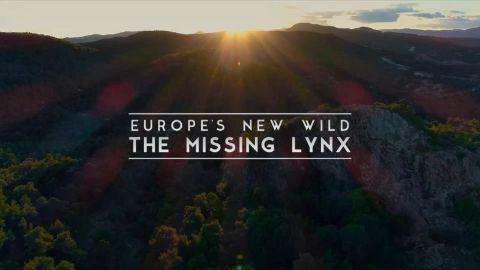
Across Iberia, food chains and ecosystems are being restored allowing endangered animals, including the rarest cat in the world, to flourish.
2021 • Nature
Embark on a journey to Spain and Portugal, In Europe’s Carpathian Mountains, the introduction of Bison is helping numerous other species to thrive, while just beyond this mountainous region, Gray Wolves are staging an astonishing return.
2021 • Nature
Sami reindeer herders and modern conservationists are teaming up in a bid to save one of Europe’s wildest frontiers. Through ice and snow, the link between man and wild is being reforged.
2021 • Nature
The Danube is the largest preserved wetland on the continent, a sanctuary for thousands of species -many are the last of their kind. Conservationists are working to preserve and restore these precious habitats before it’s too late.
2021 • Nature
For a river that conjures up images of pyramids and pharaohs, the Nile turns out to be a truly surprising river that changes at every twist and turn of its journey. As its flows into increasingly arid latitudes on its journey north it becomes an evermore vital lifeline for animals and people, but only if they can conquer the challenges that this ever-changing river throws at them.
S1E2 • Earth's Great Rivers • 2018 • Nature
Attenborough visits several museums of natural history. With the aid of dinosaur skeletons, he demonstrates how they existed in real life, and speculates about the reasons for their sudden demise.
S1E3 • Lost Worlds, Vanished Lives • 1989 • Nature
New England is the stage for the most incredible colour change on earth, when the vivid greens of summer give way to the gold’s and reds of autumn. This film reveals how this vibrant fiesta is created by the battles between the trees and the forests' inhabitants. Moose, chipmunks, rattlesnakes and a bizarre mixture of caterpillars all play a crucial role, but surprisingly the forest itself was made so colourful thanks to a combination of hard work by beavers, ants and humans.
S1E1 • Earth's Greatest Spectacles • 2016 • Nature
Svalbard in the Arctic spends many months of the year in complete darkness, an unrelenting frozen winter with temperatures down to -40 Celsius. But when the sun finally reappears, the landscape magically transforms from an ice world into a rich tundra, full of exotic plants, birds, arctic foxes, polar bears, walrus and reindeer. This film captures the changes in all their glory and reveals how this transformation is only possible thanks to some bizarre micro-organisms that feed on ice and the stunning abilities of migrating birds.
S1E2 • Earth's Greatest Spectacles • 2016 • Nature
In this first episode, he investigates how and why birds communicate, looking at the reasons snipe use their tail feathers to make a very distinctive noise and what's happening when thousands of starlings participate in stunning aerial displays in Aberystwyth.
S1E1 • Secret Life of Birds • 2012 • Nature
A thousand years ago, many millions of whales dominated the sea, with their ancient behaviours vital to the well-being of the oceans. These marine mammals are the ambassadors between one world and another, land and sea, their close communities only now being truly researched and understood. They are still a keystone species in our fragile ecosystem today, with crucial impact on our seas and the life contained within them. But whaling decimated their numbers over the last 150 years, in particular the whaling industry run by the KGB during the Cold War. In a basement in Odessa, top-secret Soviet whaling reports record the unimaginable number of whales killed. This film tells how surviving members of the Soviet leadership, and original Soviet whalers, uncover these secret records, allowing us to understand the magnitude of historical whale populations and the shocking impact of commercial whaling. Whale populations are now largely cherished across the world as we begin to understand these amazing animals, their intelligence and their important contribution to the sustainability and health of the oceans.
2023 • Nature