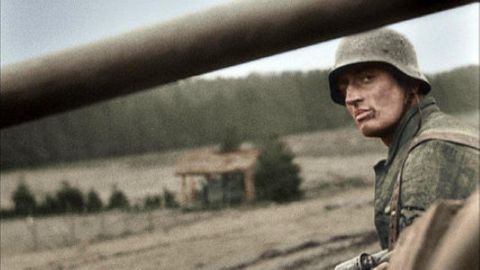
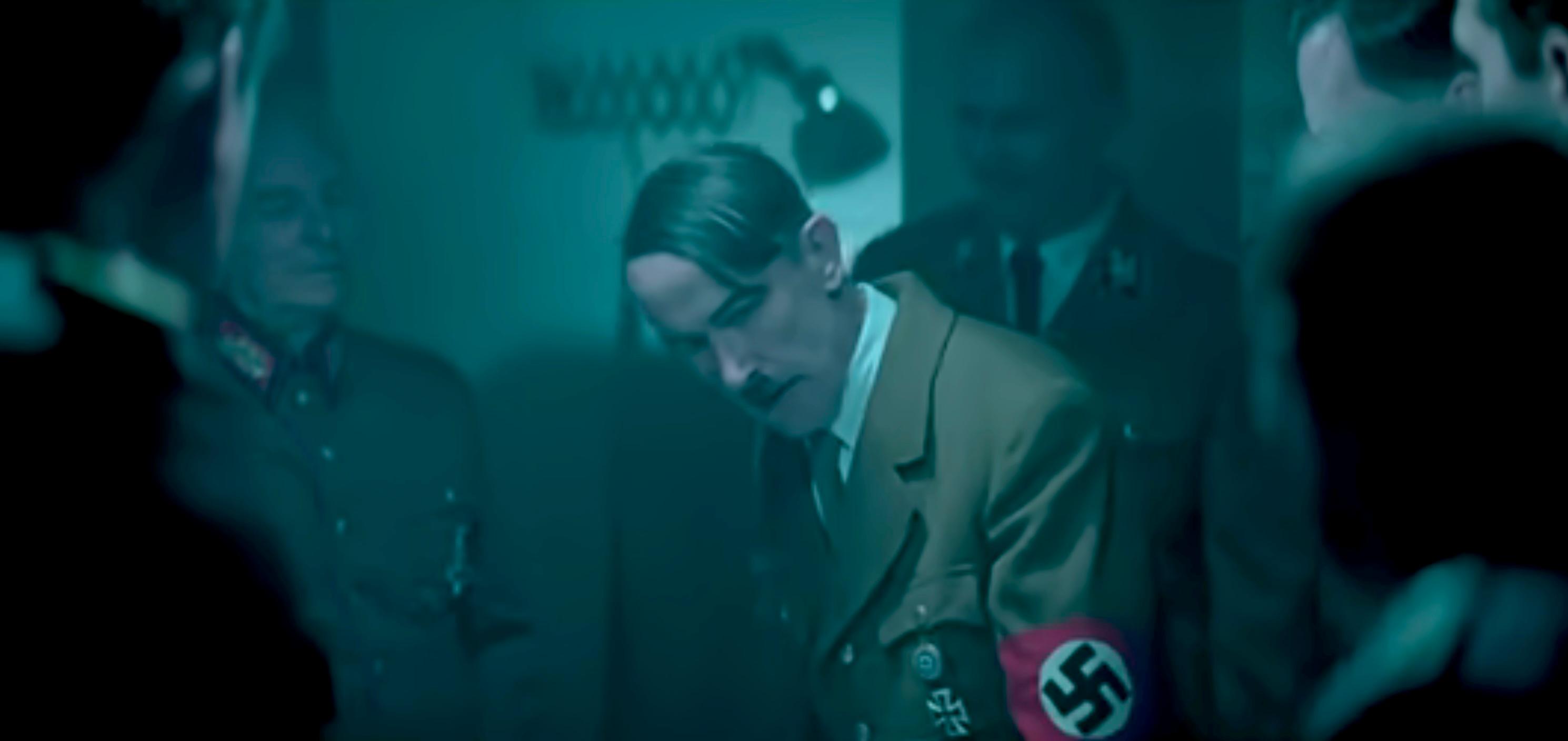
Also known by the acronym SS, the Schutzstaffel organization was a privileged instrument within the German state. Created in April 1925 to ensure the close protection of Adolf Hitler, it became over the years a real state within a state, organizing the extermination of the Jews of Europe, but also assuming political functions, repressive, ideological and even military with the creation of the Waffen-SS. This documentary looks back on its origins and its workings. Nuremberg. In 1945 the main war criminals were tried in this city where Hitler gathered fanatical crowds. The Allies judge Nazi leaders and officials of the Third Reich. Among the defendants - the Fuhrer's closest collaborators.
Hope you're finding these documentaries fascinating and eye-opening. It's just me, working hard behind the scenes to bring you this enriching content.
Running and maintaining a website like this takes time and resources. That's why I'm reaching out to you. If you appreciate what I do and would like to support my efforts, would you consider "buying me a coffee"?
BTC: bc1q8ldskxh4x9qnddhcrgcun8rtvddeldm2a07r2v
ETH: 0x5CCAAA1afc5c5D814129d99277dDb5A979672116
With your donation through , you can show your appreciation and help me keep this project going. Every contribution, no matter how small, makes a significant impact. It goes directly towards covering server costs.
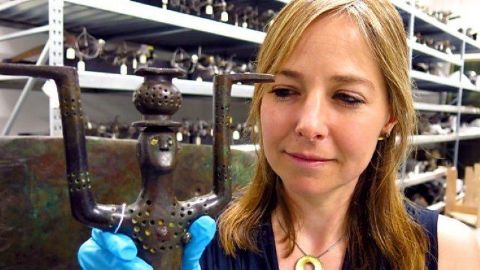
How Britain planned for a Nazi invasion - from tank traps and sticky bombs, to the Home Guard and tragic story of heroism. Alice Roberts looks for visible traces of Britain's rearmament in preparation for a German invasion. How did the Home Guard come about and what was the role of women in the offensive defense? We meet Indian-American Noor Inayat Khan, a special agent who worked with sabotage activities in German-occupied France, and hear her tragic story as one of the war's forgotten heroines. Alice learns about the deployment of the Home Guard, and Danielle travels to the Channel Islands, the only part of the British Isles under German control, to visit the only concentration camp built on British soil in Alderney. She explores life under occupation and visits the underground hospital Festung Guernsey.
S1E2 • Fortress Britain • 2022 • History
Around 200,000 years ago, a new species, Homo sapiens, appeared on the African landscape. While scientists have imagined eastern Africa as a real-life Garden of Eden, the latest research suggests humans evolved in many places across the continent at the same time. DNA from a 19th-century African-American slave is forcing geneticists to re-think the origins of our species. The theory is that our ancestors met, mated and hybridized with other human types in Africa — creating ever greater diversity within our species.
Part 2 • First Peoples • 2015 • History
A dying Hideyoshi appoints five regents to govern til his son comes of age, but the power hungry Tokugawa Ieyasu declares war on those who oppose him.
S1E6 • Age of Samurai: Battle for Japan • 2021 • History
Mussolini's ambition had always been to recreate the old Roman empire. The trouble was, militarily, he was a disaster. After failed attacks in North Africa and Greece, his armies were on the run. Hitler, now faced a difficult choice. Did he divert troops needed at other fronts to support his ally, or did he let Mussolini fall ? Hitler chose to support him - a decision that would spell disaster for both of them. Hitler would lose hundreds of thousands of troops. Mussolini would be assassinated. This film tells the extraordinary story of the war in North Africa and features the heroics of the tiny island of Malta as it withstood wave after wave of Nazi assault. It ends with the Allies fighting their way up Italy and Germany in retreat.
6/13 • World War II In HD Colour • 2009 • History
Berlin Escapes 1961-89 The many and sometimes successful attempts to escape under the watchful eyes of the East German border guards. Set against the background of the history of the Wall. On August 13th, 1961 building commenced on die Berliner Mauer, the wall that would divide the world for nearly thirty years, as well as the city of Berlin. During that period more than five thousand people escaped to freedom, but over two hundred lost their lives. Even the phrase, Checkpoint Charlie, evokes the deception and fear that existed every day in the East and West Berlin. On a Sunday morning in 1961, shocked citizens awoke to the sounds of a barrier being built along the border separating East and West Berlin. Over the next three decades, thousands of of East Berliners risked their lives--leaping from buildings, crashing vehicles into gates, digging tunnels--in desperate attempts to breach the Berlin Wall and reach the West. In 1989, as Communist rule was collapsing throughout Europe, defiant Berliners began to tear the Wall down. Today, a few battered sections remain standing--a monument to those who died trying to escape to freedom.
17/20 • The True Action Adventures of the Twentieth Century • 1996 • History
13th Century: After a unique triumph, Islam became the religion of many peoples - from Spain to Indonesia. But there was no Islamic empire, just as there was no Christian empire. Middle Ages meant: small states, wars of princes and tribes against each other. This episode covers the spreading of Islamic and Arabic culture, which was based on the use of military slaves: children of non-Muslim Turkic peoples were trained to become Islamic elite warriors. Their military triumph not only spread war and the new faith, but also advanced culture: medicine, art, architecture, astronomy - a unique blossoming of knowledge, culture and intellectual freedom penetrated as far as Spain. The real threat to Allah's earthly kingdom came not from Europe, but from the steppes of Asia. The Mongols attacked their enemies ruthlessly, devastatingly and invincible. In 1258 AD, Baghdad, the center of Islamic civilization, fell into their hands. Military conflict accompanied the spread of Islam during the Middle Ages. This program reveals the ironies of that union between war and faith: how Islam was adopted rather than marginalized by invading Mongols; how the rise of strict Islamic orthodoxy countered the scholarly advances of Arabic culture, weakening the empire; and how European appreciation of Islamic culture grew after the Christian 'Reconquista' of the Iberian peninsula. Interviews with respected scholars—including Drs. Raif Georges Khoury of the University of Heidelberg and Patrick Franke of Martin Luther University, Halle-Wittenberg—illuminate key developments in Islam's Mediterranean dominance.
S1E3 • The Holy Wars: War and Religion • 2004 • History