We have been mesmerized by Venus since ancient times. Was this a paradise world teeming with life? This film tells the remarkable story of how spacecraft revealed the true nature of Earth’s enigmatic twin, that it’s a lifeless hell – and that the Earth could follow suit.
Hope you're finding these documentaries fascinating and eye-opening. It's just me, working hard behind the scenes to bring you this enriching content.
Running and maintaining a website like this takes time and resources. That's why I'm reaching out to you. If you appreciate what I do and would like to support my efforts, would you consider "buying me a coffee"?
BTC: bc1q8ldskxh4x9qnddhcrgcun8rtvddeldm2a07r2v
ETH: 0x5CCAAA1afc5c5D814129d99277dDb5A979672116
With your donation through , you can show your appreciation and help me keep this project going. Every contribution, no matter how small, makes a significant impact. It goes directly towards covering server costs.
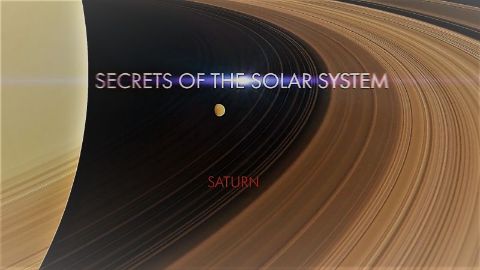
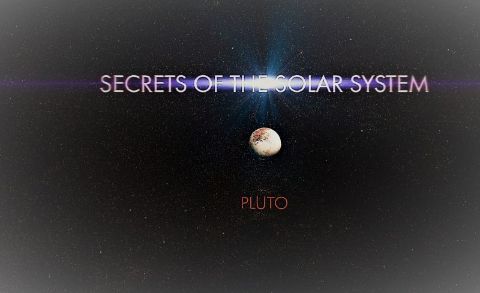
Starting with a grand tour of the Solar System, powerfully told by the world’s top space scientists. From the raging inferno of the Sun to the icy beauty of Pluto, discover the secrets that the planets have kept for billions of years, revealed with stunning images from space.
2020 • Astronomy
Join a team of scientists as they launch a probe to actually touch the Sun. Then they make a surprise discovery on the tiny planet Mercury. An exhilarating real-life space adventure, revealing that our nearest star could pose a serious threat to our modern way of life.
2020 • Astronomy
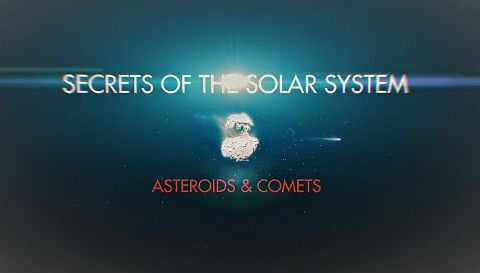
Our solar system is home to many wanderers, the asteroids and comets. This is a journey into deep space to visit objects that have endured unimaginable periods of time, waiting to reveal the origins of the solar system and therefore, us.
2020 • Astronomy
It's hard to get to space.But there is a concept that might make it possible: the space elevator. How exactly does it work.
In a Nutshell • 2016 • Astronomy
Professor Brian Cox fulfils a childhood dream by going behind the scenes at Nasa's Jet Propulsion Laboratory (JPL), mission control for Mars 2020 – one of the most ambitious missions ever launched that may finally reveal if life ever existed on the red planet. In 1980, a young Brian Cox wrote to JPL asking for photos from some of their missions to the planets. The pictures they sent him from Voyager and the Viking mission to Mars were a source of inspiration that set him on the path to becoming a physicist. Now, over 40 years later, he has been granted privileged access to JPL, including key mission areas that are usually off-limits to film crews. Brian spends a week following the team who guide the Perseverance rover and the Ingenuity helicopter - the first powered aircraft ever sent to another planet - across the surface of Mars during a critical stage of the mission. Perseverance's goal is to search for signs of long extinct life on the surface of Mars in an area called Jezero Crater, which, 3.8 billion years ago, was filled by a vast lake. If it finds evidence of that life, it could change everything we know about life in the universe - and even transform our understanding of our own origins.
2022 • Astronomy
From the furthest reaches of space to our own cosmic backyard, we count down the discoveries that changed everything we know about our universe.
S5E1 • How the Universe Works • 2016 • Astronomy
Carl Sagan opens the program with a description of the cosmos and a "Spaceship of the Imagination" (shaped like a dandelion seed). The ship journeys through the universe's hundred billion galaxies, the Local Group, the Andromeda Galaxy, the Milky Way, the Orion Nebula, our Solar System, and finally the planet Earth. Eratosthenes' successful calculation of the circumference of Earth leads to a description of the ancient Library of Alexandria. Finally, the "Ages of Science" are described, before pulling back to the full span of the Cosmic Calendar. Note: This revised version of the series adds an introduction by Ann Druyan, in which she discusses some of the changes that occurred in the years after its broadcast.
1/13 • Cosmos: A Personal Voyage • 1980 • Astronomy
Quasars are the brightest and most powerful objects in our universe, and though they have shaped the cosmos, they might ultimately destroy everything that exists.
S6E7 • How the Universe Works • 2017 • Astronomy
In the final episode, Professor Brian Cox journeys to the remotest part of the solar system, a place that the most mysterious planets call home.
S1E5 • The Planets 2019 • 2019 • Astronomy