Victory At Marathon • 2012 • episode "S1E1" Battle For Athens

Category: History | Torrent: | Subtitle:

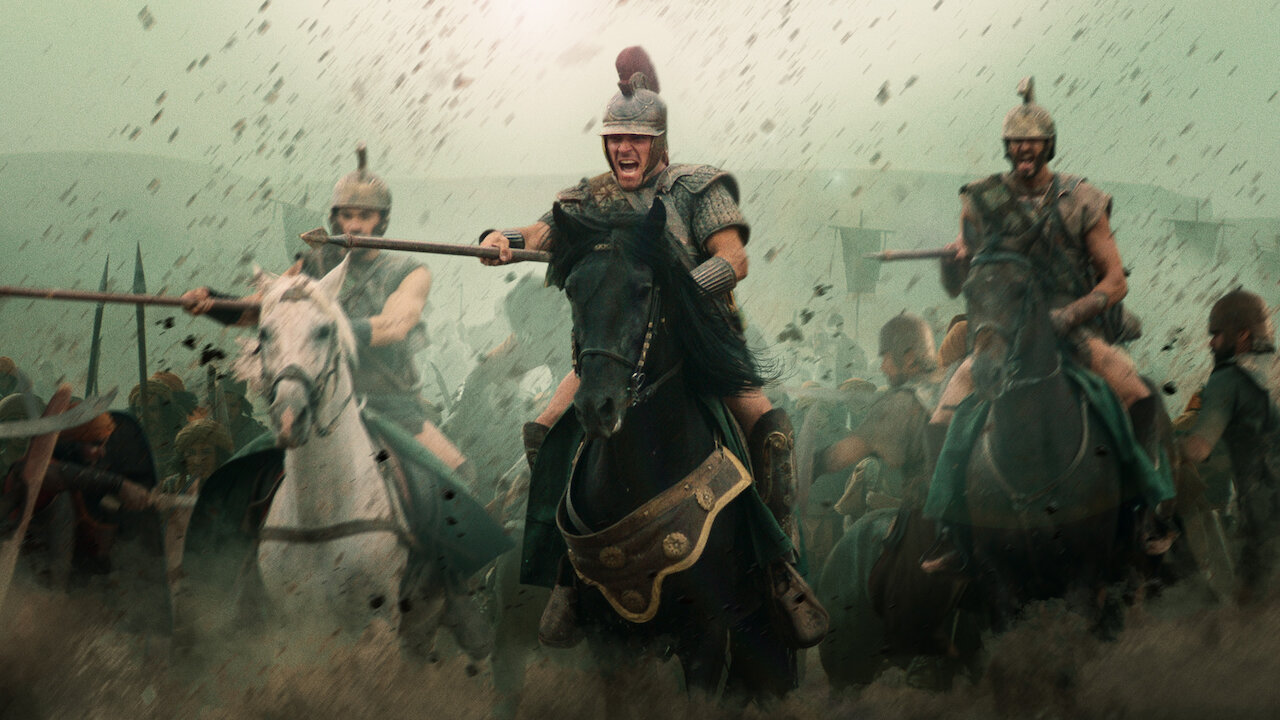
In 499 BC, Miletus, a Greek city in Asia Minor, revolted against the yoke of the Persian Empire with the support of the independent cities of Athens and Eretria. Darius, the great king of the Persian Empire, decided to avenge this affront by launching a punitive expedition against the rebel cities.

Make a donation

Buy a brother a hot coffee? Or a cold beer?

Hope you're finding these documentaries fascinating and eye-opening. It's just me, working hard behind the scenes to bring you this enriching content.

Running and maintaining a website like this takes time and resources. That's why I'm reaching out to you. If you appreciate what I do and would like to support my efforts, would you consider "buying me a coffee"?

Donation addresses

Buy Me a Coffee at ko-fi.com

patreon.com

BTC: bc1q8ldskxh4x9qnddhcrgcun8rtvddeldm2a07r2v

ETH: 0x5CCAAA1afc5c5D814129d99277dDb5A979672116

With your donation through , you can show your appreciation and help me keep this project going. Every contribution, no matter how small, makes a significant impact. It goes directly towards covering server costs.
Battle For Athens • 2012 • 2 episodes •

Victory At Marathon

In 499 BC, Miletus, a Greek city in Asia Minor, revolted against the yoke of the Persian Empire with the support of the independent cities of Athens and Eretria. Darius, the great king of the Persian Empire, decided to avenge this affront by launching a punitive expedition against the rebel cities.

2012 • History

Divine Salamis

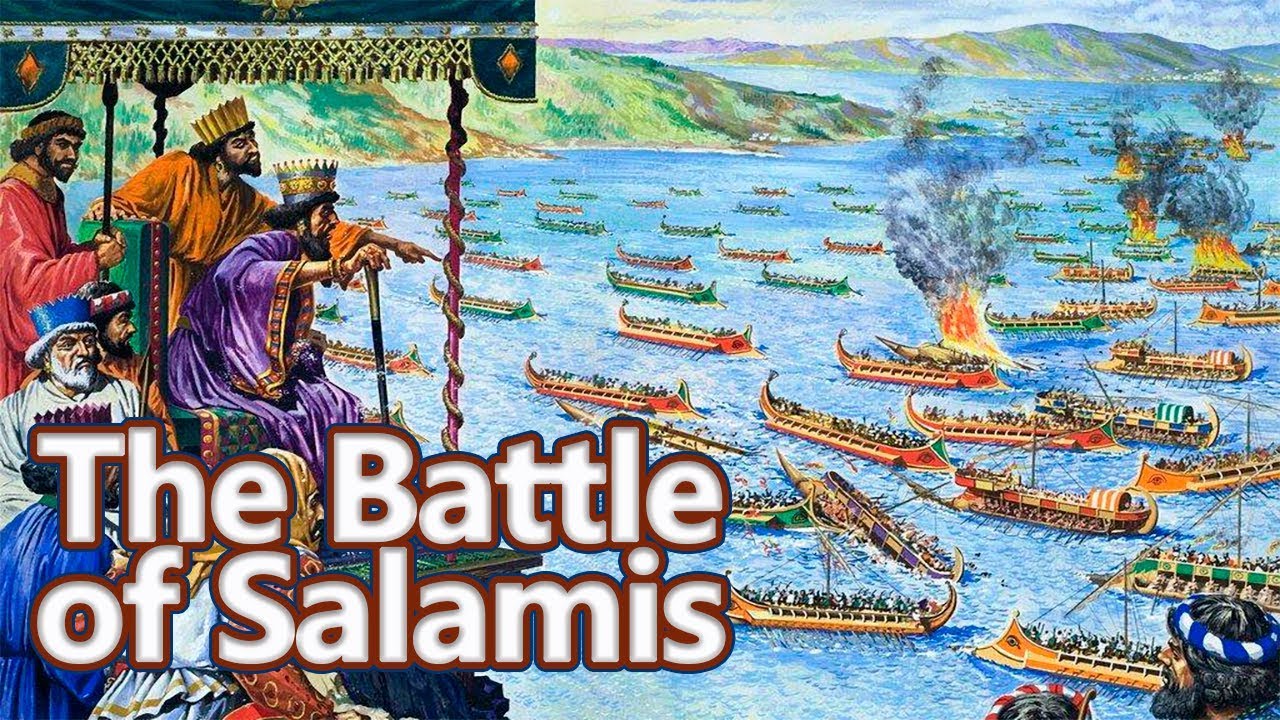
Ten years after the Battle of Marathon, Xerxes, Darius's heir, prepared to take his revenge on the Athenians. After several years of preparation, he launched an army of over a million men against mainland Greece.

2012 • History

You might also like

Empires of Gold / Cities

Henry Louis Gates, Jr. uncovers the complex trade networks and advanced educational institutions that transformed early north and West Africa from deserted lands into the continent’s wealthiest kingdoms and learning epicentres. In Part 4 Gates explores the power of Africa’s greatest ancient cities, including Kilwa, Great Zimbabwe and Benin City, whose wealth, art and industrious successes attracted new European interest and interaction along the continent’s east and west coasts.

Part 3 and 4Africa's Great Civilizations • 2017 • History

Destiny

Vlad and Mehmed face off. Maria and Gülbahar foil the Wallachian plot. Ottoman troops march into an abandoned Târgoviste and face a gruesome sight.

S2E6Rise of Empires: Ottoman • 2022 • History

The Great Famine

The little-known story of the American effort to relieve starvation in the new Soviet Russia in 1921, The Great Famine is a documentary about the worst natural disaster in Europe since the Black Plague in the Middle Ages. Five million Russians died. Half a world away, Americans responded with a massive two-year relief campaign, championed by Herbert Hoover, director of the American Relief Administration known as the ARA. In July of 1921, Herbert Hoover, received a plea for international aid by Russian novelist Maxim Gorky. "Gloomy days have come for the country of Tolstoy, Dostoyevsky, Mendeleyev," Gorky warned. He made a similar request to other Western nations, but it was Hoover who responded immediately with a promise of support. The first American relief ships arrived in Petrograd in September 1921, as the embers of the 1917 Russian revolution still smoldered. American relief workers were among the first outsiders to break through Russia's isolation and to witness and record the impact of the Bolshevik Revolution. They would be tested by a railroad system in disarray, a forbidding climate, a ruthless government suspicious of their motives, and the enormous scale of death and starvation. The initial plan called for feeding one million children by delivering bread, rice, grits, sugar, corn and milk to the most hard hit regions. Almost immediately, Hoover encountered formidable obstacles. Vladimir Lenin's new communist government was skeptical of American aid and sabotaged the relief effort by planting spies in local American Relief Administration offices. When trains stuck on the tracks prevented food from being transported, Russian officials were uncooperative, resulting in delays that contributed to an estimated 50,000 deaths. New estimates in the fall of 1921 revealed that at least 16 million Russians would be impacted by the famine. Hoover's initial plan to feed just the children would not be sufficient. That winter, cannibalism became widespread across Russia as the people continued to starve. In the U.S., Hoover managed to double the project's funding, arguing that by providing food famine relief, Americans could demonstrate the strength, kindness and efficiency of American society to a Communist culture. After a spring thaw, hundreds of American relief workers — nicknamed "Hoover's boys" — were finally able to deliver food. In August 1922, a full five months after the initial shipments of corn were sent to Russia, American Relief Administration officials were still feeding almost 11 million Soviet citizens each day in 19,000 kitchens. By the end of the famine that fall, five million Russians had starved to death, but the toll would have been significantly higher without Hoover's unprecedented humanitarian commitment. Known as "the Great Humanitarian" for his relief work during and after World War I, Hoover is said to have saved more lives than any person in history. "Lenin's government never recognized America's humanitarian motives," says producer Austin Hoyt (George H. W. Bush, Victory in the Pacific, Reagan). The Soviets always saw the relief workers as exploiters and spies." The Cheka, Lenin's secret police, kept a watchful eye on the Americans and especially on the 120,000 Russians the ARA hired to do the work. White Russians and aristocrats, the losers in Russia's brutal civil war, were hired because they were educated. The Bolsheviks feared the ARA was training them as counter-revolutionaries. The tensions the Americans experienced in the early 1920s would come to dominate U.S. Soviet relations for much of the century.

2011 • History

Breaking the Bonds: 1360-1415

England, wracked by plague and revolt, loses the upper hand until Henry V, determined to prove his right to be king, turns the tide at the battle of Agincourt.

S1E2Chivalry and Betrayal: The Hundred Years War • 2013 • History

35-24 Events 20th Century

Counting down from 35 to 24, this episode includes a space venture of a shuttle called Challenger, a ship journey on the unsinkable Titanic, and a car chase of Princess Diana - all that end in disaster. We see a war in Vietnam, a war in China, and a war thrust upon the United States; the birth of the Israeli nation, and a new style of cinema with sound. Celebrity OJ Simpson is on trial, and a dictator consolidates power as Chancellor of Germany

S1E6101 Events that Made the 20th Century • 2018 • History

Part 3: Avoiding Armageddon

Tales of Cold War Britain, from nuclear threat to upper-class spies, eerie ghost bunkers and our very own Chernobyl. In Cold War military buildup Britain constructed bunkers for the civilian population and created its own nuclear missile defense. Professor Alice Roberts explores the UK's response to the threat of nuclear attack during the early years of the Cold War in the 1950s, when a network of upper-class spies began merrily sharing British military secrets with the Soviet Union. We also visit a nuclear-bomb-proof command center and inspect the legendary Avro Vulcan jet bomber.

S1E3Fortress Britain • 2022 • History