David Attenborough’s Natural History Museum Alive • 2013

Category: Nature

Britain's best-loved broadcaster brings his favourite extinct creatures back to life in David Attenborough's Natural History Museum Alive. In this ground-breaking film, Sir David takes us on a journey through the world-famous Natural History Museum in London in a captivating tale of discovery, adventure, and magic, where state-of-the-art CGI, science, and research combine to bring the museum's now long-extinct inhabitants to life to discover how these animals once roamed the planet. As the doors are locked and night falls, Attenborough stays behind and meets some of the most fascinating extinct creatures which come alive in front of his eyes; dinosaurs, ice age beasts, and giant reptiles. The film fulfils a lifelong dream of the nation's favourite naturalist, who said: "I have been coming to the Natural History Museum since I was a boy. It's one of the great places to come to learn about natural history. In this film we have the technology to bring back to life some of the most romantic and extraordinary extinct creatures that can be conceived; some are relatively recent animals like the dodo, others older like the dinosaurs, and some we only know through fossil evidence. Using our current scientific knowledge, this film brings these creatures alive, allowing me to look at some of the biggest questions surrounding them."

Make a donation

Buy a brother a hot coffee? Or a cold beer?

Hope you're finding these documentaries fascinating and eye-opening. It's just me, working hard behind the scenes to bring you this enriching content.

Running and maintaining a website like this takes time and resources. That's why I'm reaching out to you. If you appreciate what I do and would like to support my efforts, would you consider "buying me a coffee"?

Donation addresses

Buy Me a Coffee at ko-fi.com

patreon.com

BTC: bc1q8ldskxh4x9qnddhcrgcun8rtvddeldm2a07r2v

ETH: 0x5CCAAA1afc5c5D814129d99277dDb5A979672116

With your donation through , you can show your appreciation and help me keep this project going. Every contribution, no matter how small, makes a significant impact. It goes directly towards covering server costs.

You might also like

Human

Today Earth is a human world, home to eight billion people and counting. Humans now have a greater effect in shaping Earth’s surface than many natural processes. In this episode, Chris Packham explores how dramatic twists in Earth’s story enabled humans to go from being part of nature to controlling it, and what we can learn from this epic tale before it’s too late. The story begins 66 million years ago with the catastrophic impact of the asteroid that wiped out the (Non-avian) dinosaurs. From the ashes of the desolation that followed, a new animal family rose to power. This was adaptable and inventive enough to emerge out of the harsh new world – the mammals. It began with a distant ancestor that shared many traits of the much maligned, but evolutionarily brilliant, rat. Due to a series of extreme geological and climatic events, mammals evolved into early primates feasting in the newly formed tropical rainforests, and then to early humans travelling vast distances between forests in places like East Africa’s Rift Valley. Earth’s story is a saga spanning 4.5 billion years, but it’s only in the last 11,000 years - with the rise of farming - that our species has started to dramatically impact our planet and its ecosystems. The human chapter of Earth’s story might end in disaster, but Chris is keen to argue for a different ending, where all of humanity’s achievements to date “…were just our dress rehearsals, because in the very near future our species will need to reach the zenith of its achievements and… all humanity will have to learn to put our Earth first.”

S1E5Earth: One Planet, Many Lives • 2023 • Nature

Return of the Prairie Bandit

Their habitat once stretched across the Prairies, but when humans wiped out the one thing they eat, the black-footed ferret disappeared. The only native North American ferret, this mysterious animal became the most endangered species in the world. For many years, they survived only in zoos. Now a fledgling project is attempting to bring the black-footed ferret back to Saskatchewan. This dramatic story of the ferrets’ reintroduction to the wild unfolds in Return of the Prairie Bandit, a new documentary by Kenton Vaughan set in the stunning prairie of southern Saskatchewan.

S50E13The Nature of Things • 2011 • Nature

Part I

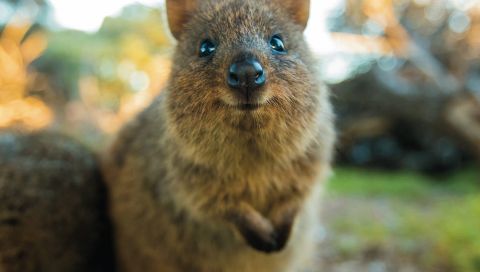
One of the world’s happiest, yet most vulnerable marsupials, the Quokka thrives only on Rottnest Island. In almost plague proportions over ten thousand of the strange relic wallabies live here. How do they survive here in such inhospitable conditions and nowhere else?

S1E1Rottnest Island: Kingdom of the Quokka • 2018 • Nature

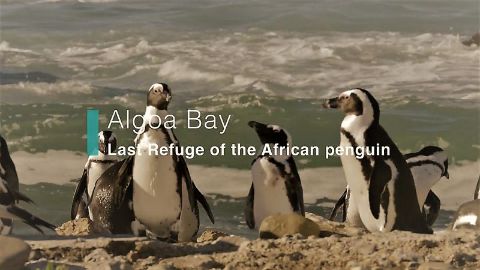
Algoa Bay: Last Refuge of the African Penguin

On the southern coast of Africa lies Algoa Bay--a protected refuge for the continent's only penguin species. Join them in their quest for survival as they brave unforgiving elements to build an unlikely marine community.

S1E4Coastal Africa • 2016 • Nature

Sense of Timing

In this episode, we examine how every animal has what could be called a sense of rhythm - the human-animal included. To give an obvious example, there's our internal body clock which responds to the so-called Circadian rhythm. That's the 24 hour night and day cycle.

S1E7Animal Super Senses • 2020 • Nature

Part 2

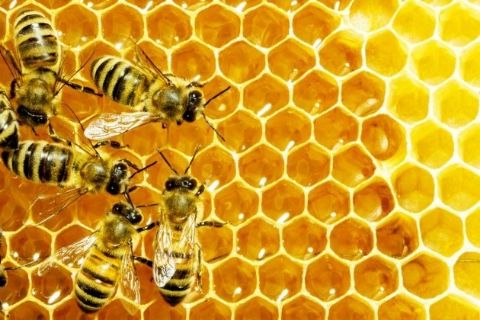
Chris and Martha discover which of our tagged bees have survived over the midsummer week - a frenetic nectar and pollen gathering period - and if they have collected enough food at this critical time to see them through the winter. With the help of Prof Adam Hart they will also explore the queen's remarkably deadly mating ritual and look at how bees can help us medically and how we can help them.

S1E2Hive Alive • 2014 • Nature