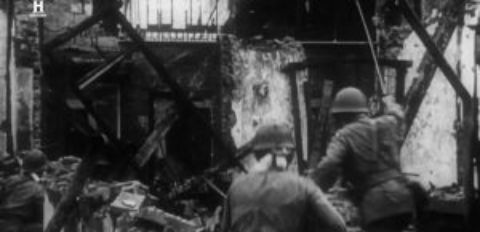
11th November 1918. The world emerges from the worst conflict ever known. While the victors build a new world order, traumatised peoples rebuild their lives. In the years to come, the major empires collapse while hatred and fear resurface, leading the world to a new apocalypse. Directed by: Isabelle Clarke, Daniel Costelle (France, 2018). Narration: Mathieu Kassovitz
Hope you're finding these documentaries fascinating and eye-opening. It's just me, working hard behind the scenes to bring you this enriching content.
Running and maintaining a website like this takes time and resources. That's why I'm reaching out to you. If you appreciate what I do and would like to support my efforts, would you consider "buying me a coffee"?
BTC: bc1q8ldskxh4x9qnddhcrgcun8rtvddeldm2a07r2v
ETH: 0x5CCAAA1afc5c5D814129d99277dDb5A979672116
With your donation through , you can show your appreciation and help me keep this project going. Every contribution, no matter how small, makes a significant impact. It goes directly towards covering server costs.
The tale of what's broadly considered China's most creative dynasty - the Song (960-1279). Michael Wood heads to the city of Kaifeng, the greatest city in the world before the 19th century.
S1E3 • The Story of China • 2016 • History
An aerial journey reveals how Egypt is modernizing while preserving its unique past.
S1E2 • Egypt from Above • 2019 • History
In late Victorian England, women began to organize to gain the right to vote. The fight for women's suffrage lasted well into the early 20th Century.
S2E2 • Butterfly Effect • 2017 • History
Archaeologist and historian Richard Miles looks at the winners, losers and survivors of the great Bronze Age collapse, a regional catastrophe that wiped out the hard-won achievements of civilisation in the eastern Mediterranean about 3,000 years ago. In the new age of iron, civilisation would re-emerge, tempered in the flames of conflict, tougher and more resilient than ever before.
S1E2 • Ancient Worlds • 2010 • History
In the second episode, Mary Beard explores the physical world of the Roman Empire, and finds surprising parallels with our own world.
S1E2 • Mary Beard's Ultimate Rome: Empire Without Limit • 2016 • History
In the subsequent 65 million years, mammals are part of Europe’s history. Sea mammals conquered the oceans while herds of herbivores crisscrossed the land. It was 600,000 years ago that Homo Heidelbergensis first began hunting. Seen from a geological perspective, human beings have been on the earth for only a few short moments, but within this brief time we have already fundamentally transformed the planet. Rivers have been straightened, forests cleared and roads laid down across the natural habitats of nearly all the earth’s animals.
S1E2 • 300 Million Years: Where Life Began • 2015 • History