Follow the adventures of the filmmakers behind "Big Pacific". This "Making Of" special explores the highlights and challenges of wildlife filmmaking.
Hope you're finding these documentaries fascinating and eye-opening. It's just me, working hard behind the scenes to bring you this enriching content.
Running and maintaining a website like this takes time and resources. That's why I'm reaching out to you. If you appreciate what I do and would like to support my efforts, would you consider "buying me a coffee"?
BTC: bc1q8ldskxh4x9qnddhcrgcun8rtvddeldm2a07r2v
ETH: 0x5CCAAA1afc5c5D814129d99277dDb5A979672116
With your donation through , you can show your appreciation and help me keep this project going. Every contribution, no matter how small, makes a significant impact. It goes directly towards covering server costs.
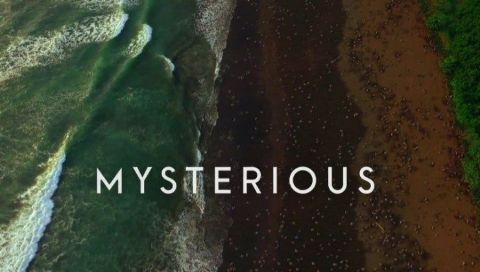
Man has explored land, the oceans surface, and large parts of the solar system, and in the 21st century we are just beginning to explore the depths of the Pacific Ocean. We yearn to unravel the mysterious Pacific but she does not give up her secrets willingly.
2017 • Nature
In the Pacific, the quest to multiply has spawned a stunning array of unusual behaviors and adaptations. There are forest penguins with a tenuous marriage, the secret rendezvous of great white sharks, and the tale of male pregnancy.
2017 • Nature
Follow the adventures of the filmmakers behind "Big Pacific". This "Making Of" special explores the highlights and challenges of wildlife filmmaking.
2017 • Nature
In the final film, he reflects on the dramatic impact that humankind has had on the natural world within his own lifetime. He tells the surprising and deeply personal story of the changes he has seen, of the pioneering conservationists with who he has worked - and of the global revolution in attitudes towards nature that has taken place within the last six decades. In a journey that takes him from the London Zoo to the jungles of Borneo, Attenborough reveals what inspired him to become a conservationist. He remembers classic encounters with mountain gorillas, blue whales and the giant tortoise, Lonesome George. These are all characters that have helped to change public attitudes to the natural world.
S1E3 • Attenborough: 60 Years in the Wild • 2012 • Nature
This episode continues the study of mammals, and particularly those whose young gestate inside their bodies. Attenborough asks why these have become so varied and tries to discover the common theme that links them. Examples of primitive mammals that are still alive today include the treeshrew, the desman and the star-nosed mole. Insect eaters vary enormously from the aardvark, giant anteater and pangolin to those to which much of this programme is devoted: the bats, of which there are nearly 1,000 different species. These took to flying at night, and its possible that they evolved from treeshrews that jumped from tree to tree, in much the same way as a flying squirrel.
10/13 • Life on Earth • 1979 • Nature
In this episode, Chris Packham tells the miraculous story of how plant life turned Earth from a barren rock into a vibrant green world. A four billion year saga of extraordinary highs and lows that almost wiped out all life on the planet. Four billion years ago Earth was predominantly a water world, lacking land masses, with plant life’s early ancestors trapped on the seabed. Everything changed when a giant asteroid bombardment smashed into the young planet’s crust triggering plate tectonics - Earth’s extraordinary land building force. As opportunities on land grew, plants faced an epic struggle to establish themselves in a world dominated by giant eight metre fungi, overcoming death and dehydration and eventually creating the life-giving substance that would allow them to prosper: soil. But just as they seemed set to triumph, evolving into the amazing biological machines that are trees, they became the victims of their own success. Giant swamp forests sprang up, locking up so much carbon dioxide, that global temperatures plummeted sending Earth into one of its most terrifying chapters yet.
S1E3 • Earth: One Planet, Many Lives • 2023 • Nature
New Zealand was one of the last land masses to be found and settled by people. Lush and fertile, almost everything brought here flourishes, often with surprising consequences. Told through the experiences of its native species - in particular, a charismatic and peculiar giant, flightless parrot - this is the moving story of the changing fortunes of New Zealand's wildlife since humans first arrived.
Part 3 • New Zealand: Earth's Mythical Islands • 2016 • Nature
This episode focuses on the Jurassic period, a time when the first giant killers stalked the Earth and lurked in the seas; a time when the slightest advantage meant the difference between life and death. In North America the iconic allosaurus, an ambush hunter with a lethal bite, dominated. Not even the heavily-armoured stegosaurus was safe from this killer, and incredible evidence reveals a glimpse of a vicious battle between these two giants. Life in Jurassic oceans was no easier; in 2008, a fossil was dug out of a frozen island high in the Arctic. It was a colossal marine reptile, twice as big as most ocean predators, at 15 metres long and weighing about 45 tonnes. This was Predator X. Its skull alone was nearly twice the size of a tyrannosaurus rex's, and its bite force unmatched by anything in the Jurassic seas. The balance of power between predator and prey is a fine one, as prey continually evolves different ways to avoid predators. But for the most successful and enduring predators, the battle to survive has always been tipped in their favour.
S1E4 • Planet Dinosaur • 2011 • Nature
At more than 1,200 miles, the Orange River is the longest in South Africa. Join as we trace its westward journey, bringing to its shores a diverse sample of African wildlife, large and small. From powerful swimming birds like the African darter, to flat lizards who inhabit the granite rocks of the mighty Augrabies Falls, it's the journey of life-bringing water passing through some of the continent's most diverse and dramatic landscapes.
S1E6 • Extreme Africa • 2017 • Nature