Berlin 1933: Diary of a Metropolis • 2023

Category: History | Torrent: | Subtitle:

Using extracts from individuals' diaries and some film records, this documentary series tells the story of the changes that occurred in Berlin (and Germany) during the pivotal year of 1933.

Make a donation

Buy a brother a hot coffee? Or a cold beer?

Hope you're finding these documentaries fascinating and eye-opening. It's just me, working hard behind the scenes to bring you this enriching content.

Running and maintaining a website like this takes time and resources. That's why I'm reaching out to you. If you appreciate what I do and would like to support my efforts, would you consider "buying me a coffee"?

Donation addresses

Buy Me a Coffee at ko-fi.com

patreon.com

BTC: bc1q8ldskxh4x9qnddhcrgcun8rtvddeldm2a07r2v

ETH: 0x5CCAAA1afc5c5D814129d99277dDb5A979672116

With your donation through , you can show your appreciation and help me keep this project going. Every contribution, no matter how small, makes a significant impact. It goes directly towards covering server costs.

You might also like

Mustafa Kemal-Ataturk

Rageh Omaar explains how the collapse of this Islamic super-power following the first World War left problems that still exist in Europe and the Middle East today. From its capital in Istanbul the Ottoman Empire matched the glories of Ancient Rome. Yet its achievements have been largely lost in the trauma of its last few years. Brutality, massacres and the carve-up of former Ottoman lands created a legacy of tension and conflict that continue to this day. The heartland of the former empire - modern day Turkey - turned its back on its Islamic, Ottoman past. It underwent a social revolution led by military commander and secular visionary Mustafa Kemal-Ataturk. So why is Ottomanism back on the political agenda? And why are many politicians in the West hoping that Turkey can provide a role model as a modern, Islamic democracy?

S1E3 • The Ottomans: Europe's Muslim Emperors • 2013 • History

Warriors

When Rome is sacked by barbarians, Europe enters a Dark Age. But from the fringes of the old empire, two new forces remake the world. The Arabs, funded by a gold rush, unite under the banner of Islam. The Vikings rejuvenate the cities of Europe, travel to America and become Christian knights. The stage is set for a clash of civilisations - the Crusades.

4/12 • Mankind: The Story of All of Us • 2012 • History

JFK Assassination

On November 22, 1963, John F. Kennedy was shot twice as he rode in an open-top limousine through Dallas, Texas. The assassination sent shockwaves across the world and begged the question: How could a United States president be murdered so easily? Now, thanks to new research, firsthand accounts, and unpublished CIA files, we uncover ten crucial errors—from ignored threats to intelligence breakdowns to major security failings—any one of which, if avoided, could have saved JFK's life…and changed history.

S1E2 • Ten Steps to Disaster • 2021 • History

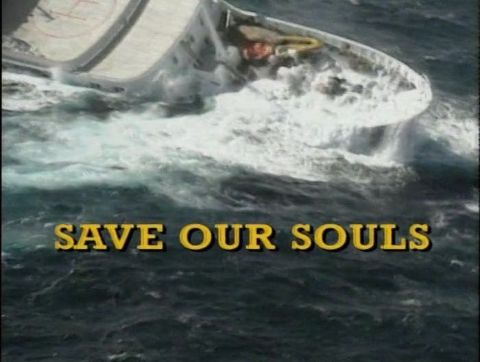
Save Our Souls

Dramatic Sea Rescues Some of the Twentieth Century's most famous examples, with emphasis on how the rescue services have operated in the most appalling conditions. When the "unsinkable" Titanic struck an iceberg on her maiden voyage, she went down long before rescue ships could reach her. Those who survived owed their lives to the brave, self-sacrificing efforts of some of the crew and passengers on board. Shipbuilding, sea communications and rescue capabilities have advanced since then, but as the ill-fated voyages of the Morro Castle, Andrea Doria, Estonia and others show, disaster can strike at any time. And when it does, heroic efforts often mean the difference between survival...and a watery grave. Disasters at sea can be due to war, negligence or more often the force of nature. The twentieth century is littered with examples of sea disasters, from the negligence that sunk the unsinkable Titanic on her maiden voyage, to the tragedies of war and the weather. However, if the cause of the disaster was bad weather, the rescue services then have the most difficult task of responding to the SOS in the most appalling conditions.

19/20 • The True Action Adventures of the Twentieth Century • 1996 • History

Spies in Space

Just two years ago, the National Reconnaissance Office (NRO) declassified a top-secret 1960s program to put a manned spy platform into orbit. While Apollo got all the attention and the glory in its race to the Moon, the men and women behind MOL worked in the shadows to give America the eyes and ears it needed. After 50 years of secrecy, Spies in Space will be the first television program to weave together rarely seen footage from America's secret spy satellite systems.

S1E2 • Atomic Age Declassified • 2018 • History

The Worlds Biggest Murder Trial: Nuremberg

On the 19 November 1945, the International Military Tribunal was opened in the Palace of Justice in Nuremberg, Germany. The city, which had seen the rise of the Nazi Party was, in the eyes of the allies, the perfect location to host its demise. The first of the Nuremberg trials was to be the biggest murder trial in human history, with 21 Nazi leaders appearing before the court charged with the deaths of millions of innocent people during the Holocaust of WWII. These were no ordinary criminals; they represented the very foundation of Nazi ideology that had instigated the most ferocious genocide the world had ever seen. With judges and prosecutors from the US, the UK, the USSR and France, the trials were the allies' collective condemnation of Nazi Germany and the atrocities committed in pursuit of their ideology. The decisions made at Nuremberg had implications not only for the accused, but for the very foundation of modern international criminal law. Now, 75 years on, audiences are provided with an immersive look at the event that has become synonymous with the birth of contemporary human rights in the 2020 documentary, The World’s Biggest Murder Trial: Nuremberg. This feature-length documentary provides a detailed account of the events and implications of the trials, featuring more than 1000 archive clips, including recently digitised film footage from the courtroom itself. Whilst 90 minutes seems incredibly brief considering the enormity of the trials, the documentary's constant and unwavering focus on the courtroom, and the horrors it uncovered, suggest any longer might be too harrowing to bear. It is a decision that serves to amplify the inhumanity of the accusations, the apparent indifference of the accused, and the desperate desire for justice in the aftermath of such a dehumanising period of history. The sheer enormity of the task that faced the judges and prosecutors is evident from the moment each of the accused ascends from deep beneath the palace and enters the dock. Convicting a single alleged murderer is one thing, but a murder trial with an estimated 12 million victims is a an almost incomprehensible undertaking, even in a modern context. The cinematic quality of the footage captures every moment in extraordinary detail, from the disturbing cold-bloodedness of the Third Reich leaders as they openly snigger at translation errors throughout the trial, to the accounts of survivors, who witnessed the terror of their actions first hand. With the benefit of hindsight, their crimes seem indisputable; however the documentary proves that there is no conviction without proof, and the trials themselves were not without controversy. The convictions were based on concepts barely understood, laws not yet formalised, and many believed the process served as a political judgement rather than a transformative moment in international law. Despite the criticisms surrounding them, there is no denying that the greatest legacy of the trials is the role they played in reiterating the need for an international body focused on the protection of the human person. Though the majority of Nazis never received a punishment that reflected the extent of their crime, Nuremberg will forever be remembered as the moment that much of the world heard of the atrocities of the Holocaust for the first time.

2020 • History