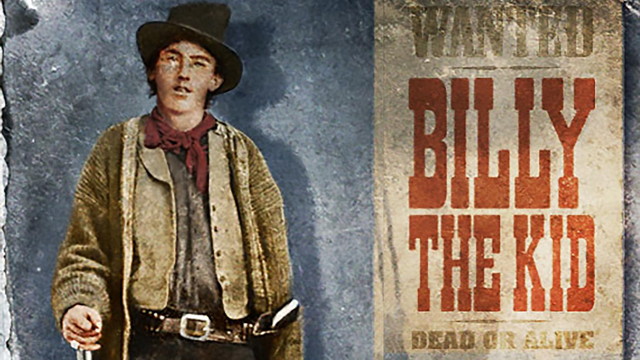
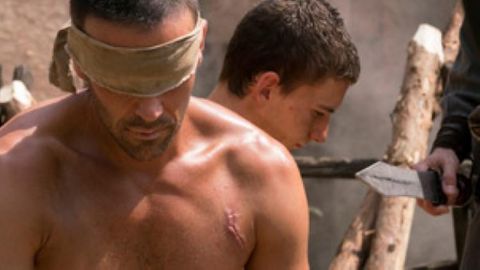
This PBS American Experience documentary chronicles the life of Billy the Kid, the infamous outlaw who became a legend of the Wild West. Through rare photographs, expert interviews, and dramatic reenactments, it explores his rise from a troubled youth to a folk hero pursued by lawmen across New Mexico. The film examines how myth and reality blurred around Billy the Kid, turning him into an enduring symbol of the American frontier.
Hope you're finding these documentaries fascinating and eye-opening. It's just me, working hard behind the scenes to bring you this enriching content.
Running and maintaining a website like this takes time and resources. That's why I'm reaching out to you. If you appreciate what I do and would like to support my efforts, would you consider "buying me a coffee"?
BTC: bc1q8ldskxh4x9qnddhcrgcun8rtvddeldm2a07r2v
ETH: 0x5CCAAA1afc5c5D814129d99277dDb5A979672116
With your donation through , you can show your appreciation and help me keep this project going. Every contribution, no matter how small, makes a significant impact. It goes directly towards covering server costs.
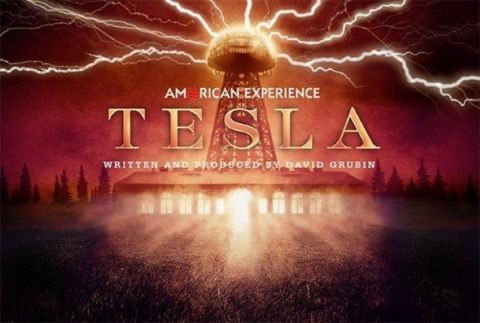
Meet Nikola Tesla, the genius engineer and tireless inventor whose technology revolutionized the electrical age of the 20th century. Although eclipsed in fame by Edison and Marconi, it was Tesla's vision that paved the way for today's wireless world. His fertile but undisciplined imagination was the source of his genius but also his downfall, as the image of Tesla as a "mad scientist" came to overshadow his reputation as a brilliant innovator.
2016 • Physics
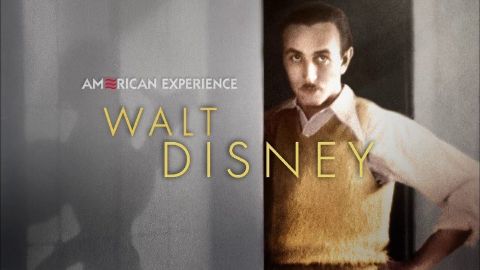
Uniquely adept at art as well as commerce, Walt Disney was a master filmmaker who harnessed the power of technology to tell stories of outsiders struggling for acceptance and belonging, while questioning the conventions of class and authority. As Disney rose to prominence and gained financial security, his work became increasingly celebratory of the American way of life that made his unlikely success possible. A polarizing figure - though true believers vastly outnumber his critics - Disney's achievements are indisputable. In this two-part, four-hour film, AMERICAN EXPERIENCE examines Disney's complex life and continuing legacy, featuring rare archival footage from the Disney vaults, interviews with biographers and historians, as well as the animators and designers who helped turn his dreams into reality. Both an inspiring story and a cautionary tale about the price of ambition, Walt Disney offers an unprecedented look at the man who created a world and built an empire.
2015 • People
Celebrate the 50th anniversary of the concert that became a touchstone for a generation. This film brings the three-day concert to life through the voices of those who were present at what became the defining moment of the counterculture revolution. In August, 1969, half a million people from all walks of life and every corner of the country converged on a small dairy farm in upstate New York. They came to hear the concert of their lives, but most experienced something far more profound.
2019 • Music
In this edition of the critically acclaimed "American Experience" series, Oscar-nominated filmmaker Barak Goodman reopens the investigation into the infamous My Lai massacre, a Vietnam War-era atrocity that killed more than 300 unarmed civilians. Complemented by 400 hours of newly discovered audio recordings that shed light on what happened on the ground, Goodman's Emmy-nominated film includes first-person accounts from the participants and other eyewitnesses.
2010 • History
By the close of the Industrial Revolution, the American food supply was tainted with frauds, fakes and legions of new and untested chemicals, dangerously threatening the health of consumers. Based on the book by Deborah Blum, The Poison Squad tells the story of government chemist Dr. Harvey Wiley who, determined to banish these dangerous substances from dinner tables, took on the powerful food manufacturers and their allies. Wiley embarked upon a series of bold and controversial trials on 12 human subjects who would become known as the “Poison Squad.” Following Wiley’s unusual experiments and tireless advocacy, the film charts the path of the forgotten man who laid the groundwork for U.S. consumer protection laws, and ultimately the creation of the FDA.
2020 • Health
This PBS American Experience documentary chronicles the life of Billy the Kid, the infamous outlaw who became a legend of the Wild West. Through rare photographs, expert interviews, and dramatic reenactments, it explores his rise from a troubled youth to a folk hero pursued by lawmen across New Mexico. The film examines how myth and reality blurred around Billy the Kid, turning him into an enduring symbol of the American frontier.
2012 • History
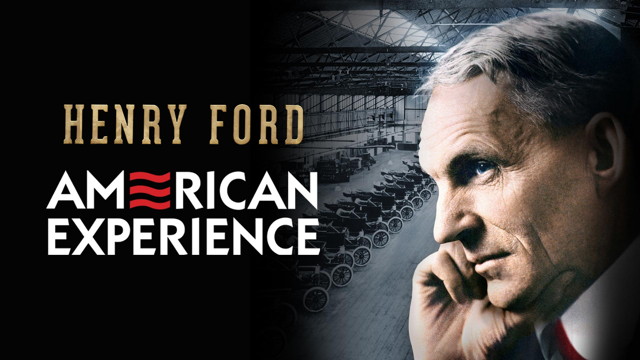
This PBS American Experience documentary tells the dramatic story of Henry Ford, the brilliant and controversial industrialist who transformed America. From revolutionizing manufacturing with the assembly line to creating the affordable Model T, Ford reshaped the way people lived and worked. The film also delves into his complex personality, his fierce anti-union stance, and the contradictions between his visionary innovations and his troubling social views.
2013 • Technology
Bettany Hughes' series profiling the most celebrated thinkers of the Ancient world continues as she turns her attention to Socrates. Heading to Greece, she details how the Athenian philosopher secured a reputation as an influential maverick. She also highlights how his contributions as one of the founders of Western philosophy did not please his detractors, as his outspoken defence of his beliefs ultimately led to his execution.
Part 2 • Genius of the Ancient World • 2015 • History
Actor Clive Standon travels across Europe with Viking experts to discover how the Vikings were able to invade England and France. In Rise of the Pagans,Vikings actors Clive Standen and Maude Hirst travel to Scandinavia to explore the pagan beliefs and warrior culture of the Vikings-and dispel myths about their violent society.
S1E1 • Real Vikings • 2016 • History
The Ukrainian government says that thousands of children have been taken unlawfully to Russia since the start of the war. The International Criminal Court has issued a warrant for President Putin's arrest. Now, Panorama investigates what happened to more than 40 children taken by Russian forces from a children's home in Kherson. The film-makers, working with journalists in Ukraine, uncover birth certificates, a secret adoption and a trail of evidence leading all the way to the Russian parliament.
2023 • History
The story of Hitler's lightning invasion of France and its rapid collapse, of the evacuation from Dunkirk, and of the summer of 1940 when Britain fought on alone. In new digital colour, this episode shows the Battle of Britain and the Blitz.
S1E2 • Apocalypse: The Second World War • 2009 • History
Five thousand years ago man first throws a handful of rocks into a campfire and stumbles upon a discovery that changes the world: Metal. Copper, Tin and Bronze empower the ancient world and allow empires to expand, armed with sharp, hard-wearing weapons.
8/12 • Mankind Decoded • 2013 • History
The little-known story of the American effort to relieve starvation in the new Soviet Russia in 1921, The Great Famine is a documentary about the worst natural disaster in Europe since the Black Plague in the Middle Ages. Five million Russians died. Half a world away, Americans responded with a massive two-year relief campaign, championed by Herbert Hoover, director of the American Relief Administration known as the ARA. In July of 1921, Herbert Hoover, received a plea for international aid by Russian novelist Maxim Gorky. "Gloomy days have come for the country of Tolstoy, Dostoyevsky, Mendeleyev," Gorky warned. He made a similar request to other Western nations, but it was Hoover who responded immediately with a promise of support. The first American relief ships arrived in Petrograd in September 1921, as the embers of the 1917 Russian revolution still smoldered. American relief workers were among the first outsiders to break through Russia's isolation and to witness and record the impact of the Bolshevik Revolution. They would be tested by a railroad system in disarray, a forbidding climate, a ruthless government suspicious of their motives, and the enormous scale of death and starvation. The initial plan called for feeding one million children by delivering bread, rice, grits, sugar, corn and milk to the most hard hit regions. Almost immediately, Hoover encountered formidable obstacles. Vladimir Lenin's new communist government was skeptical of American aid and sabotaged the relief effort by planting spies in local American Relief Administration offices. When trains stuck on the tracks prevented food from being transported, Russian officials were uncooperative, resulting in delays that contributed to an estimated 50,000 deaths. New estimates in the fall of 1921 revealed that at least 16 million Russians would be impacted by the famine. Hoover's initial plan to feed just the children would not be sufficient. That winter, cannibalism became widespread across Russia as the people continued to starve. In the U.S., Hoover managed to double the project's funding, arguing that by providing food famine relief, Americans could demonstrate the strength, kindness and efficiency of American society to a Communist culture. After a spring thaw, hundreds of American relief workers — nicknamed "Hoover's boys" — were finally able to deliver food. In August 1922, a full five months after the initial shipments of corn were sent to Russia, American Relief Administration officials were still feeding almost 11 million Soviet citizens each day in 19,000 kitchens. By the end of the famine that fall, five million Russians had starved to death, but the toll would have been significantly higher without Hoover's unprecedented humanitarian commitment. Known as "the Great Humanitarian" for his relief work during and after World War I, Hoover is said to have saved more lives than any person in history. "Lenin's government never recognized America's humanitarian motives," says producer Austin Hoyt (George H. W. Bush, Victory in the Pacific, Reagan). The Soviets always saw the relief workers as exploiters and spies." The Cheka, Lenin's secret police, kept a watchful eye on the Americans and especially on the 120,000 Russians the ARA hired to do the work. White Russians and aristocrats, the losers in Russia's brutal civil war, were hired because they were educated. The Bolsheviks feared the ARA was training them as counter-revolutionaries. The tensions the Americans experienced in the early 1920s would come to dominate U.S. Soviet relations for much of the century.
2011 • History