In pop culture, pirates are often depicted as booty-looting rogues, but their history is far more complicated. See how they became enemies of humanity.
Hope you're finding these documentaries fascinating and eye-opening. It's just me, working hard behind the scenes to bring you this enriching content.
Running and maintaining a website like this takes time and resources. That's why I'm reaching out to you. If you appreciate what I do and would like to support my efforts, would you consider "buying me a coffee"?
BTC: bc1q8ldskxh4x9qnddhcrgcun8rtvddeldm2a07r2v
ETH: 0x5CCAAA1afc5c5D814129d99277dDb5A979672116
With your donation through , you can show your appreciation and help me keep this project going. Every contribution, no matter how small, makes a significant impact. It goes directly towards covering server costs.
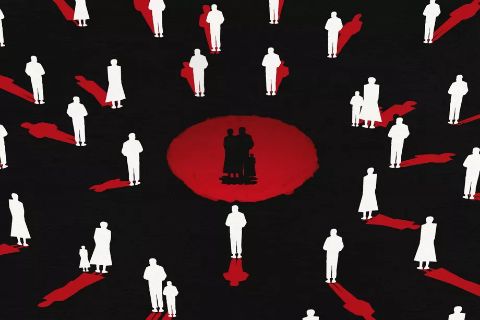
Cory Booker and others discuss how slavery, housing discrimination and centuries of inequality have compounded to create a racial wealth gap.
2018 • Economics
Scientific feat or terrifying social experiment? Specialists in the field discuss the high stakes and ethical controversies of gene editing.
2018 • Technology
Cryptocurrency has made people billionaires, but is digital cash the next revolution? Learn about this anonymous currency and why it's so coveted.
2018 • Economics
Explained examines why diets are often unsuccessful. It looks at the science that suggests that low carb, low fat, and body type diets as well as supplements and detoxification regimes simple do not work in helping most people lose weight. While the diet industry pushes us to avoid calories the food industry encourage us to eat more of them.
2018 • Health
Does the stock market accurately reflect the status of the economy? Finance specialists discuss market history, valuations and CEO incentives.
2018 • Economics
The term eSports is short for "electronic sports". It is introduced to describe competitive video gaming. What's competitive video gaming? It's basically just people playing video games in some form of competition.
2018 • Technology
Explained examines the possibility of extraterrestrial life and looks at why we have not yet found evidence for its existence despite efforts to look for it. It considers the Fermi paradox which suggests that given the vastness of the universe that there should be a great deal of extraterrestrial life in our galaxy. It also consider conspiracy theories about U.F.O.
2018 • Astronomy
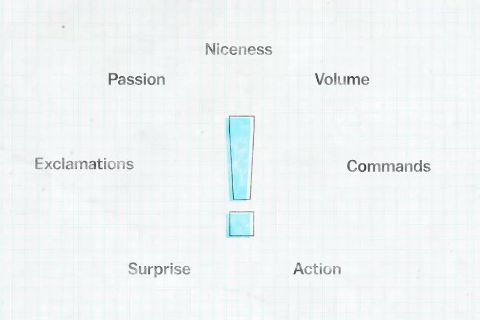
The story of the exclamation point. How it came to be and are we overusing it today?
2018 • Design
Explained looks at the popular English sport of cricket. First developed in the mid-1800s, cricket has grown into one of the most popular sports in the world. It looks at the complicated and confusing rules behind the game and examines how the British Empire exported the game to its colonies including the West Indies and India. It also looks at different forms of the game including test cricket and Twenty20 cricket.
2018 • People
Scientists are working to understand and even slow the aging process.
2018 • Health
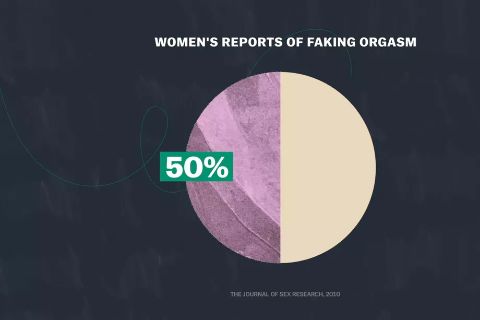
The female orgasm is more elusive when a man is involved. Discover the reasons why -- and how women are embracing hands-on solutions.
2018 • Health
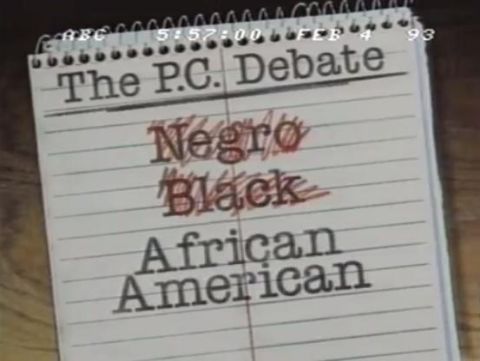
Political correctness can sometimes feel like a tug-of-war between inclusivity and free speech. Experts discuss the concepts behind the fraught term.
2018 • People
Hillary Clinton and Anne-Marie Slaughter discuss the cultural norms at the center of the worldwide gender pay gap, including the "motherhood penalty"
2018 • Economics
The global water crisis is at an inflection point. How do we price our most valuable resource, while also ensuring access to it as a human right?
2018 • Environment
There are more billionaires than ever. But how does this vast accumulation of wealth affect the world?
2019 • Economics
What goes on inside an animal's mind? Figuring out how they think and feel might just be the key to understanding our own place in the world.
2019 • Nature
It began with bloomers. Then came spandex. Now we sport leggings and other activewear everywhere. How did comfy, casual clothing go mainstream?
2019 • Lifehack
Computer code now controls how we live. But how did these programming languages evolve? And how can they be used to build a new and better world?
2019 • Technology
(This episode is from before the outbreak of Covid-19 pandemic) - In this episode from 2019, experts including Bill Gates discuss the history of pandemics, how they spread and what could be done to contain them.
2019 • Health
The planet's current rate of meat consumption is unprecedented -- and becoming unsustainable. In the future, will meat alternatives be the answer?
2019 • Health
Oil led to huge advancements - and vast inequities. As the planet warms, why is it so hard to turn away from fossil fuels, and can it be done in time?
2021 • Environment
As the planet warms, hurricanes could become even more dangerous and destructive. What can be done to survive and minimize the threat of these storms?
2021 • Nature
The Instagram face. A shapely posterior. Cosmetic surgery can make the latest beauty trends a reality. Explore its origins and effects, inside and out.
2021 • Health
From the waltz to voguing, dance crazes have connected people throughout history. But when a dance catches on, who gets the credit - and compensation?
2021 • Music
Dirt roads. Pickup trucks. Hip-hop? As the borders around country music shift, who decides what defines the popular genre, and who gets to be a star?
2021 • Music
Fairy tales have survived thousands of years for a reason. Explore their far-flung history and how the stories speak to fundamental human concerns.
2021 • Creativity
Henry Louis Gates, Jr. explores the impact of the Atlantic trading world, giving rise to powerful new kingdoms, but also transatlantic slave trade. Learn of the revolutionary movements of the 18th & early 19th centuries, including the advent of the Sokoto Caliphate. In the final part Henry Louis Gates, Jr. explores the dynamism of 19th century Africa, the “Scramble” by European powers for its riches, and the defiant and successful stand of uncolonized Ethiopia.
Part 5 and 6 • Africa's Great Civilizations • 2017 • History
Deciphering the meaning of strange symbols in Egyptian art gives insight into ancient knowledge of sacred cosmology. A new way of interpreting hieroglyphics is presented, indicating that the ancients had sophisticated understanding of physics, biology and celestial mechanics. The team goes on an expedition into the open desert in search of a remote site of extreme antiquity called nabta playa. Here, Neolithic stone circles were found marking the motion of the same stars as were tracked in pharonic civilization. The possible connection is discussed.
S1E3 • The Pyramid Code • 2010 • History
In late Victorian England, women began to organize to gain the right to vote. The fight for women's suffrage lasted well into the early 20th Century.
S2E2 • Butterfly Effect • 2017 • History
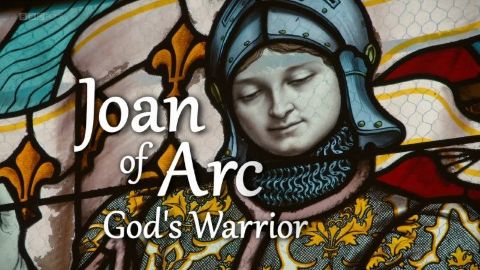
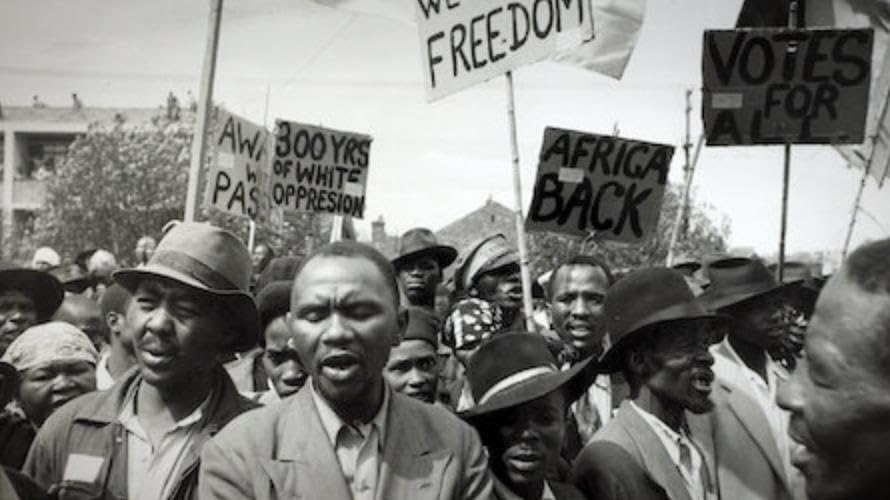
Dr Helen Castor explores the life - and death - of Joan of Arc. Joan was an extraordinary figure - a female warrior in an age that believed women couldn't fight, let alone lead an army. But Joan was driven by faith, and today more than ever we are acutely aware of the power of faith to drive actions for good or ill. Since her death, Joan has become an icon for almost everyone - the left and the right, Catholics and Protestants, traditionalists and feminists. But where in all of this is the real Joan - the experiences of a teenage peasant girl who achieved the seemingly impossible? Through an astonishing manuscript, we can hear Joan's own words at her trial, and as Helen unpicks Joan's story and places her back in the world that she inhabited, the real human Joan emerges.

2015 • History
13th Century: After a unique triumph, Islam became the religion of many peoples - from Spain to Indonesia. But there was no Islamic empire, just as there was no Christian empire. Middle Ages meant: small states, wars of princes and tribes against each other. This episode covers the spreading of Islamic and Arabic culture, which was based on the use of military slaves: children of non-Muslim Turkic peoples were trained to become Islamic elite warriors. Their military triumph not only spread war and the new faith, but also advanced culture: medicine, art, architecture, astronomy - a unique blossoming of knowledge, culture and intellectual freedom penetrated as far as Spain. The real threat to Allah's earthly kingdom came not from Europe, but from the steppes of Asia. The Mongols attacked their enemies ruthlessly, devastatingly and invincible. In 1258 AD, Baghdad, the center of Islamic civilization, fell into their hands. Military conflict accompanied the spread of Islam during the Middle Ages. This program reveals the ironies of that union between war and faith: how Islam was adopted rather than marginalized by invading Mongols; how the rise of strict Islamic orthodoxy countered the scholarly advances of Arabic culture, weakening the empire; and how European appreciation of Islamic culture grew after the Christian 'Reconquista' of the Iberian peninsula. Interviews with respected scholars—including Drs. Raif Georges Khoury of the University of Heidelberg and Patrick Franke of Martin Luther University, Halle-Wittenberg—illuminate key developments in Islam's Mediterranean dominance.
S1E3 • The Holy Wars: War and Religion • 2004 • History
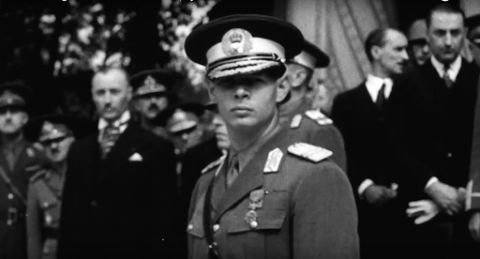
This is one of the last and greatest untold stories of the Second World War, revealed by the last surviving Chief of State, King Michael I of Romania. “We took the train to Berlin to see the other side of the coin and we had lunch with Hitler. It wasn’t an enjoyable meeting.” It is the story of a King’s decision who, in a critical moment of the Second World War, relinquished Germany’s support, guiding Romania towards the Allies, thus bringing about a quicker end to the war. It is a story of palatial intrigues. And a story of deceptions. From Buckingham Palace to Bucharest. From Moscow to Washington. Lost diplomatic signals, aristocrat spies and blackmail at gun point. And the courage of a young king who dared. Romania, at the outbreak of the Second World War, was a very young nation, with an age of only 20 years.
2017 • History