The Instagram face. A shapely posterior. Cosmetic surgery can make the latest beauty trends a reality. Explore its origins and effects, inside and out.
Hope you're finding these documentaries fascinating and eye-opening. It's just me, working hard behind the scenes to bring you this enriching content.
Running and maintaining a website like this takes time and resources. That's why I'm reaching out to you. If you appreciate what I do and would like to support my efforts, would you consider "buying me a coffee"?
BTC: bc1q8ldskxh4x9qnddhcrgcun8rtvddeldm2a07r2v
ETH: 0x5CCAAA1afc5c5D814129d99277dDb5A979672116
With your donation through , you can show your appreciation and help me keep this project going. Every contribution, no matter how small, makes a significant impact. It goes directly towards covering server costs.
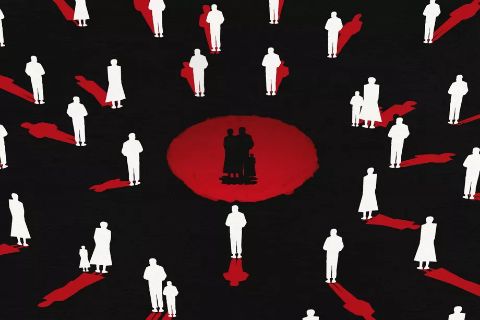
Cory Booker and others discuss how slavery, housing discrimination and centuries of inequality have compounded to create a racial wealth gap.
2018 • Economics
Scientific feat or terrifying social experiment? Specialists in the field discuss the high stakes and ethical controversies of gene editing.
2018 • Technology
Cryptocurrency has made people billionaires, but is digital cash the next revolution? Learn about this anonymous currency and why it's so coveted.
2018 • Economics
Explained examines why diets are often unsuccessful. It looks at the science that suggests that low carb, low fat, and body type diets as well as supplements and detoxification regimes simple do not work in helping most people lose weight. While the diet industry pushes us to avoid calories the food industry encourage us to eat more of them.
2018 • Health
Does the stock market accurately reflect the status of the economy? Finance specialists discuss market history, valuations and CEO incentives.
2018 • Economics
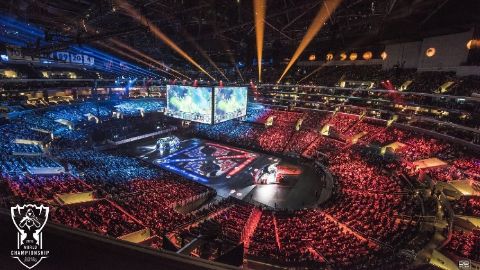
The term eSports is short for "electronic sports". It is introduced to describe competitive video gaming. What's competitive video gaming? It's basically just people playing video games in some form of competition.
2018 • Technology
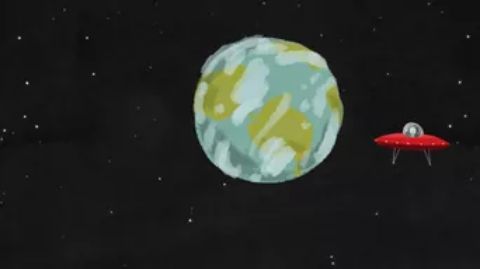
Explained examines the possibility of extraterrestrial life and looks at why we have not yet found evidence for its existence despite efforts to look for it. It considers the Fermi paradox which suggests that given the vastness of the universe that there should be a great deal of extraterrestrial life in our galaxy. It also consider conspiracy theories about U.F.O.
2018 • Astronomy
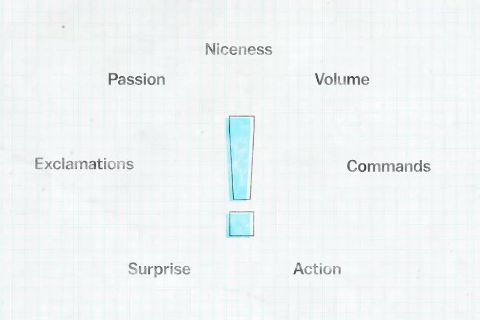
The story of the exclamation point. How it came to be and are we overusing it today?
2018 • Design
Explained looks at the popular English sport of cricket. First developed in the mid-1800s, cricket has grown into one of the most popular sports in the world. It looks at the complicated and confusing rules behind the game and examines how the British Empire exported the game to its colonies including the West Indies and India. It also looks at different forms of the game including test cricket and Twenty20 cricket.
2018 • People
Scientists are working to understand and even slow the aging process.
2018 • Health
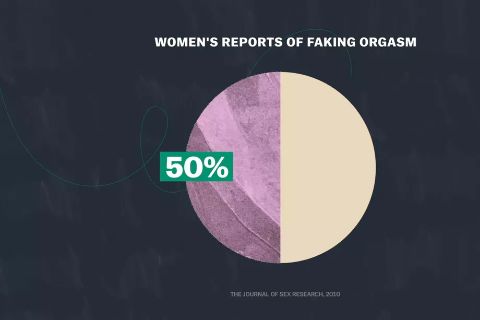
The female orgasm is more elusive when a man is involved. Discover the reasons why -- and how women are embracing hands-on solutions.
2018 • Health
Political correctness can sometimes feel like a tug-of-war between inclusivity and free speech. Experts discuss the concepts behind the fraught term.
2018 • People
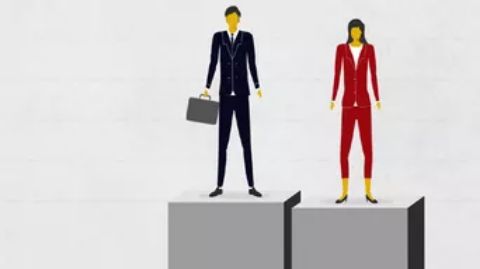
Hillary Clinton and Anne-Marie Slaughter discuss the cultural norms at the center of the worldwide gender pay gap, including the "motherhood penalty"
2018 • Economics
The global water crisis is at an inflection point. How do we price our most valuable resource, while also ensuring access to it as a human right?
2018 • Environment
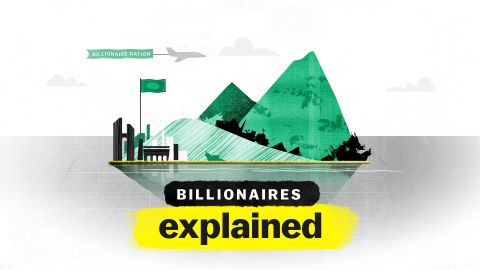
There are more billionaires than ever. But how does this vast accumulation of wealth affect the world?
2019 • Economics
What goes on inside an animal's mind? Figuring out how they think and feel might just be the key to understanding our own place in the world.
2019 • Nature
It began with bloomers. Then came spandex. Now we sport leggings and other activewear everywhere. How did comfy, casual clothing go mainstream?
2019 • Lifehack
Computer code now controls how we live. But how did these programming languages evolve? And how can they be used to build a new and better world?
2019 • Technology
(This episode is from before the outbreak of Covid-19 pandemic) - In this episode from 2019, experts including Bill Gates discuss the history of pandemics, how they spread and what could be done to contain them.
2019 • Health
The planet's current rate of meat consumption is unprecedented -- and becoming unsustainable. In the future, will meat alternatives be the answer?
2019 • Health
Oil led to huge advancements - and vast inequities. As the planet warms, why is it so hard to turn away from fossil fuels, and can it be done in time?
2021 • Environment
As the planet warms, hurricanes could become even more dangerous and destructive. What can be done to survive and minimize the threat of these storms?
2021 • Nature
The Instagram face. A shapely posterior. Cosmetic surgery can make the latest beauty trends a reality. Explore its origins and effects, inside and out.
2021 • Health
From the waltz to voguing, dance crazes have connected people throughout history. But when a dance catches on, who gets the credit - and compensation?
2021 • Music
Dirt roads. Pickup trucks. Hip-hop? As the borders around country music shift, who decides what defines the popular genre, and who gets to be a star?
2021 • Music
Fairy tales have survived thousands of years for a reason. Explore their far-flung history and how the stories speak to fundamental human concerns.
2021 • Creativity
Dive into the world of an ice climber, a bus driver, a woman in labor and a senior dance club to show how the human heart and the circulatory system power our physical and emotional lives and create the pulsing rhythm of our world.
S1E2 • Human: The World Within • 2021 • Health
By the middle of January many people struggle to keep up their resolutions to be more active. The result is that the UK wastes nearly £600 million a year on unused gym memberships. But new science has the answers. Medical journalist Michael Mosley teams up with scientists whose latest research is turning common knowledge about fitness on its head. They reveal why 10,000 steps is just a marketing ploy and that two minutes of exercise is all a person needs each week. They discover how to get people to stick to their fitness plans and what exercise can actually make everyone more intelligent. Whether it is for couch potatoes who hate the thought of exercise, someone too busy to consider the gym, or even for fitness fanatics who are desperate to do more - science can help everyone exercise better.
2020 • Health
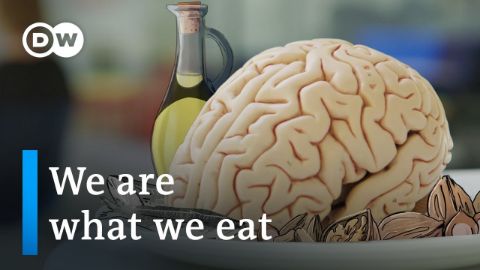
Chocolate reduces stress. Fish stimulates the brain. Is there any truth to such popular beliefs? The findings of researchers around the world say yes: It appears we really are what we eat. A study in a British prison found that inmates who took vitamin supplements were less prone to violent behavior. And in Germany, a psychologist at the University of Lübeck has shown that social behavior is influenced by the ingredients consumed at breakfast. But what really happens in the brain when we opt for honey instead of jam, and fish rather than sausage? Scientists around the world are trying to find out. Neuro-nutrition is the name of an interdisciplinary research field that investigates the impact of nutrition on brain health. Experiments on rats and flies offer new insight into the effects of our eating habits. When laboratory rats are fed a diet of junk food, the result is not just obesity. The menu also has a direct influence on their memory performance. The role of the intestinal flora has been known for some time, but scientists are currently discovering other relationships. So-called "brain food" for example: The Mediterranean diet that’s based on vegetables and fish is said to provide the best nutrition for small grey cells. Omega-3 fatty acids, which are found in fish, for example, protect the nerve cells and are indispensable for the development of the brain - because the brain is also what it eats!


2020 • Health
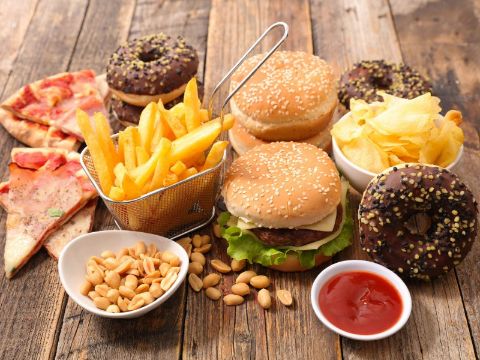
Cheap, quick and tasty, fast food became a culinary craze in the 1950s. But has our quest for convenience created an irreversible health crisis?
S1E1 • History 101 • 2020 • Health
Renegade researchers are fighting the medical establishment by exploring a controversial cure for our vices: psychedelic drugs.
S2E1 • Breakthrough National Geographic • 2017 • Health
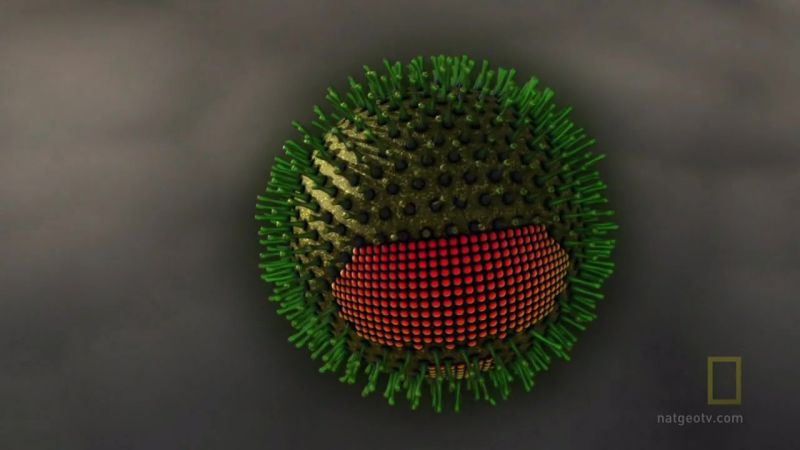
On the front lines of the hunt for killer viruses, a shocking discovery is made: viruses, once thought to be a menace to humankind, may in fact be the ultimate creators. Since the beginning of time, they have played a critical role in evolution, shaping us and perhaps even creating us. How could that be? How can an entity seemingly programmed for destruction lead to genetic diversity and new species? To many people, viruses are simply agents for disease, but to Dr. Luis Villarreal, Director of the Center for Virus Research at the University of California Irvine, they may possess far greater power than originally thought. He guides us through evidence that viruses gave rise to the first complex cells, played a role in the diversification of life, changed how our young are born, drove evolution, and perhaps gave us emotions. One expert even suggests that an ancient virus could have entered our genes and rewired us for monogamy. National Geographic investigates a provocative new theory that suggests that all life - including humans - is descended from viruses. Taking us through African jungles in search for new strains, this episode of Explorer presents a startling new view of viruses - toward what may be a remarkable evolutionary moment: the rise of a new human species.
2008 • Health