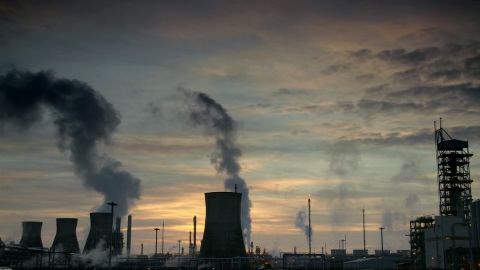
Follows the first 48 hours following the explosion at the nuclear power plant, charting the safety test that led to the disaster, the heroic efforts to prevent a second even worse explosion, and the evacuation of 50,000 people from the nearby city of Pripyat. Featuring contributions from first-hand witnesses, including the chief operator and medical personnel, historians and professors of radiochemistry.
Hope you're finding these documentaries fascinating and eye-opening. It's just me, working hard behind the scenes to bring you this enriching content.
Running and maintaining a website like this takes time and resources. That's why I'm reaching out to you. If you appreciate what I do and would like to support my efforts, would you consider "buying me a coffee"?
BTC: bc1q8ldskxh4x9qnddhcrgcun8rtvddeldm2a07r2v
ETH: 0x5CCAAA1afc5c5D814129d99277dDb5A979672116
With your donation through , you can show your appreciation and help me keep this project going. Every contribution, no matter how small, makes a significant impact. It goes directly towards covering server costs.
Documentary about how humans exploit the sea's riches with great ingenuity and bravery.
S1E1 • Human Planet • Environment
What would happen if, tomorrow, every single person on Earth simply disappeared? Not dead, simply gone, just like that. A world without people, where city streets are still populated by cars, but no drivers. A world where there is no one to fix bridges or repair broken windows…
2008 • Environment
Ice may be nothing more than frozen water but, as Iain explains, it holds extraordinary power. Descending 150m down a frozen waterfall, he sees a glacier in action from below and discovers why the huge Jacobshaven glacier is retreating, he shows how it shaped our past and may now threaten our future.
Earthquakes have always been a terrifying phenomenon, and they’ve become more deadly as our cities have grown — with collapsing buildings posing one of the largest risks. But why do buildings collapse in an earthquake? And how can it be prevented? Vicki V. May explains the physics of why it is not the sturdiest buildings, but the smartest, that will remain standing.
Graham visits ancient mounds in North America and wonders if they contain astronomical significance — or even warnings of an apocalyptic climate event.
S1E6 • Ancient Apocalypse • 2022 • Environment
From the global perspective of space, this 2-hour special reveals the breathtaking extent of our influence, revealing how we’ve transformed our planet and produced an interconnected world of extraordinary complexity. A journey through 12,000 years, Humanity from Space shows how seemingly small flashes of innovation have changed the course of civilization; innovations that touch all of us today in ways unimaginable to our ancestors. And we’ll gaze into the future at the new challenges we’ll face in order to survive as our global population soars because of our success. In every case we’ll look at our progression in a unique and surprising way, revealing unforgettable facts and "who knew?" connections. To visualize these stories cutting-edge technology is used to turn raw data into authentic moving images, building on expertise from a previous (and highly-praised) project; "Earth From Space." Using this technique, we can map humanity’s behavior in stunning, never seen before detail, revealing how our civilization grew, how it works today and what the future might hold.
2015 • Environment