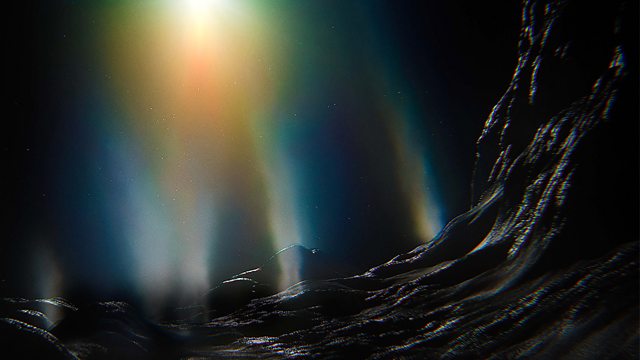
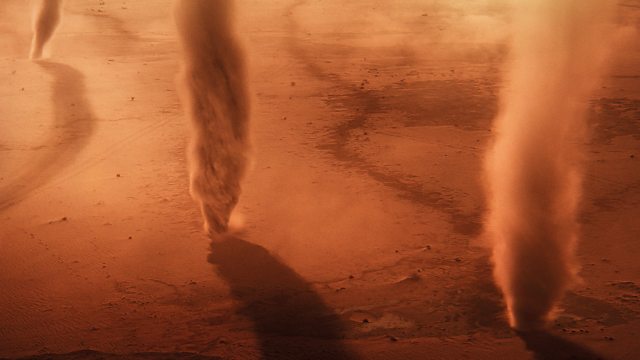
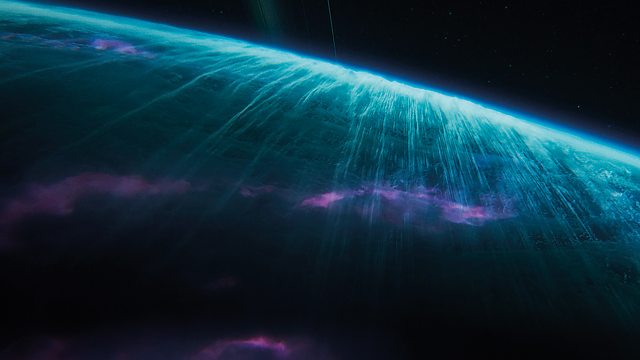
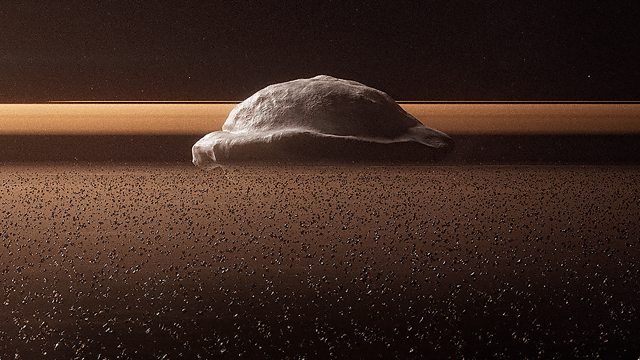
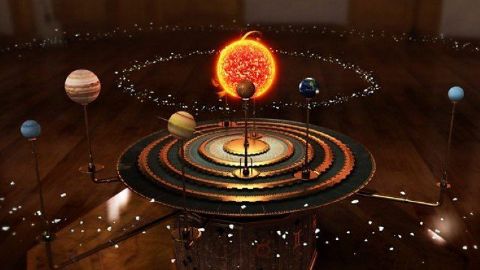
Professor Brian Cox explores the solar system’s hidden realms, between and beyond the planets, where countless worlds lie hiding in the darkness.
Hope you're finding these documentaries fascinating and eye-opening. It's just me, working hard behind the scenes to bring you this enriching content.
Running and maintaining a website like this takes time and resources. That's why I'm reaching out to you. If you appreciate what I do and would like to support my efforts, would you consider "buying me a coffee"?
BTC: bc1q8ldskxh4x9qnddhcrgcun8rtvddeldm2a07r2v
ETH: 0x5CCAAA1afc5c5D814129d99277dDb5A979672116
With your donation through , you can show your appreciation and help me keep this project going. Every contribution, no matter how small, makes a significant impact. It goes directly towards covering server costs.
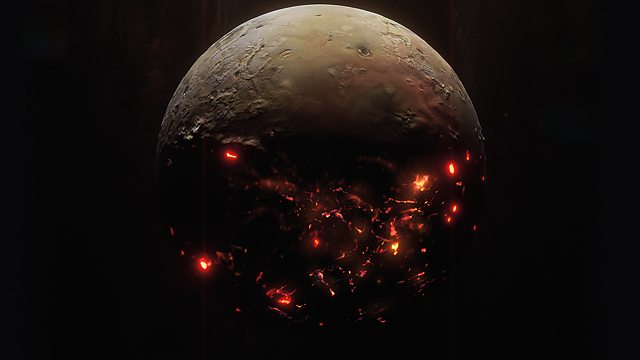
Professor Brian Cox journeys to the volcano worlds of the solar system and explore alien landscapes bursting with fire and ice. There are planets and moons covered in volcanoes, with eruptions so violent they reach into space. Understanding what makes these worlds active is critical in the search for life beyond Earth.
2024 • Astronomy
Professor Brian Cox explores the solar system’s hidden realms, between and beyond the planets, where countless worlds lie hiding in the darkness.
2024 • Astronomy
Professor Brian Cox explores the solar system’s wildest weather, encountering powerful lightning, strange metallic frosts and monsoon rains on a moon a billion kilometres from Earth.
2024 • Astronomy
Professor Brian Cox explores the solar system’s ice giants, frozen moons and worlds where ice behaves in unimaginable ways.
2024 • Astronomy
Professor Brian Cox explores the solar system’s misfits and oddballs, and investigates the forces that sculpted the bizarre features on these strange worlds.
2024 • Astronomy
Here it is, folks: the end. In our final episode of Crash Course Astronomy, Phil gives the course a send off with a look at some of his favorite topics and the big questions that Astronomy allows us to ask.
46 • Crash Course Astronomy • 2016 • Astronomy
How does light escape from the sun? We take a journey from the centre of the sun, following the path of light. We witness its fiery birth from in the core, its 430,000 mile battle against gravity and magnetism, and its escape from the solar surface.
S3E1 • How the Universe Works • 2014 • Astronomy
For the first time, scientists have captured a photograph of a black hole. The image verifies one of the most important theories in physics and will help unlock the greatest mysteries of the cosmos.
Breakthrough • 2019 • Astronomy
There are Black Holes, and then there are Monster Black Holes -- containing several million to ten billion times the mass of our Sun! They've been discovered in the center of many galaxies. But they don't just absorb everything around them...in fact, they may be key to forming new galaxies.
10 • Cosmic Front • 2014 • Astronomy
This is the epic story of the stars, and how discovering their tale has transformed our own understanding of the universe. Once we thought the sun and stars were gods and giants. Now we know, in a way, our instincts were right. The stars do all have their own characters, histories and role in the cosmos. Not least, they played a vital part in creating us. There are old, bloated red giants, capable of gobbling up planets in their orbit; explosive deaths - supernovae - that forge the building blocks of life; and black holes, the most mysterious stellar tombstones. And, of course, stars in their prime, like our own sun. Leading astronomers reveal how the grandest drama on tonight is the one playing above our heads.
2012 • Astronomy
Thanks to the wonders of physics, astronomers can map a timeline of the universe’s history. Today, Phil’s going to give you an overview of those first few minutes (yes, MINUTES) of the universe’s life. It started with a Big Bang, when the Universe was incredibly dense and hot. It expanded and cooled, going through multiple stages where different kinds of matter could form. It underwent a phenomenally rapid expansion called inflation, which smoothed out much of the lumpiness in the matter. Normal matter formed atoms between 3 and 20 minutes after the bang, and the lumps left over from inflation formed the galaxies and larger structures we see today.
44 • Crash Course Astronomy • 2016 • Astronomy