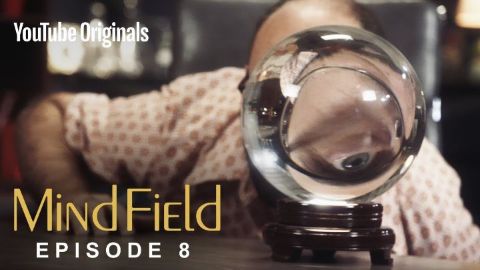
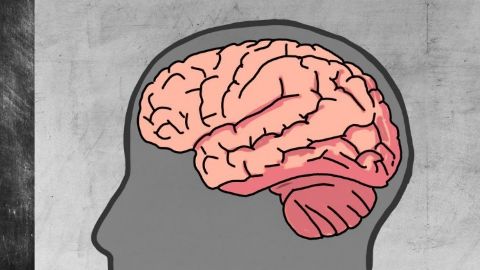
Do You Know Yourself? • 2017 • episode "S1E8" Mind Field

Category: Brain

What makes you, you? If even the most basic parts of you, like your memories or your past, can be forgotten or manipulated, how can you know ever really know who “you” are?

Make a donation

Buy a brother a hot coffee? Or a cold beer?

Hope you're finding these documentaries fascinating and eye-opening. It's just me, working hard behind the scenes to bring you this enriching content.

Running and maintaining a website like this takes time and resources. That's why I'm reaching out to you. If you appreciate what I do and would like to support my efforts, would you consider "buying me a coffee"?

Donation addresses

Buy Me a Coffee at ko-fi.com

patreon.com

BTC: bc1q8ldskxh4x9qnddhcrgcun8rtvddeldm2a07r2v

ETH: 0x5CCAAA1afc5c5D814129d99277dDb5A979672116

With your donation through , you can show your appreciation and help me keep this project going. Every contribution, no matter how small, makes a significant impact. It goes directly towards covering server costs.
Mind Field • 2017 - 2019 • 18 episodes •

Isolation

What happens when your brain is deprived of stimulation? What effect does being cut off from interaction with the outside world have on a person? What effect does it have on me, when I am locked in a windowless, soundproof isolation chamber for three days? In this episode of Mind Field, I take both an objective and a very intimate look at Isolation.

2017 • Brain

Conformity

We are all unique individuals. We follow the beat of our own drum. We wouldn’t throw our own beliefs out the window just to fit in...or would we? In this episode of Mind Field, I demonstrate the strong, human urge to conform, and just how far people will go to fall in with the crowd.

2017 • Brain

Destruction

We humans love to build, create, and organize. So why do we also love to destroy things? Can violently breaking stuff really help to calm us down, or does it just make us more angry? In this episode of Mind Field, I take a hard look at our urge to destroy.

2017 • Brain

Artificial Intelligence

So you say you love your computer or smartphone...but can it love you back? As we become more dependent on technology, and our technology becomes more lifelike, where does the line between human and computer lie? And what happens when our relationships become romantic? In this episode of Mind Field, I look into Artificial Intelligence.

2017 • Brain

Freedom of Choice

We may value having Freedom of Choice, but are we actually happier when we have limited choices...or even no choice at all? Do we truly have control over our decisions, or are they really predetermined by other forces? My fellow YouTubers and I have our minds read by a “box” that reveals who - or what - is really calling the shots.

2017 • Brain

Touch

How much of the sensations we feel is determined by our physical bodies? Maybe our minds play a bigger role than we know. I’ll see if people can be tricked into feeling intense physical pain, even though it’s all in their heads. I’ll also look at a machine that makes it possible for you to tickle yourself, and I’ll show you a weird physical illusion you can do at home.

2017 • Brain

In Your Face

How much do we communicate through facial expressions? Are our expressions affected by our moods, or is it the other way around? And what happens to your ability to relate to others when your facial muscles are frozen by Botox? In this episode of Mind Field, I take a look at what’s In Your Face.

2017 • Brain

Do You Know Yourself?

What makes you, you? If even the most basic parts of you, like your memories or your past, can be forgotten or manipulated, how can you know ever really know who “you” are?

2017 • Brain

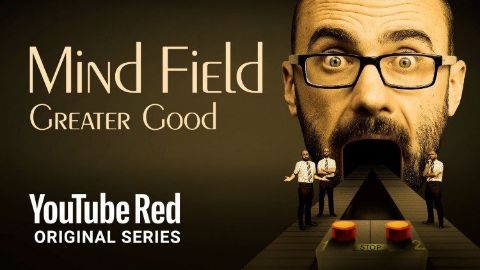
The Greater Good

Would you reroute a train to run over one person to prevent it from running over five others? In the classic “Trolley Problem” survey, most people say they would. But I wanted to test what people would actually do in a real-life situation. In the world’s first realistic simulation of this controversial moral dilemma, unsuspecting subjects will be forced to make what they believe is a life-or-death decision.

2017 • Brain

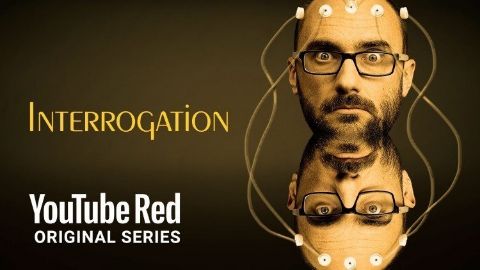
Interrogation

Psychology. Neuroscience. Drugs. All can be tools of interrogation. In this episode, an expert shows me how to coerce unsuspecting subjects into signing false confessions; a police psychologist questions me about my personal life after I am injected with a truth serum; and I match wits against a new brainwave-reading lie-detection method developed at Northwestern University.

2017 • Brain

The Cognitive Tradeoff Hypothesis

Humans are the only Earthlings with complex language. But at what cost was that ability acquired? In this episode, I visit Tetsuro Matsuzawa to learn about his influential cognitive tradeoff hypothesis.

2019 • Brain

Moral Licensing

How are our moral decisions influenced by factors we’re not aware of? A phenomenon known as Moral Licensing claims that when we do something good, we often subconsciously allow ourselves to then do something bad. In this episode, I take a look at whether those who donate money to charity become more likely to let a kid take the blame for a crime they know they committed.

2018 • Brain

The Stilwell Brain

There are 100 billion individual neurons in the human brain. Working together, they allow us to make sense of, and move through, the world around us. Scientists have built replicas of the human brain with computers, but no one has ever successfully made a brain out of humans. On this episode, I’ll travel back to my hometown of Stilwell, Kansas, and turn it into a working brain!

2018 • Brain

The Stanford Prison Experiment

Normal people can become monsters, given the right situation. That’s the standard narrative of the Stanford Prison Experiment, one of the most famous psychological experiments of all time. But what if the cause of its participants’ cruel behavior wasn’t what we’ve always been told?

2018 • Brain

Should I Die?

If I could live forever, should I? How does being reminded of our own mortality affect us psychologically? In this episode I speak with mortician and death positivity activist Caitlin Doughty and visit a cryonics facility trying to extend human life indefinitely. Will I take them up on their offer, or will I choose to die?

2018 • Brain

How to Talk to Aliens

Are we alone in the universe? Even if we could contact aliens, what would we say? How would we say it? And, most importantly, should we even be trying to make contact at all? This episode takes me on a journey to compose and send my own personal message into outer space.

2019 • Brain

Behaviour and Belief

How can a lie become true? In this episode, Dr. Aaron Blaisdell and I create a game show that is actually a giant “human Skinner Box” to observe the formation of superstitious beliefs. And Dr. Samuel Veissière helps me design and perform a placebo reverse exorcism, harnessing the power of belief in both science and religion to convince normal people that a spirit has possessed their bodies.

2019 • Brain

Mind Reading

In this episode I visit a researcher who is studying memory by using machine learning and neuroimaging to detect and predict people's brain states. I also travel to Japan to meet with a team working on ways to record the content of peoples’ dreams.

2019 • Brain

You might also like

The Stanford Prison Experiment

Normal people can become monsters, given the right situation. That’s the standard narrative of the Stanford Prison Experiment, one of the most famous psychological experiments of all time. But what if the cause of its participants’ cruel behavior wasn’t what we’ve always been told?

S3E4Mind Field • 2018 • Brain

Secrets of the Brain

Jim Al-Khalili goes on a journey through 600 million years of evolution to uncover how the human brain, the most complex structure known in the universe, came to exist. Chapter 1: With some 100 billion neurons and over 100 trillion connections - more than all the stars in the Milky Way - the human brain is one of nature's greatest achievements. But how did something so incredibly sophisticated evolve from its simple beginnings? Chapter 2: Jim watches primates in action to see how they tackle survival challenges, revealing the clever tricks that shaped the brain's thinking. But the real breakthrough came when brains learned to be social. Teaming up with his wife, Jim investigates how relationships and friendships made people more intelligent. With AI getting smarter by the day, Jim wants to know what makes biological brains so special. Through scans, fossil discoveries and cutting-edge research, he uncovers what makes the brain so hard to emulate.

Horizon • 2025 • Brain

Make me creative

Todd puts brain training to the test in Make Me Creative, as he trains his brain to be more creative, innovative and to think more laterally, before attempting a creative art challenge.

S1E2Redesign my brain • 2013 • Brain

The Distracted Mind

Everyone knows we're not supposed to multitask while driving, but do you know why? It turns out your brain literally can't focus on too much at once.

TED-EdBrain

Inside Our Autistic Minds

Chris Packham helps autistic people illustrate how their minds work, helping them connect with their friends and family in a new, more authentic way. Chapter 1: Since sharing his own autism diagnosis with the world, naturalist and presenter Chris Packham has been flooded with letters and emails from other autistic people, frustrated that their friends, families and co-workers don't understand them. And in this series, Chris wants to bridge the gap. By teaming up with top film-makers, graphic designers, animators and musicians, Chris helps a group of autistic people create short films to reveal to their family and friends how they're truly feeling inside – what's really going on in their autistic minds. He helps an autistic comedian reveal to her mum what's really going on inside her head, gives a non-speaking autistic man the chance to take his message to the world and visits the only state school in the country exclusively for autistic girls. Chapter 2: Chris meets Anton, a teaching assistant and trance DJ with a deep love of Middlesbrough FC, and Ethan, a 19-year-old student and aspiring rapper from Essex. He helps them make films to reveal to their friends and classmates how Anton feels about change and Ethan about hypersensitivity to noise. Chris also meets Dr Luke Beardon, an expert in autistic hypersensitivity, and Dr Punit Shah, who helps him to understand both Anton's restrictive and repetitive behaviours and Chris's own need for order in his life.

2023 • Brain

The Science of Deception

What new methods of analysis have been developed in the age-old struggle to discover if someone is telling the truth...or not? Some scientists have gone beyond the polygraph to model other ways of detecting whether we are getting a straight answer or being led down a crooked path.

2017 • Brain