Documentary charting the life of Eric Clapton, widely renowned as one of the greatest performers of all time. But behind the scenes lay restlessness and tragedy. The insatiable search to grow his artistic voice left fans surprised as he constantly quit successful bands, from the groundbreaking Yardbirds to 60s supergroup Cream. His isolated pursuit of his craft, and fear of selling out, served as a catalyst for his evolution as an artist. Stretching from his traumatic childhood living in a 'house of secrets', to his long struggle with drugs and alcohol, and the tragic loss of his son in a heart-breaking accident, Eric Clapton always found an inner strength and healing in music. Told through his own words and songs, as well as those of his family, friends, musical collaborators, contemporaries and many heroes - including BB King, Jimi Hendrix and George Harrison.
Hope you're finding these documentaries fascinating and eye-opening. It's just me, working hard behind the scenes to bring you this enriching content.
Running and maintaining a website like this takes time and resources. That's why I'm reaching out to you. If you appreciate what I do and would like to support my efforts, would you consider "buying me a coffee"?
BTC: bc1q8ldskxh4x9qnddhcrgcun8rtvddeldm2a07r2v
ETH: 0x5CCAAA1afc5c5D814129d99277dDb5A979672116
With your donation through , you can show your appreciation and help me keep this project going. Every contribution, no matter how small, makes a significant impact. It goes directly towards covering server costs.
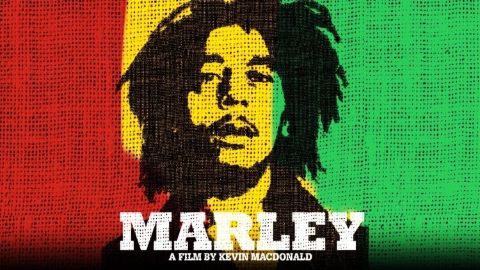
Bob Marley's musical (and cultural) shadow is so large that the man clearly needed an authoritative documentary portrait--and Marley steps in with all the right stuff to fill the role. Working with official rights to the music and access to Marley's family and friends, Oscar-winning documentarian Kevin Macdonald (One Day in September) creates a thorough account that hits the major points, not stinting on some of the less admirable aspects of Marley's life (including his brood of children fathered with women other than his patient wife, Rita, whose presence indicates just how much she puts Marley's legacy above his personal infidelities). Especially interesting is the sketch of Bob Marley's youth, as a mixed-race--and thus socially ostracized--kid from the village of Nine Mile who began to put together a reggae sound with a group of like-minded musicians in Jamaica in the late '50s and early '60s. That period comes to life, and the account of Marley's ascent, while familiar from such sagas, has its share of offbeat incidents. His death, at age 36 in 1981, does not dominate the movie, but Macdonald does a good job of getting that story laid out. In the meantime, the music and the concert footage are more than enough to justify the movie's existence, and Macdonald makes time to include thoughts about politics, ganja smoking, and Rastafarianism, too. If it's not the final word on Marley, it's an excellent start.
2012 • Music
They defined music and popular culture like no other band ever will. But how did The Beatles make the journey from Merseyside teenagers to international pop stars in the 1960s? The Beatles: Made on Merseyside recounts how American rock ‘n’ roll and rhythm and blues dragged post-war Liverpool into one of the most vibrant music cities ever with the Mersey Sound. Featuring unique archive and revealing interviews from those involved in the early years of The Beatles in Liverpool and Hamburg, we discover the story of The Beatles’ previous band formations and why it took so long for them to achieve success. From school bands to colleges, Hamburg to The Cavern Club, The Beatles moved from skiffle to rock ‘n’ roll before creating their unique sound.
2019 • Music
In 1969, 500,000 people descended on a small field in a little-known town in upstate New York called Woodstock. The documentary that captured the iconic event, chronicled in unflinching detail this moment in history. But how was this groundbreaking film actually made?
2019 • Music
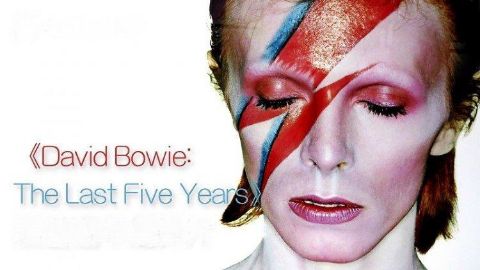
There was nothing predictable about David Bowie. Everything was designed to intrigue, to challenge, to defy all expectations. But perhaps no period in David Bowie's extraordinary career raised more fascination, more surprise, and more questions than the last five years. This is an intimate portrait of one of the defining artists of the twentieth and early twenty first centuries, told by the people who knew him best - his friends and artistic collaborators. This film takes a detailed look at Bowie's last albums, The Next Day and Blackstar, and his play Lazarus. In his final five years, Bowie not only began producing music again, but returned to the core and defining themes of his career. This film explores how Bowie was a far more consistent artist than many interpretations of his career would have us believe. It traces the core themes from his final works and relates them to his incredible back catalogue. His urge to communicate feelings of spirituality, alienation and fame underpin his greatest works from the 1960s to 2016. This is what lies at the heart of his success and appeal - music that deals with what it means to be human in a way that goes far beyond the normal palette of a rock star. The film is not a comprehensive overview of his entire career, but an in-depth exploration of pivotal moments that show how the themes, the narrative and the approach is consistent - it is simply the palette that changes. The film includes every key member of the Next Day band, the Blackstar band and those who worked with him on the stage play Lazarus. In addition, old friends and colleagues are on hand to explore how the work of the last five years relates to Bowie's back catalogue. And, as in David Bowie: Five Years, there is a wealth of unseen and rare archive footage.
2017 • Music
Tom Service plunges into the life and times of Mozart to try and rediscover the greatness and humanity of the living man in his moment.
We don't know much about the human brain on music. Do people instinctively know the sound patterns of the pentatonic scale? Is there a base level of musical knowledge in all of us, just waiting to be tapped? Or is the pentatonic scale simply so common in Western music that it has become ingrained in all of our minds? Improvisational genius Bobby McFerrin uses audience participation to demonstrate the power of the pentatonic scale - or at least the audience's familiarity with it.
2011 • Music