Two out of five wild plants are threatened with extinction. Today people are finding remarkable ways to help them, and so make our world a little greener and a little wilder.
Hope you're finding these documentaries fascinating and eye-opening. It's just me, working hard behind the scenes to bring you this enriching content.
Running and maintaining a website like this takes time and resources. That's why I'm reaching out to you. If you appreciate what I do and would like to support my efforts, would you consider "buying me a coffee"?
BTC: bc1q8ldskxh4x9qnddhcrgcun8rtvddeldm2a07r2v
ETH: 0x5CCAAA1afc5c5D814129d99277dDb5A979672116
With your donation through , you can show your appreciation and help me keep this project going. Every contribution, no matter how small, makes a significant impact. It goes directly towards covering server costs.
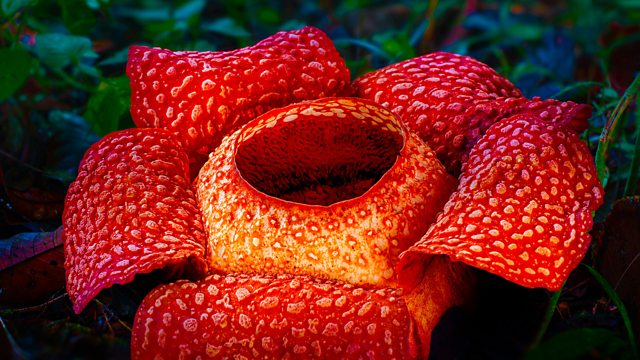
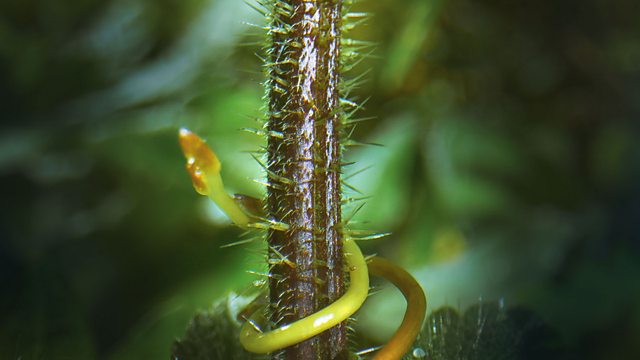
More kinds of plants are crammed together in the tropical rainforests than anywhere else on Earth. The result is astonishing beauty and intense competition - a plant battleground. New filming techniques allow us to enter the plants’ world and see it from their perspective and on their timescale. From fast-growing trees to flowers that mimic dead animals, this is a journey into a magical world that operates on a different timescale to our own.
2022 • Nature
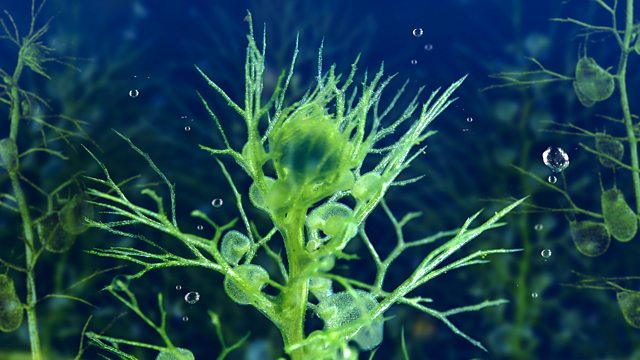
Water plants create beautiful, bizarre worlds. Flowers smother rivers and lakes. Plants fight and hunt. A river bubbles like champagne as plants create the atmosphere itself.
2022 • Nature
Plants of the seasonal world face constant change. They use use strategy, deception and feats of engineering to survive. Most importantly, they must get their timing right.
2022 • Nature
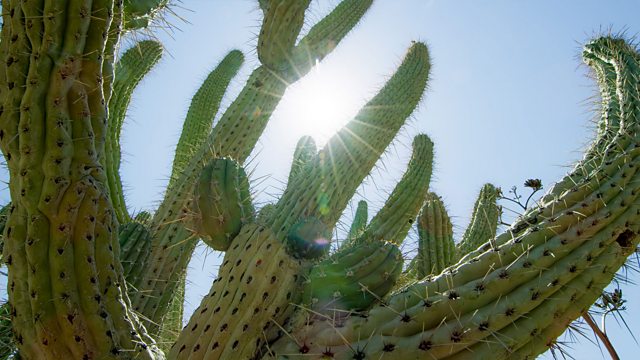
Desert plants spend decades in suspended animation waiting for rain, or they travel to find it. They survive using weapons, camouflage and surprising alliances with animals.
2022 • Nature
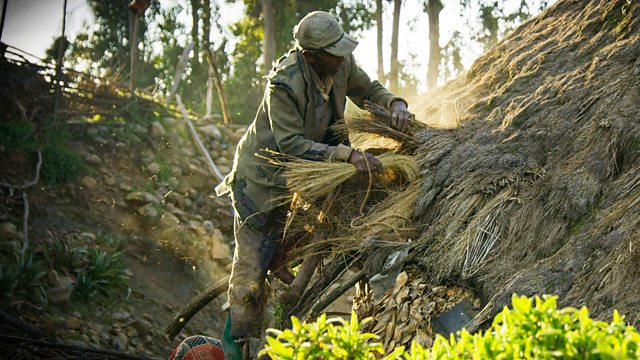
Two out of five wild plants are threatened with extinction. Today people are finding remarkable ways to help them, and so make our world a little greener and a little wilder.
2022 • Nature
In which John Green and Hank Green teach you about how human primates moved out of Africa and turned Earth into a real-life Planet of the Apes. And the apes are people! John and Hank teach you about how humans evolved, and the sort of tricks they picked up along the way like complex tool use, big brains, and fighting. Learn more: http://www.bighistoryproject.com
Five hundred million years ago, our previously eyeless distant ancestral creatures suddenly developed eyes, thereby marking a dramatic leap in evolution. What enabled our ancestors to suddenly evolve with eyes has been a long-unresolved great mystery in the history of our life. Now, scientists are close to cracking the mystery of the amazing story of the birth of our eyes, using cutting-edge DNA research. Travel back to a super realistic prehistoric world recreated by CGI to witness the astonishing story behind the birth of our eyes.
S1E1 • Leaps in Evolution • 2016 • Nature
This episode shows unique insights into Germany’s mountain world, traveling from Saxonian Switzerland to the Palatinate Forest, from the Harz to the Alps.
Part 2 • Wild Germany • 2012 • Nature
This episode follows the animals of Argentina, living life at the mercy of the Andean mountains. These peaks dictate a hard existence for every living creature from their summits to the very edge of the Patagonian steppe, forcing even the cutest resident to turn carnivore.
S1E1 • Wild Argentina • 2017 • Nature
In South Africa, Chris finds out how reproduction has shaped life on Earth and the surprising evolutionary origins of sex, eggs and birds. This is a journey of innovation, adaptation and astonishing creativity.
The documentary series reveals the extraordinary riches and wonders of the Polar Regions that have kept people visiting them for thousands of years. Today, their survival relies on a combination of ancient wisdom and cutting-edge science. Most Arctic people live in Siberia, either in cities like Norilsk - the coldest city on earth - or out on the tundra, where tribes like the Dogan survive by herding reindeer, using them to drag their homes behind them. On the coast, traditional people still hunt walrus from open boats - it is dangerous work, but one big walrus will feed a family for weeks. Settlers are drawn to the Arctic by its abundant minerals; the Danish Armed Forces maintain their claim to Greenland's mineral wealth with an epic dog sled patrol, covering 2,000 miles through the winter. Above, the spectacular northern lights can disrupt power supplies so scientists monitor it constantly, firing rockets into it to release a cloud of glowing smoke 100 kilometres high. In contrast, Antarctica is so remote and cold that it was only a century ago that the first people explored the continent. Captain Scott's hut still stands as a memorial to these men. Science is now the only significant human activity allowed; robot submarines are sent deep beneath the ice in search of new life-forms, which may also be found in a labyrinth of ice caves high up on an active volcano. Above, colossal balloons are launched into the purest air on earth to detect cosmic rays. At the South Pole there is a research base designed to withstand the world's most extreme winters. Cut off from the outside world for six months, the base is totally self-sufficient, even boasting a greenhouse.
S1E6 • Frozen Planet • 2011 • Nature