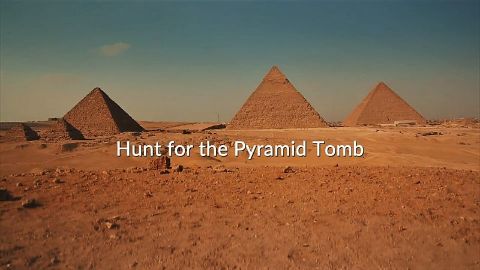
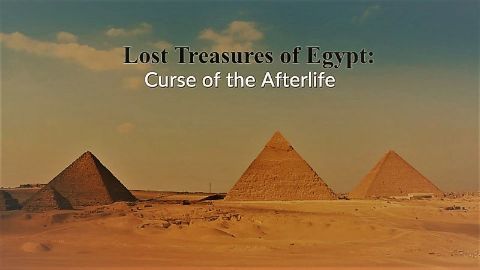
An investigation into why the great pharaohs of Egypt abandoned the pyramids of Giza and chose a secret cemetery in the Valley of the Kings in which to be buried; a team looks for clues to identify human remains found in looted graves.
Hope you're finding these documentaries fascinating and eye-opening. It's just me, working hard behind the scenes to bring you this enriching content.
Running and maintaining a website like this takes time and resources. That's why I'm reaching out to you. If you appreciate what I do and would like to support my efforts, would you consider "buying me a coffee"?
BTC: bc1q8ldskxh4x9qnddhcrgcun8rtvddeldm2a07r2v
ETH: 0x5CCAAA1afc5c5D814129d99277dDb5A979672116
With your donation through , you can show your appreciation and help me keep this project going. Every contribution, no matter how small, makes a significant impact. It goes directly towards covering server costs.
Archaeologists unearth a long-lost box of treasures from inside Tutankhamun's tomb; new technology reveals why this boy king's resting place remained hidden from tomb robbers for thousands of years; a team is tasked with transporting Tut's treasures.
2019 • History
An investigation into why the great pharaohs of Egypt abandoned the pyramids of Giza and chose a secret cemetery in the Valley of the Kings in which to be buried; a team looks for clues to identify human remains found in looted graves.
2019 • History
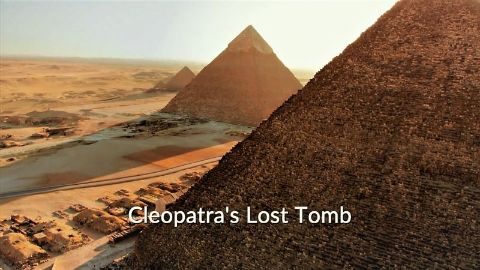
Archaeologists hunt for Queen Cleopatra's lost tomb; underwater archaeologists explore sunken ruins; a team takes mummies to the hospital to scan for hidden treasure; an archaeologist discovers a secret tunnel network at a forgotten temple.
2019 • History
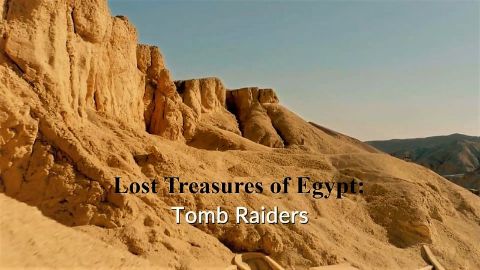
A dramatic find reveals ancient, state-sanctioned tomb robbery on an industrial scale. Egyptologist Don Ryan works against the clock to examine the contents of Tomb 49 - and makes a dramatic discovery.
2019 • History
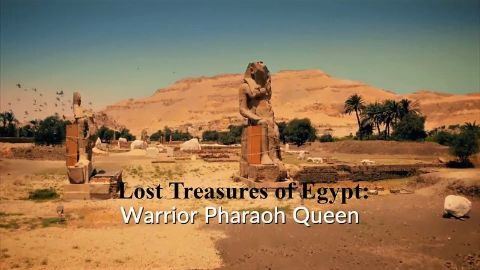
Archaeologists investigate Hatshepsut, one of the greatest female pharaohs in history; a discovery inside one of Hatshepsut's quarries sparks an investigation which leads to the temple of Karnak; an archaeologist excavates mummy parts.
2019 • History
Archaeologists decode the afterlife's secrets in an elaborate tomb and unearth a rare burial chamber revealing evidence of grave robbing.
2019 • History
On June 6, 1944, D-Day, 1.5 million Allied troops take part in the greatest invasion in history, but then bog down in the Norman hedgerows for weeks. Saipan proves the costliest Pacific battle to date, while back home dreaded telegrams from the War Department begin arriving at an inconceivable rate.
The Cuban Missile Crisis was one of the defining moments of the mid-twentieth century and of the presidency of John Kennedy. How did the two Cold War powers of the USSR and the USA come to the point of threatening nuclear war?
S2E5 • Butterfly Effect • 2017 • History
Archaeologists investigate Hatshepsut, one of the greatest female pharaohs in history; a discovery inside one of Hatshepsut's quarries sparks an investigation which leads to the temple of Karnak; an archaeologist excavates mummy parts.
Part 5 • Lost Treasures of Egypt • 2019 • History
How did an insignificant cluster of Latin hill villages on the edge of the civilised world become the greatest empire the world has known? In the fifth programme of the series, archaeologist and historian Richard Miles examines the phenomenon of the Roman Republic, from its fratricidal mythical beginnings, with the legend of Romulus and Remus, to the all too real violence of its end, dragged to destruction by war lords like Pompey the Great and Julius Caesar. Travelling to Sicily and North Africa, Richard tells the story of Rome's century-long struggle for dominance with the other great regional power, Carthage. It was a struggle that would end with the total destruction of this formidable enemy and the transformation of landlubber Rome into a seapower, and the Republic into an Empire. But with no-one left to beat, the only enemy that Rome had left was itself.
S1E5 • Ancient Worlds • 2010 • History
In the subsequent 65 million years, mammals are part of Europe’s history. Sea mammals conquered the oceans while herds of herbivores crisscrossed the land. It was 600,000 years ago that Homo Heidelbergensis first began hunting. Seen from a geological perspective, human beings have been on the earth for only a few short moments, but within this brief time we have already fundamentally transformed the planet. Rivers have been straightened, forests cleared and roads laid down across the natural habitats of nearly all the earth’s animals.
S1E2 • 300 Million Years: Where Life Began • 2015 • History
What is the future of the human presence in space? How might things be different if there had not been a Cold War and a Space Race? What does humanity gain by venturing into our solar system...and beyond?
S1E2 • Butterfly Effect • 2016 • History