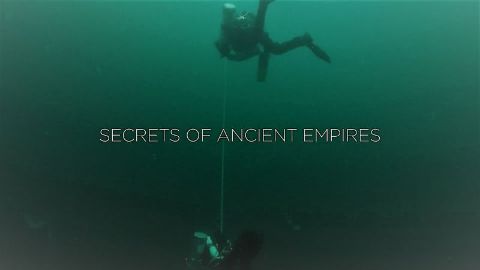
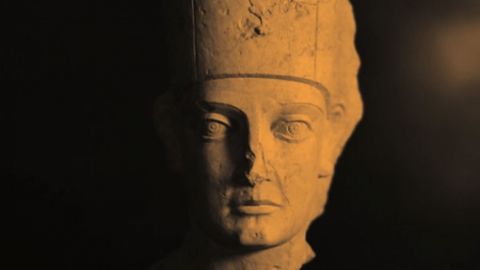
An international team of scientists began a 3-year exploration of the Black Sea in search of evidence of the ancient empires that sailed their ships into unknown waters in pursuit of trade.
Hope you're finding these documentaries fascinating and eye-opening. It's just me, working hard behind the scenes to bring you this enriching content.
Running and maintaining a website like this takes time and resources. That's why I'm reaching out to you. If you appreciate what I do and would like to support my efforts, would you consider "buying me a coffee"?
BTC: bc1q8ldskxh4x9qnddhcrgcun8rtvddeldm2a07r2v
ETH: 0x5CCAAA1afc5c5D814129d99277dDb5A979672116
With your donation through , you can show your appreciation and help me keep this project going. Every contribution, no matter how small, makes a significant impact. It goes directly towards covering server costs.
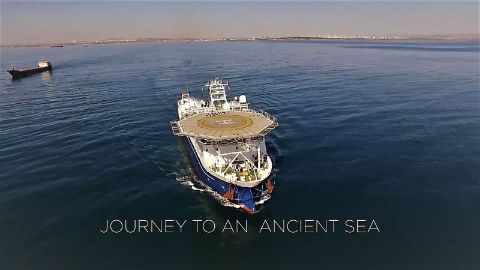
An international team of scientists began a 3-year exploration of the Black Sea in search of evidence of the ancient empires that sailed their ships into unknown waters in pursuit of trade.
2018 • History
The team continues to make astonishing discoveries on the floor of the Black Sea. A treasure trove of shipwrecks uniquely preserved that date back two and a half thousand years to the Greek and Roman empires, culminating in maritime archaeology’s greatest ever wreck discovery.
2018 • History
With both sides planning for the worst-case scenario, Ronald Reagan and Mikhail Gorbachev find common ground. Tragedy strikes after a nuclear disaster.
S1E5 • Turning Point: The Bomb and the Cold War • 2024 • History
How did the events of his childhood shape the man who would become Genghis Khan? What impact did the Mongol invasions have on the history of Asia and on the psyche of Europe?
S1E6 • Butterfly Effect • 2016 • History
In the spring of 1943, after the successive failures of Moscow and Stalingrad, the armies of the Reich go on the offensive again. Considered the greatest tank battle in History, this event represents a real turning point of World War II on the Eastern Front.
S3E1 • Butterfly Effect • 2018 • History
After finding strands of human hair buried in Greenland's permafrost, scientists are attempting the impossible: to be the first to reconstruct the identity of a Stone Age human being through nothing but his ancient locks. From scraps of DNA an ancient face appears. Further discoveries in the genetic code threaten to overturn long-held beliefs of how humans populated the earth. How much does your hair say about you? Scratch that. How much will your hair say about you, in say, 4,000 years? After finding tufts of human hair buried in Greenlands permafrost, scientists will assemble a remarkable human blueprint that details the life of one early human down to the color of his eyes, the shape of his teeth...even his receding hairline. But as the research team, lead by evolutionary biologist Eske Willerslev, break into this genetic code, they find far more than they bargained for, and the discovery threatens to turn our long held concept of how humans populated the earth on its head. In the ultimate cold case, National Geographic will obtain exclusive access to the international team of genetic scientists, archaeologists and paleo- artists who are breathing life into a man dead for 4,000 years, learning everything about him and even the way he and his people lived... through his hair.
Dramatised documentary revealing Spartacus as he really was - a brilliant leader of a guerrilla band, but a flawed and indecisive human being. Starring Anthony Flanagan as Spartacus and Robert Glenister as his nemesis, Marcus Licininus Crassus. 73 BC BC Spartacus is captured and ends up on the slave market in Rome. He is sold to a gladiator school in Capua - his combat skills quickly show. In his first official battle, Spartacus is forced to kill his opponent at the request of the people and their master. From then on he plans his escape - in the same year he escapes with 70 other slaves. The small uprising quickly turns into a bitter fight for the freedom of thousands.
S1E3 • Warriors: Great Men of History • 2007 • History
The National Geographic Channel EXPLORER series takes on the August 6, 1945, U.S. Air Force atomic bombing of Hiroshima, Japan, in this chronological retelling of the 24 hours following the event. The atomic bombing of Hiroshima, on August 6, 1945, was a moment that changed the world. Power that fueled the stars had been unleashed and turned into a lethal technology. Now learn the second-by-second story of that defining moment through those hit hardest by that weapon--the survivors. On August 6th, 1945 a weapon unlike any other before was unleashed on the Japanese city of Hiroshima. Four days later, the Japanese surrendered having been subjected to horrors and devastation previously unknown and unimaginable. But beyond the horror and human toll, real scientific questions remained unanswered. In 1945, a team of scientists and experts from the Manhattan Project was ordered by President Truman to investigate the facts of what really happened when the atomic bomb exploded over Hiroshima. National Geographic reveals the incredible science behind what happened moment by moment in the 24 Hours After Hiroshima.