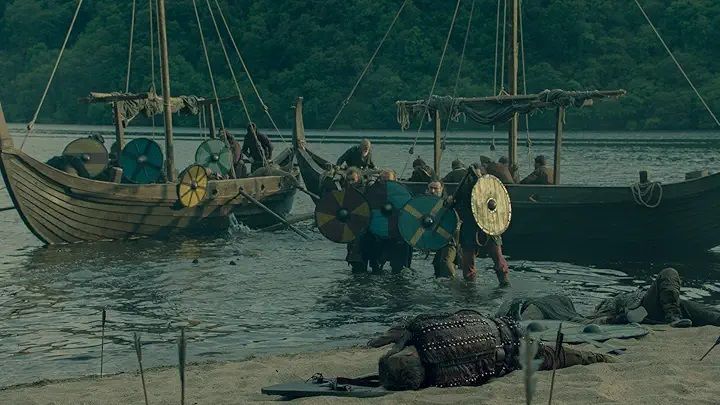
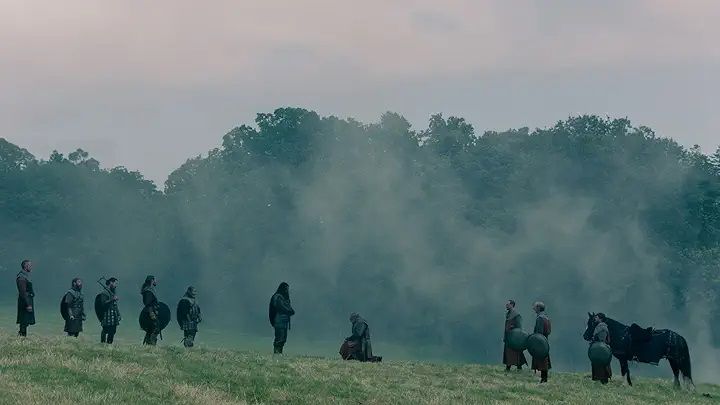
Most people describe the Vikings as a people who were dedicated exclusively to raiding the European coasts in search of gold and silver, but in this series we are going to delve deeper into what these Scandinavian sailors were really like. We will follow the Vikings on a journey through the centuries and see how they transformed populations, politics, trade, culture, religion and societies in general. In this first episode we will discover why they left Scandinavia to become pirates.
Hope you're finding these documentaries fascinating and eye-opening. It's just me, working hard behind the scenes to bring you this enriching content.
Running and maintaining a website like this takes time and resources. That's why I'm reaching out to you. If you appreciate what I do and would like to support my efforts, would you consider "buying me a coffee"?
BTC: bc1q8ldskxh4x9qnddhcrgcun8rtvddeldm2a07r2v
ETH: 0x5CCAAA1afc5c5D814129d99277dDb5A979672116
With your donation through , you can show your appreciation and help me keep this project going. Every contribution, no matter how small, makes a significant impact. It goes directly towards covering server costs.
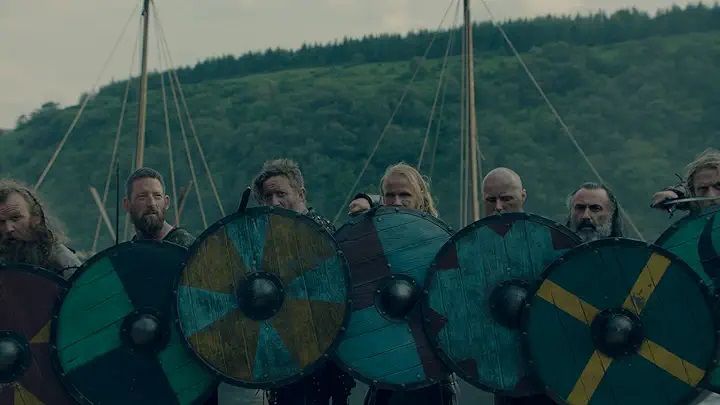
Most people describe the Vikings as a people who were dedicated exclusively to raiding the European coasts in search of gold and silver, but in this series we are going to delve deeper into what these Scandinavian sailors were really like. We will follow the Vikings on a journey through the centuries and see how they transformed populations, politics, trade, culture, religion and societies in general. In this first episode we will discover why they left Scandinavia to become pirates.
2019 • History
When the Vikings attack the shores of the Frankish kingdom, they are met with resistance that is very different from what they are used to, as the Emperor Charlemagne has no intention of giving up his Christian territory to pagans and pirates. We follow the Vikings as they try to push deeper into Frankish lands to reach great cities like Paris. At first, the defense is staunch, but surprising and tumultuous events in both Denmark and France soon change everything.
2019 • History
At the end of the 9th century, the Vikings returned to France, but this time they traded raiding for something completely different: integration. Through diplomacy and political marriages, they were increasingly accepted into Frankish society, and even abandoned their old religion and converted to Christianity. A new duchy was soon established and the Vikings became Normans.
2019 • History
The year is 1066 and the Vikings are no longer engaged in coastal raids and pillaging monasteries, but in a fight for the throne of England. The Norman Duke William is determined to take the island. In this final episode we will discover what novel tactics William used and how he managed to conquer England once and for all. This is a tumultuous and historic event, and it will also be the last battle of the Vikings.
2019 • History
Think of a Viking warrior and you probably imagine a fearsome, muscular, bearded man. Well, think again. Using cutting-edge facial recognition technology, scientists have brought to life the battle-hardened face of a female fighter who lived more than 1,000 years ago.
2019 • History
When Rome is sacked by barbarians, Europe enters a Dark Age. But from the fringes of the old empire, two new forces remake the world. The Arabs, funded by a gold rush, unite under the banner of Islam. The Vikings rejuvenate the cities of Europe, travel to America and become Christian knights. The stage is set for a clash of civilisations - the Crusades.
4/12 • Mankind: The Story of All of Us • 2012 • History
Dramatic Sea Rescues Some of the Twentieth Century's most famous examples, with emphasis on how the rescue services have operated in the most appalling conditions. When the "unsinkable" Titanic struck an iceberg on her maiden voyage, she went down long before rescue ships could reach her. Those who survived owed their lives to the brave, self-sacrificing efforts of some of the crew and passengers on board. Shipbuilding, sea communications and rescue capabilities have advanced since then, but as the ill-fated voyages of the Morro Castle, Andrea Doria, Estonia and others show, disaster can strike at any time. And when it does, heroic efforts often mean the difference between survival...and a watery grave. Disasters at sea can be due to war, negligence or more often the force of nature. The twentieth century is littered with examples of sea disasters, from the negligence that sunk the unsinkable Titanic on her maiden voyage, to the tragedies of war and the weather. However, if the cause of the disaster was bad weather, the rescue services then have the most difficult task of responding to the SOS in the most appalling conditions.
19/20 • The True Action Adventures of the Twentieth Century • 1996 • History
Alastair Sooke follows in the footsteps of Rome's mad, bad and dangerous emperors in the second part of his celebration of Roman art. He dons a wetsuit to explore the underwater remains of the Emperor Claudius's pleasure palace and ventures into the cave where Tiberius held wild parties. He finds their taste in art chimes perfectly with their obsession with sex and violence. The other side of the coin was the bombastic art the Romans are best remembered for - monumental arches and columns that boast about their conquests. Trajan's Column in Rome reads like the storyboard of a modern-day propaganda film. Sooke concludes with the remarkable legacy of the Emperor Hadrian. He gave the world the magnificent Pantheon in Rome - the eternal image of his lover Antinous, the most beautiful boy in the history of art - and a villa in Tivoli where he created one of the most ambitious art collections ever created.
S1E2 • The Treasures of Ancient Rome • 2012 • History
The National Geographic Channel EXPLORER series takes on the August 6, 1945, U.S. Air Force atomic bombing of Hiroshima, Japan, in this chronological retelling of the 24 hours following the event. The atomic bombing of Hiroshima, on August 6, 1945, was a moment that changed the world. Power that fueled the stars had been unleashed and turned into a lethal technology. Now learn the second-by-second story of that defining moment through those hit hardest by that weapon--the survivors. On August 6th, 1945 a weapon unlike any other before was unleashed on the Japanese city of Hiroshima. Four days later, the Japanese surrendered having been subjected to horrors and devastation previously unknown and unimaginable. But beyond the horror and human toll, real scientific questions remained unanswered. In 1945, a team of scientists and experts from the Manhattan Project was ordered by President Truman to investigate the facts of what really happened when the atomic bomb exploded over Hiroshima. National Geographic reveals the incredible science behind what happened moment by moment in the 24 Hours After Hiroshima.
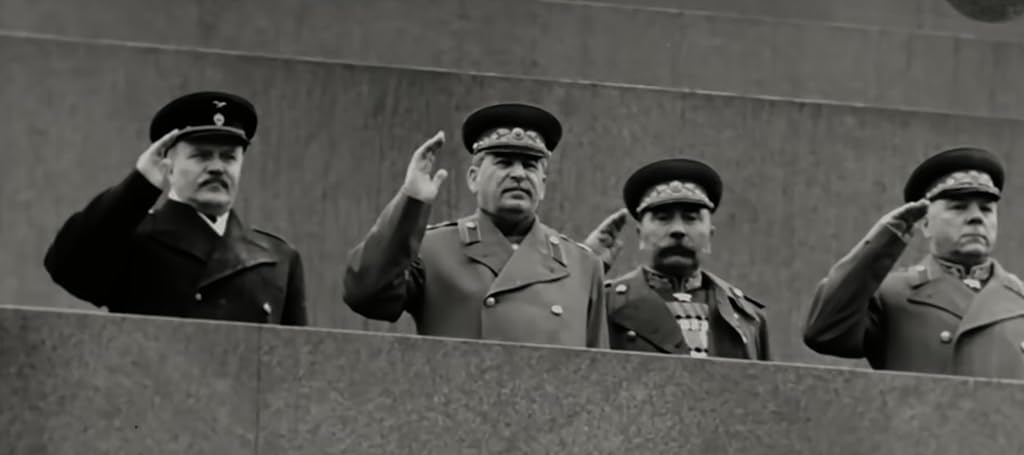
The Soviet Story offers an alternative history of an Allied power, which helped the Nazis to fight Jews and which slaughtered its own people on an industrial scale.
2008 • History