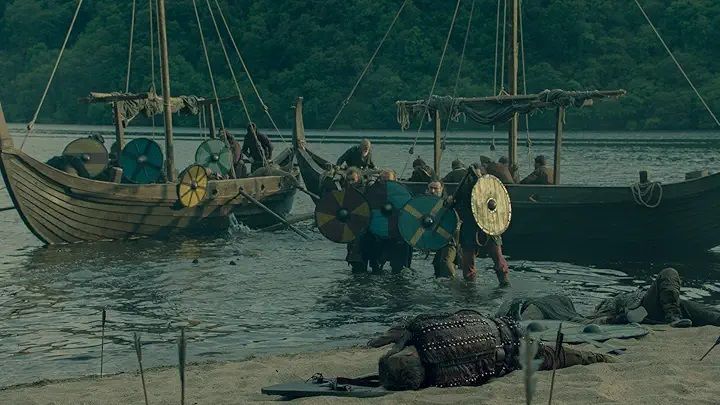
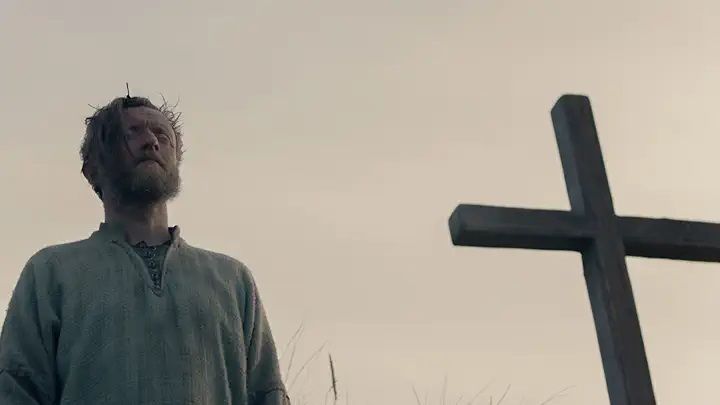
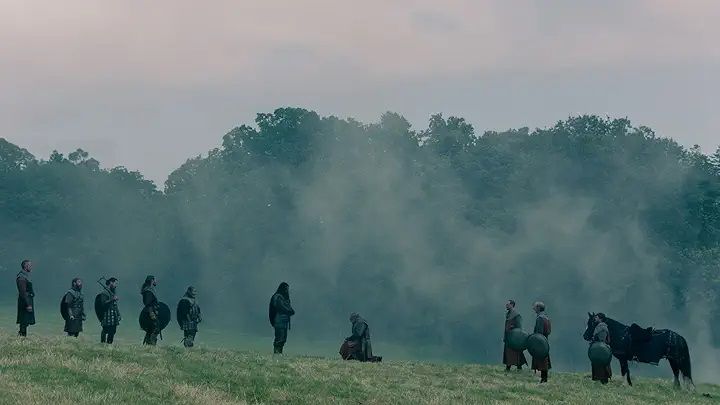
The year is 1066 and the Vikings are no longer engaged in coastal raids and pillaging monasteries, but in a fight for the throne of England. The Norman Duke William is determined to take the island. In this final episode we will discover what novel tactics William used and how he managed to conquer England once and for all. This is a tumultuous and historic event, and it will also be the last battle of the Vikings.
Hope you're finding these documentaries fascinating and eye-opening. It's just me, working hard behind the scenes to bring you this enriching content.
Running and maintaining a website like this takes time and resources. That's why I'm reaching out to you. If you appreciate what I do and would like to support my efforts, would you consider "buying me a coffee"?
BTC: bc1q8ldskxh4x9qnddhcrgcun8rtvddeldm2a07r2v
ETH: 0x5CCAAA1afc5c5D814129d99277dDb5A979672116
With your donation through , you can show your appreciation and help me keep this project going. Every contribution, no matter how small, makes a significant impact. It goes directly towards covering server costs.
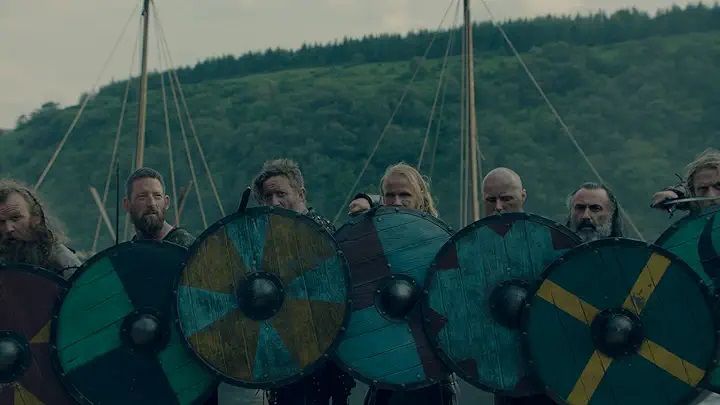
Most people describe the Vikings as a people who were dedicated exclusively to raiding the European coasts in search of gold and silver, but in this series we are going to delve deeper into what these Scandinavian sailors were really like. We will follow the Vikings on a journey through the centuries and see how they transformed populations, politics, trade, culture, religion and societies in general. In this first episode we will discover why they left Scandinavia to become pirates.
2019 • History
When the Vikings attack the shores of the Frankish kingdom, they are met with resistance that is very different from what they are used to, as the Emperor Charlemagne has no intention of giving up his Christian territory to pagans and pirates. We follow the Vikings as they try to push deeper into Frankish lands to reach great cities like Paris. At first, the defense is staunch, but surprising and tumultuous events in both Denmark and France soon change everything.
2019 • History
At the end of the 9th century, the Vikings returned to France, but this time they traded raiding for something completely different: integration. Through diplomacy and political marriages, they were increasingly accepted into Frankish society, and even abandoned their old religion and converted to Christianity. A new duchy was soon established and the Vikings became Normans.
2019 • History
The year is 1066 and the Vikings are no longer engaged in coastal raids and pillaging monasteries, but in a fight for the throne of England. The Norman Duke William is determined to take the island. In this final episode we will discover what novel tactics William used and how he managed to conquer England once and for all. This is a tumultuous and historic event, and it will also be the last battle of the Vikings.
2019 • History
Even during the brutality of the Dark Ages, the Vikings of Northern Europe were considered particularly fearsome, ruthless, and dangerous. For centuries, historians believed all Viking warriors were men, but new archaeological discoveries on a small island in central Sweden have revealed evidence that some of the fighters were women. See how modern forensic testing helped identify the sex of one female war chief.
2019 • History
This in-depth documentary examines the life of Mustafa Kemal Ataturk, who founded the Republic of Turkey from the ruins of the Ottoman Empire. One of the most fascinating personalities of his time: Mustafa Kemal Ataturk. November 10 2018 marks the 80th anniversary of his death. His revolution, which quickly and radically transformed the declining Ottoman Empire into today's Turkey and profoundly changed culture and society, is rooted in European thinking. But Ataturk's unconditional determination also shows dictatorial traits. Mustafa Kemal Ataturk - Monuments to the father of modern Turkey can be found in every city, the anniversary of his death is commemorated every year, derogatory words about him are punishable by law. Rarely has a politician changed a society so radically in such a short time as Ataturk did in Turkey, which was born out of the declining Ottoman Empire. He acted with unconditional determination when it came to catapulting a deeply backward country into modernity. His reforms still have an impact today. Ataturk's revolution is rooted in European thinking, in the French Enlightenment, in the process of secularization in western states. In many ways it is a turning to the West. It is also based on the idea of equality between men and women - unique in the Islamic world at the time. With his cultural revolution, however, he also overwhelms many traditionally oriented Turks. It still has an effect today. How did a young Ottoman officer become the hero of Gallipoli in World War I? How did this hero become the charismatic founder of today's Turkey through the war of independence? How does he push his reforms through in just fifteen years: abolition of polygamy, introduction of Swiss civil law, dress reform, hat reform, language and writing reform? The docu-drama tells the story of Mustafa Kemal Pasha - from his birth in multicultural Salonika to his death on November 10, 1938. Along with interviews with historians, a rich trove of archival footage and photographs enhance the documentary. These are further illuminated by reenactments depicting the intellectual evolution of Ataturk the man, as well as his revolution and political philosophy. Inner monologues drawn from the wide range of the nation's founder's writings and diaries, notes and letters lend authenticity and credibility to the film.
2018 • History
Archaeologists decode the afterlife's secrets in an elaborate tomb and unearth a rare burial chamber revealing evidence of grave robbing.
Part 6 • Lost Treasures of Egypt • 2019 • History
The end of the War in the Pacific is one of the greatest and most terrible tales of modern history. The Japanese fought to the bitter end and continued to fight island by island, hill by hill. US Air Force command tried bombing Japan into submission, firebombing Tokyo but could not break the Japanese resolve. Over 200,000 people died. In the end, President Truman decided to go nuclear and the fates of Hiroshima and Nagasaki were sealed.
13/13 • World War II In HD Colour • 2009 • History
Simon Sebag Montefiore looks at how every event in ancient Rome revolved around religion. From the foundation myth through to the deification of emperors, nothing could happen without calling upon the pantheon of Roman gods. Simon investigates how the Romans worshipped and sacrificed to the gods. He discovers that sacredness defined what was Roman and it was the responsibility of every Roman to play their part in the cult. Even the ancient Roman sewer was holy ground!
S1E1 • Rome: A History of the Eternal City • 2012 • History
Was America's first billionaire, John D. Rockefeller, a greedy robber baron, a generous philanthropist, or both? And did the oil tycoon exploit America's poor or give them access to much-needed energy? Historian and Hillsdale College professor Burt Folsom, author of "The Myth of the Robber Barons," reveals the truth about the Rockefeller empire.