Origins / The Cross and the Crescent • 2017 • episode "Part 1 and 2" Africa's Great Civilizations

Category: History

Parts 1 and 2. Henry Louis Gates Jr. explores Africa's rich history. Journey with Professor Henry Louis Gates, Jr. to Kenya, Egypt and beyond as he discovers the origins of man, the formation of early human societies and the creation of significant cultural and scientific achievements on the African continent. In part 2: Professor Henry Louis Gates, Jr. charts the ancient rise of Christianity & Islam, whose economic & cultural influence stretched from Egypt to Ethiopia. Learn of African religious figures like King Lalibela, an Ethiopian saint, and Menelik, bringer of the Ark of the Covenant.

Make a donation

Buy a brother a hot coffee? Or a cold beer?

Hope you're finding these documentaries fascinating and eye-opening. It's just me, working hard behind the scenes to bring you this enriching content.

Running and maintaining a website like this takes time and resources. That's why I'm reaching out to you. If you appreciate what I do and would like to support my efforts, would you consider "buying me a coffee"?

Donation addresses

Buy Me a Coffee at ko-fi.com

patreon.com

BTC: bc1q8ldskxh4x9qnddhcrgcun8rtvddeldm2a07r2v

ETH: 0x5CCAAA1afc5c5D814129d99277dDb5A979672116

With your donation through , you can show your appreciation and help me keep this project going. Every contribution, no matter how small, makes a significant impact. It goes directly towards covering server costs.
Africa's Great Civilizations • 2017 • 3 episodes •

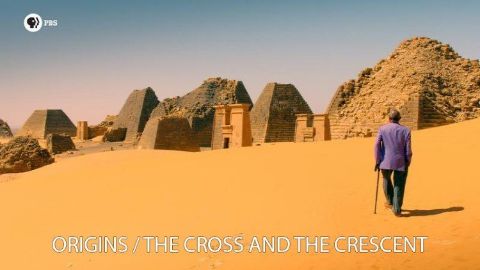
Origins / The Cross and the Crescent

Parts 1 and 2. Henry Louis Gates Jr. explores Africa's rich history. Journey with Professor Henry Louis Gates, Jr. to Kenya, Egypt and beyond as he discovers the origins of man, the formation of early human societies and the creation of significant cultural and scientific achievements on the African continent. In part 2: Professor Henry Louis Gates, Jr. charts the ancient rise of Christianity & Islam, whose economic & cultural influence stretched from Egypt to Ethiopia. Learn of African religious figures like King Lalibela, an Ethiopian saint, and Menelik, bringer of the Ark of the Covenant.

2017 • History

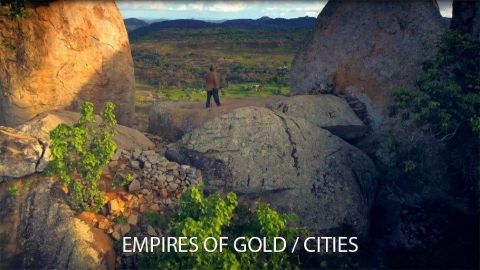
Empires of Gold / Cities

Henry Louis Gates, Jr. uncovers the complex trade networks and advanced educational institutions that transformed early north and West Africa from deserted lands into the continent’s wealthiest kingdoms and learning epicentres. In Part 4 Gates explores the power of Africa’s greatest ancient cities, including Kilwa, Great Zimbabwe and Benin City, whose wealth, art and industrious successes attracted new European interest and interaction along the continent’s east and west coasts.

2017 • History

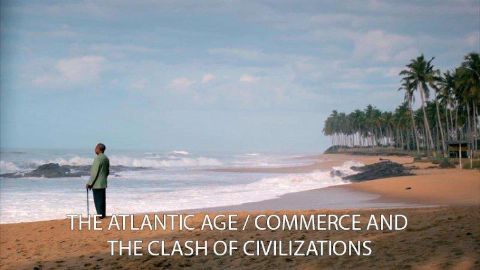
The Atlantic Age / Commerce and the Clash of Civilizations

Henry Louis Gates, Jr. explores the impact of the Atlantic trading world, giving rise to powerful new kingdoms, but also transatlantic slave trade. Learn of the revolutionary movements of the 18th & early 19th centuries, including the advent of the Sokoto Caliphate. In the final part Henry Louis Gates, Jr. explores the dynamism of 19th century Africa, the “Scramble” by European powers for its riches, and the defiant and successful stand of uncolonized Ethiopia.

2017 • History

You might also like

The Manhunt

Chapter 1: Most Wanted The return of the documentary, picking up in the immediate aftermath of the Second World War, when the Allies uncovered the scale of the Holocaust. Preparations began for a trial at Nuremberg, where 22 of the highest-ranking Nazis, including Hermann Goering, were to face charges of war crimes and crimes against humanity. But not all the highest-ranking Nazis had been captured, and the job of tracking them down fell to Allied soldiers. Chapter 2: The Ratline After the Nuremberg trial, the most senior ranking Nazis had been executed or imprisoned - but many of the worst criminals were still at large. They included Adolf Eichmann, who arranged the transportation of millions of Europe's Jewish people to death camps, and Nazi secret police chief Klaus Barbie, who became known as "the Butcher of Lyon" because of his reputation for extreme cruelty. This documentary follows the hunt for these two war criminals. Chapter 3: The Reckoning The continuing story of the diehards committed to hunt down thousands of Nazi war criminals, some of whom were living in plain sight. One such woman was German Beate Klarsfeld, determined to right the wrongs of her country's dark past and identify Nazis who had gone unpunished - including the notorious Klaus Barbie. The documentary also tells the story of Josef Mengele - who performed gruesome experiemnts on Auschwitz inmates - and the son so appalled by his father's actions he considered turning him in.

S4Rise of the Nazis • 2019 • History

Making Ourselves at Home

He continues his personal account of Britain's empire by looking at how traders, conquerors and settlers spread the British way of doing things around the world - in particular how they created a very British idea of home. He begins in India, where early traders wore Indian costume and took Indian wives. Their descendants still cherish their mixed heritage. Victorian values put a stop to that as inter racial mixing became taboo. In Singapore he visits a club where British colonials gathered together, in Canada he finds a town whose inhabitants are still fiercely proud of the traditions of their Scottish ancestors, in Kenya he meets the descendants of the first white settlers - men whose presence came to be bitterly resented as pressure for African independence grew. And he traces the story of an Indian family in Leicester whose migrations have been determined by the changing fortunes of the British empire.

S1E2Empire • 2012 • History

A Disrespectful Loyalty (May 1970-March 1973)

The South Vietnamese fight on their own, succumbing to terrible losses in Laos. After he is reelected, President Richard Nixon strikes a peace deal with Hanoi that sees the release of American prisoners of war.

S1E9The Vietnam War • 2017 • History

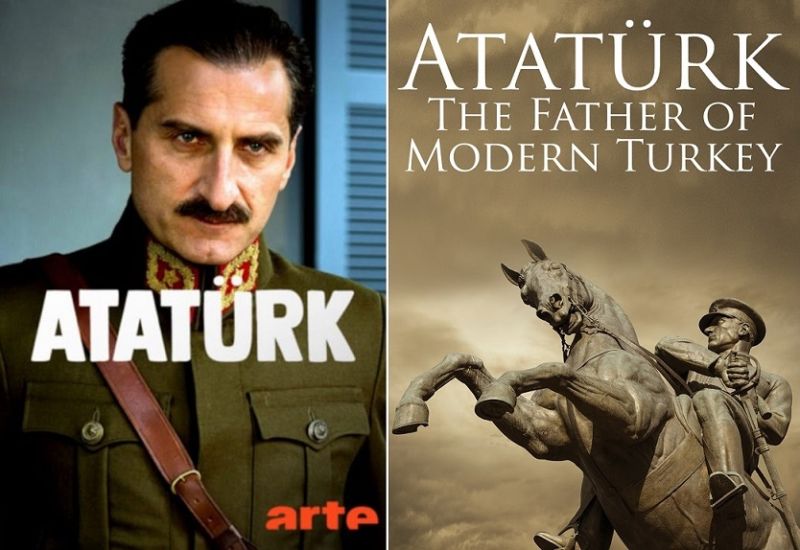
Ataturk: The Father of Modern Turkey

This in-depth documentary examines the life of Mustafa Kemal Ataturk, who founded the Republic of Turkey from the ruins of the Ottoman Empire. One of the most fascinating personalities of his time: Mustafa Kemal Ataturk. November 10 2018 marks the 80th anniversary of his death. His revolution, which quickly and radically transformed the declining Ottoman Empire into today's Turkey and profoundly changed culture and society, is rooted in European thinking. But Ataturk's unconditional determination also shows dictatorial traits. Mustafa Kemal Ataturk - Monuments to the father of modern Turkey can be found in every city, the anniversary of his death is commemorated every year, derogatory words about him are punishable by law. Rarely has a politician changed a society so radically in such a short time as Ataturk did in Turkey, which was born out of the declining Ottoman Empire. He acted with unconditional determination when it came to catapulting a deeply backward country into modernity. His reforms still have an impact today. Ataturk's revolution is rooted in European thinking, in the French Enlightenment, in the process of secularization in western states. In many ways it is a turning to the West. It is also based on the idea of equality between men and women - unique in the Islamic world at the time. With his cultural revolution, however, he also overwhelms many traditionally oriented Turks. It still has an effect today. How did a young Ottoman officer become the hero of Gallipoli in World War I? How did this hero become the charismatic founder of today's Turkey through the war of independence? How does he push his reforms through in just fifteen years: abolition of polygamy, introduction of Swiss civil law, dress reform, hat reform, language and writing reform? The docu-drama tells the story of Mustafa Kemal Pasha - from his birth in multicultural Salonika to his death on November 10, 1938. Along with interviews with historians, a rich trove of archival footage and photographs enhance the documentary. These are further illuminated by reenactments depicting the intellectual evolution of Ataturk the man, as well as his revolution and political philosophy. Inner monologues drawn from the wide range of the nation's founder's writings and diaries, notes and letters lend authenticity and credibility to the film.

2018 • History

Saddam: The Butcher of Baghdad

The story of Saddam Hussein the sadistic tyrant who rules Iraq with an utter contempt for humanity for 23 years - a man whose cruelty knows no limits and who'll stop at nothing to achieve the power of life and death over millions of people.

6/10Evolution of Evil • 2015 • History

Avenging Caesar

Marc Antony and Octavian were part of the triumvirate seeking to avenge Caesar. The two leaders managed to combine their forces to punish Brutus and Cassius, Caesar’s assassins, following the Battle of Philippi in 42 BC. But how would the ambitions of the two men collide as time went on?

Part 1The Destiny of Rome: Series 1 • 2011 • History