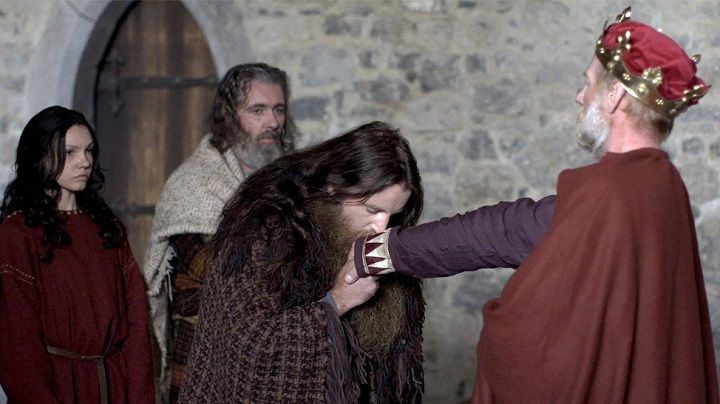
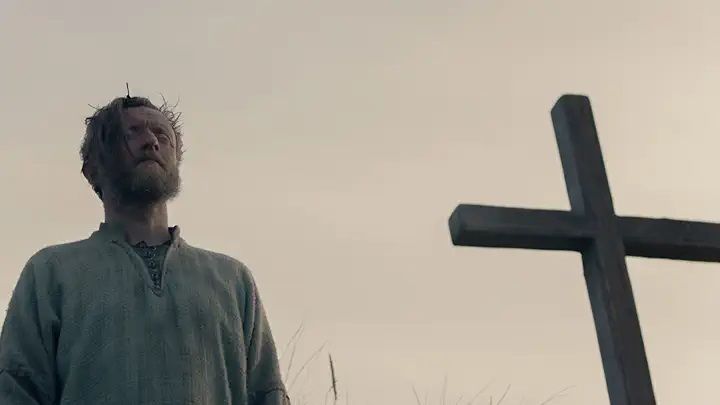
Episode One opens in the turmoil of 12th century Ireland, essentially a "Game of Thrones" society where provincial kings vie for supremacy. When two of these power players drive a rival into exile, he seeks help from Henry II, the Anglo-Norman king of England. Henry's vassal Strongbow and other Norman allies then invade Ireland with frightening power.
Hope you're finding these documentaries fascinating and eye-opening. It's just me, working hard behind the scenes to bring you this enriching content.
Running and maintaining a website like this takes time and resources. That's why I'm reaching out to you. If you appreciate what I do and would like to support my efforts, would you consider "buying me a coffee"?
BTC: bc1q8ldskxh4x9qnddhcrgcun8rtvddeldm2a07r2v
ETH: 0x5CCAAA1afc5c5D814129d99277dDb5A979672116
With your donation through , you can show your appreciation and help me keep this project going. Every contribution, no matter how small, makes a significant impact. It goes directly towards covering server costs.
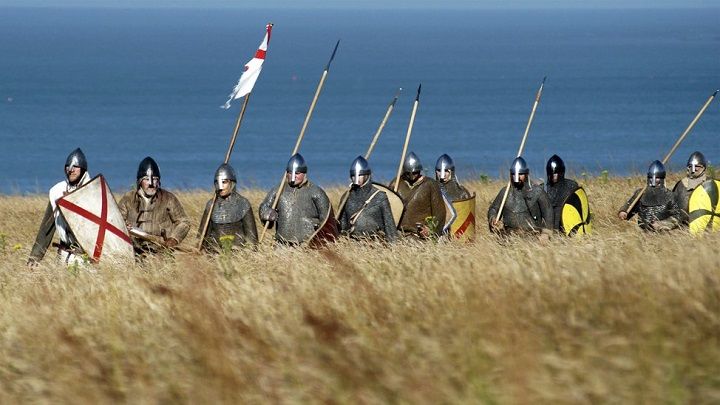
Episode One opens in the turmoil of 12th century Ireland, essentially a "Game of Thrones" society where provincial kings vie for supremacy. When two of these power players drive a rival into exile, he seeks help from Henry II, the Anglo-Norman king of England. Henry's vassal Strongbow and other Norman allies then invade Ireland with frightening power.
2023 • History
Episode Two follows the course of the invasion, as Strongbow wins victory after victory. In 1171 Henry II himself arrives to takes control of Ireland, and he grants land there to settlers from Britain. Now archaeology and cutting-edge science reveal their fascinating lives. The episode also shows how the conquest of Ireland enabled centuries of war between England and France.
2023 • History
Cities of the Sky explores the creation of some of the ancient world's largest and most splendid cities. Were people across Native America inspired by celestial phenomenon to build their communities? Answers are revealed in American urban centers that bloomed from the Mexican jungle, a massive multi-cultural city in Central Mexico that is among the largest urban centers in history, and the capital of South America's greatest empire.
S1E3 • Native America • 2018 • History
In the first episode of an exciting three-part series, Professor Robert Bartlett explores how the Normans developed from a band of marauding Vikings into the formidable warriors who conquered England in 1066. He tells how the Normans established their new province of Normandy -'land of the northmen' - in northern France. They went on to build some of the finest churches in Europe and turned into an unstoppable force of Christian knights and warriors, whose legacy is all around us to this day. Under the leadership of Duke William, the Normans expanded into the neighbouring provinces of northern France. But William's greatest achievement was the conquest of England in 1066. The Battle of Hastings marked the end of the Anglo-Saxon aristocracy and monarchy. The culture and politics of England would now be transformed by the Normans.
S1E1 • The Normans • 2010 • History
Once in power, Hitler tightens his grip through propaganda, antisemitic laws, and the expansion of the Third Reich into Austria.
S1E3 • Hitler and the Nazis: Evil on Trial • 2024 • History
On the 19 November 1945, the International Military Tribunal was opened in the Palace of Justice in Nuremberg, Germany. The city, which had seen the rise of the Nazi Party was, in the eyes of the allies, the perfect location to host its demise. The first of the Nuremberg trials was to be the biggest murder trial in human history, with 21 Nazi leaders appearing before the court charged with the deaths of millions of innocent people during the Holocaust of WWII. These were no ordinary criminals; they represented the very foundation of Nazi ideology that had instigated the most ferocious genocide the world had ever seen. With judges and prosecutors from the US, the UK, the USSR and France, the trials were the allies' collective condemnation of Nazi Germany and the atrocities committed in pursuit of their ideology. The decisions made at Nuremberg had implications not only for the accused, but for the very foundation of modern international criminal law. Now, 75 years on, audiences are provided with an immersive look at the event that has become synonymous with the birth of contemporary human rights in the 2020 documentary, The World’s Biggest Murder Trial: Nuremberg. This feature-length documentary provides a detailed account of the events and implications of the trials, featuring more than 1000 archive clips, including recently digitised film footage from the courtroom itself. Whilst 90 minutes seems incredibly brief considering the enormity of the trials, the documentary's constant and unwavering focus on the courtroom, and the horrors it uncovered, suggest any longer might be too harrowing to bear. It is a decision that serves to amplify the inhumanity of the accusations, the apparent indifference of the accused, and the desperate desire for justice in the aftermath of such a dehumanising period of history. The sheer enormity of the task that faced the judges and prosecutors is evident from the moment each of the accused ascends from deep beneath the palace and enters the dock. Convicting a single alleged murderer is one thing, but a murder trial with an estimated 12 million victims is a an almost incomprehensible undertaking, even in a modern context. The cinematic quality of the footage captures every moment in extraordinary detail, from the disturbing cold-bloodedness of the Third Reich leaders as they openly snigger at translation errors throughout the trial, to the accounts of survivors, who witnessed the terror of their actions first hand. With the benefit of hindsight, their crimes seem indisputable; however the documentary proves that there is no conviction without proof, and the trials themselves were not without controversy. The convictions were based on concepts barely understood, laws not yet formalised, and many believed the process served as a political judgement rather than a transformative moment in international law. Despite the criticisms surrounding them, there is no denying that the greatest legacy of the trials is the role they played in reiterating the need for an international body focused on the protection of the human person. Though the majority of Nazis never received a punishment that reflected the extent of their crime, Nuremberg will forever be remembered as the moment that much of the world heard of the atrocities of the Holocaust for the first time.
2020 • History
A dying Hideyoshi appoints five regents to govern til his son comes of age, but the power hungry Tokugawa Ieyasu declares war on those who oppose him.
S1E6 • Age of Samurai: Battle for Japan • 2021 • History
Over millions of years, mankind has evolved from a puny, vulnerable creature to become a dominant force on the planet. Occasionally the planet bites back--with terrifying consequences that have shaped our evolution.
3/13 • Mankind Decoded • 2013 • History