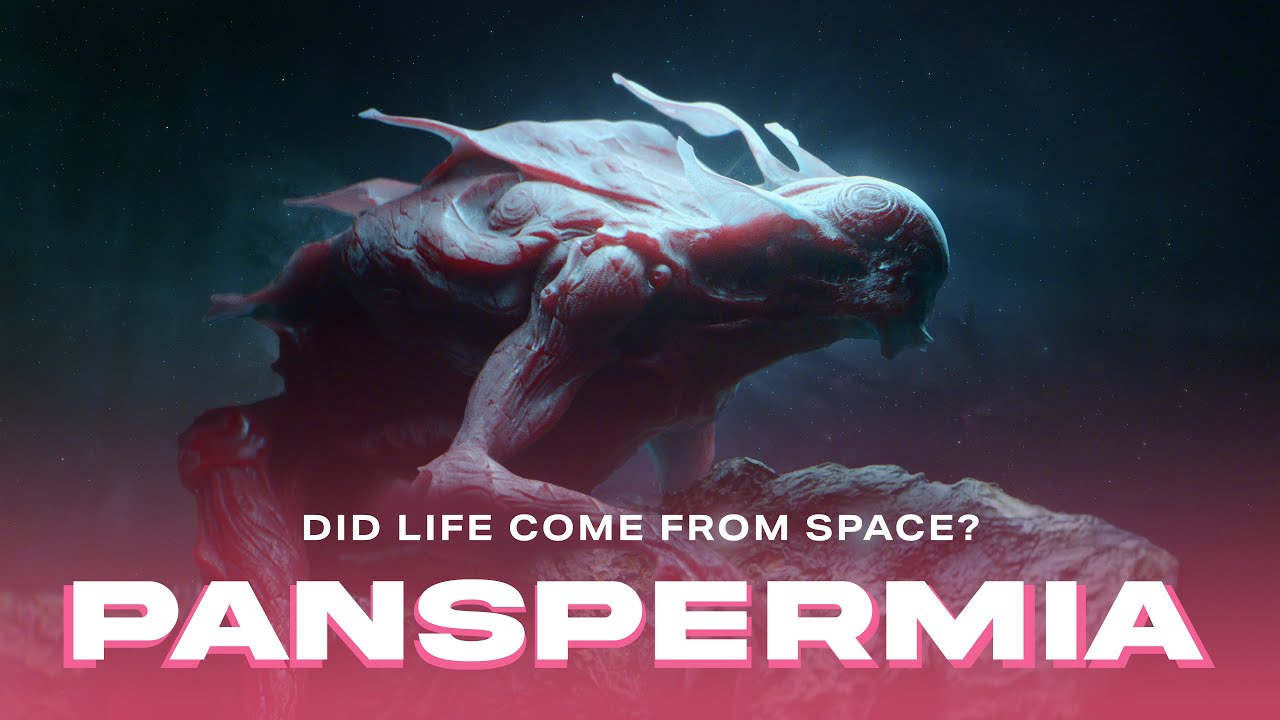
It's not as crazy as it sounds: life on Earth could be descended from space-faring microbes from Mars, or even further beyond, riding here on an interplanetary highway of asteroids. Extremophile bacteria may be resilient enough to survive the intense 3-stage journey, by repairing their own damaged DNA or hibernating for the long and deadly journey through space.
Hope you're finding these documentaries fascinating and eye-opening. It's just me, working hard behind the scenes to bring you this enriching content.
Running and maintaining a website like this takes time and resources. That's why I'm reaching out to you. If you appreciate what I do and would like to support my efforts, would you consider "buying me a coffee"?
BTC: bc1q8ldskxh4x9qnddhcrgcun8rtvddeldm2a07r2v
ETH: 0x5CCAAA1afc5c5D814129d99277dDb5A979672116
With your donation through , you can show your appreciation and help me keep this project going. Every contribution, no matter how small, makes a significant impact. It goes directly towards covering server costs.
How's it all gonna end? This experience takes us on a journey to the end of time, trillions of years into the future, to discover what the fate of our planet and our universe may ultimately be.
2019 • Astronomy
The Moon has drawn out our sense of wonder since before we were fully human. Where did it come from? What secrets are written in its rocks? For most of our history, its story was cloaked in myth and mystery. Only now are the vivid details coming into focus.
2020 • Astronomy
The biggest question of our time. Are we alone? Chapter 1 of this experience takes you to alien worlds and distant places in time and space, in search of where alien life might be hiding and what our place is within the history of life. After generations of wondering, the truth is finally within our reach. New research and technologies have brought us closer than ever to an answer - only a few decades in the eyes of some NASA scientists.
2020 • Astronomy
What if there was a museum that contained every type of life form in the universe? This experience takes you on a tour through the possible forms alien life might take, from the eerily familiar to the utterly exotic, ranging from the inside of the Earth to the most hostile corners of the universe.
2020 • Astronomy
Who are the masters of the universe? Are we the only intelligent life, or is something else lurking out there? For 60 years now, we have probed the skies for signs of alien intelligence, longing for connection -- to no avail. But new ideas and technologies are beginning to change the game. Proudly presenting the third chapter in the Life Beyond trilogy: In Search of Giants. In this journey, we will see how far we’ve come in the search for intelligent life, how they might be communicating, just how advanced they might be, and what it would mean if we really did make contact. It might take thousands of years to make a discovery. But as long as the mystery endures, the search for giants will continue. It's in our blood to want to know.
2021 • Science
66 million years ago, the worst day in the history of life was dawning.
2024 • Environment
It's not as crazy as it sounds: life on Earth could be descended from space-faring microbes from Mars, or even further beyond, riding here on an interplanetary highway of asteroids. Extremophile bacteria may be resilient enough to survive the intense 3-stage journey, by repairing their own damaged DNA or hibernating for the long and deadly journey through space.
2026 • Astronomy
Second Genesis follows planetary scientist Carolyn Porco as she explores what it takes to look for life beyond Earth, and what conditions are required for life to exist. Porco makes the case that Saturn’s moon Enceladus—with its plumes of water vapor spewing into space, confirmed organic materials, and evidence of hydrothermal vents at the bottom of its liquid ocean—is the most promising place to look. Could Enceladus be the key to proving once and for all that life is not unique to Earth? And what it would mean—both scientifically, and spiritually—if we found evidence of a true second genesis right here in our own galactic back yard?
2017 • Astronomy
Lunar days are about 14 Earth days long, and when night comes, temperatures plummet. But there are other issues to deal with as well. For instance, how can we overcome the moon's lack of atmosphere; difficult terrain with abrasive particles, and the effects of cosmic background radiation?
S1E4 • Destination: Moon • 2016 • Astronomy
Relive some of the most unexpected accidents in spaceflight and meet the astronauts who had to fix them on the fly
S1E3 • Space Disasters • 2020 • Astronomy
The Apollo space program embraces tragic setbacks and historic success; the last stage includes the Apollo 11 space flight which landed the first two people on the Moon.
S1E2 • Apollo Back to the Moon • 2019 • Astronomy
Flying through bad weather can be a harrowing experience, and for NASA, it can be doubly unnerving, as violent storms can strike from below the atmosphere or above it. Witness the true power of nature in space and on Earth as astronauts and ground crews battle to overcome the elements, including a severe lightning strike that crippled Apollo 12's computer system, the freezing temps that compromised the Space Shuttle Challenger, and the tempest of space debris that sent a dead satellite on a collision course with the International Space Station.
S1E5 • Space Disasters • 2020 • Astronomy
Earth has a companion in space so large that it rules our nights, our months, our ocean tides. Why Earth should have such a moon is one of the deepest mysteries of the Solar System. We tell the story of how the Earth’s satellite became the unlikely object of desire of the two Cold War superpowers.
S1E4 • The Planets • 2004 • Astronomy