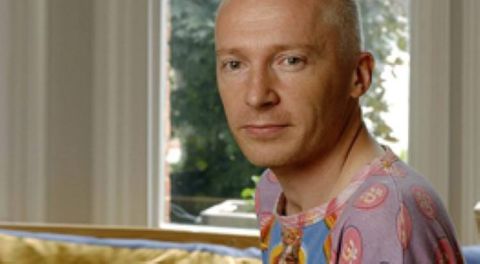
Durst reveals details about his childhood including witnessing his mother's suicide.
Hope you're finding these documentaries fascinating and eye-opening. It's just me, working hard behind the scenes to bring you this enriching content.
Running and maintaining a website like this takes time and resources. That's why I'm reaching out to you. If you appreciate what I do and would like to support my efforts, would you consider "buying me a coffee"?
BTC: bc1q8ldskxh4x9qnddhcrgcun8rtvddeldm2a07r2v
ETH: 0x5CCAAA1afc5c5D814129d99277dDb5A979672116
With your donation through , you can show your appreciation and help me keep this project going. Every contribution, no matter how small, makes a significant impact. It goes directly towards covering server costs.
In 2001, a dismembered corpse is found floating in Galveston Bay, Texas.
2015 • People
Durst reveals details about his childhood including witnessing his mother's suicide.
2015 • People
A tip leads a district attorney to re-open the investigation into the disappearance of Kathie Durst.
2015 • People
In 2003, Galveston, Texas, becomes a media circus as the press descends to cover Durst's trial.
2015 • People
Family and friends of Kathie Durst continue to hunt for the truth about what happened to her.
2015 • People
Filmmakers spend nearly a decade investigating Robert Durst and his alleged crimes.
2015 • People
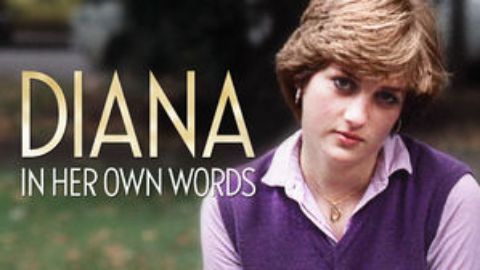
This documentary uses the recordings Princess Diana made for the book that was written by Andrew Morton. In this documentary Diana narrates her life and the events that surrounded her.
2017 • People
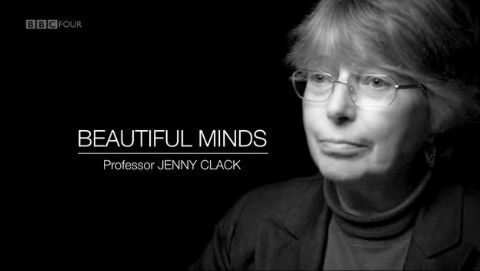
Jenny Clack recounts how she overcame setbacks before she found and described a fossil which offered new evidence of how fish made the transition onto land. For paleontologist Professor Jenny Clack, who solved one of the greatest mysteries in the history of life on Earth, success was far from inevitable. A chance discovery in 1986 in the earth sciences department of Cambridge University, of long-forgotten fossils collected from the Devonian rocks of East Greenland in 1970, was to shape the rest of her career. She recounts how she had to overcome a series of setbacks before she found and described the fossil Acanthostega, a 365 million-year-old creature that offered dramatic new evidence of how fish made the transition onto land. She authored or co-authored more than 120 research papers as well as numerous popular articles and book reviews. A measure of the significance of her work is that 15 of her research papers were published in the journal Nature. Her one book, "Gaining Ground, The Origin and Evolution of Tetrapods" (2002), summarises the results of research on early tetrapods over the previous 25 years.
S2E1 • Beautiful Minds • 2012 • People
Marc-André Leclerc climbs alone, far from the limelight. The free-spirited 23-year-old makes some of the boldest solo ascents in history. With no cameras and no margin for error, Leclerc's approach is the essence of solo adventure.
2021 • People
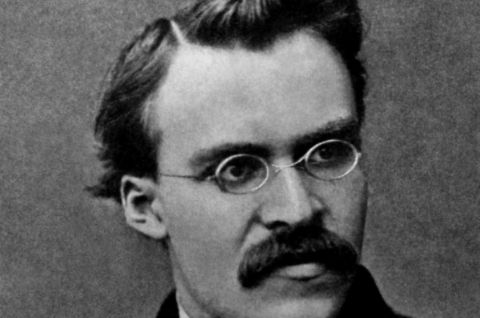
The philosopher Friedrich Nietzsche was one of the most brilliant and dangerous minds of the 19th century. His uncompromising and often brutal ideas smashed the comfortable presuppositions and assumptions of religion, morality and science. His was a world not just bereft of God but almost of humanity, breathtaking in both its post-religious starkness and its originality. Bettany Hughes goes in search of the beliefs of a man whose work is amongst the most devastatingly manipulated and misinterpreted in philosophical history. Nietzsche's dislike of systems and of seeking truths left his ideas ambiguous and sometimes incoherent. It was this that made him vulnerable to interpretation, and as a result his thoughts - which warned against the very notion of a political system like totalitarianism - were manipulated to strengthen its ideals. Vocally opposed to anti-Semitism, his anti-Semitic sister made sure he became the poster boy for Hitler's drive for an Aryan ideal.
Part 2 • Genius of the Modern World • 2016 • People
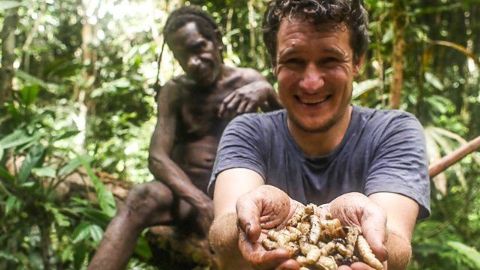
Will Millard returns to Korowai to spend more time with two old men in the forest.
S1E2 • My Year With the Tribe • 2018 • People
Professor Marcus du Sautoy goes in search of answers to one of science's greatest mysteries: how do we know who we are? While the thoughts that make us feel as though we know ourselves are easy to experience, they are notoriously difficult to explain. So, in order to find out where they come from, Marcus subjects himself to a series of probing experiments.