It's June 1944. the Soviet Red Army and the Western Allies are in a race to the finish line. The prize is Hitler's Berlin, and whoever is first to cover 700 miles will not only win the war but will get to decide
Hope you're finding these documentaries fascinating and eye-opening. It's just me, working hard behind the scenes to bring you this enriching content.
Running and maintaining a website like this takes time and resources. That's why I'm reaching out to you. If you appreciate what I do and would like to support my efforts, would you consider "buying me a coffee"?
BTC: bc1q8ldskxh4x9qnddhcrgcun8rtvddeldm2a07r2v
ETH: 0x5CCAAA1afc5c5D814129d99277dDb5A979672116
With your donation through , you can show your appreciation and help me keep this project going. Every contribution, no matter how small, makes a significant impact. It goes directly towards covering server costs.
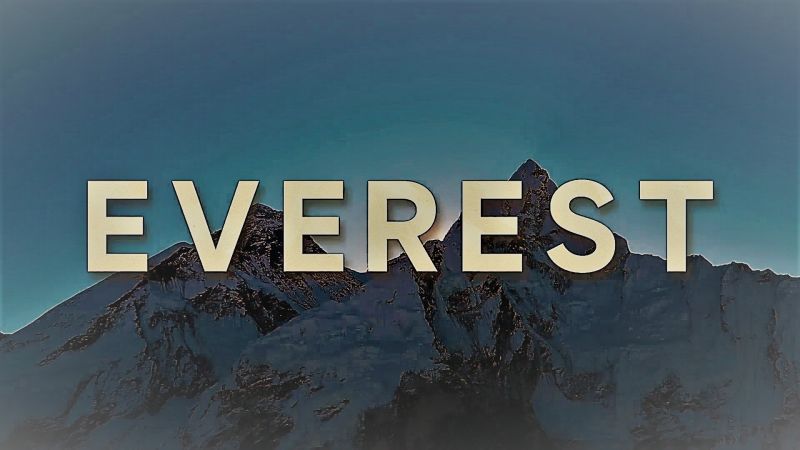
Where earth meets sky: how the most thrilling and dangerous point at the top of the world continues to fascinate, and what it takes to conquer the Big One.
2021 • Math
Psychedelics have impacted history for as long as there have been people wanting to get their minds blown. Discover who's been under the influence from Salem witches and Santa Claus to 1960s hippies and Steve Jobs, and find out how mind-altering substances have changed our world.
2021 • Math
Ever wonder what happens after a global pandemic? Sometimes the secrets of the future can be found in the past. In the wake of the Spanish Flu, the 1920s become the decade of flappers, jazz, and the speakeasy, and for many a time of unprecedented opportunity.
2021 • History
Get the inside track on five of the greatest heists in history. These are not petty robberies, but high-stakes operations meticulously planned and audaciously executed, with a cast of colorful characters from the mastermind to the snitch. Find out who gets away with the loot, and who doesn't.
2021 • History
It's June 1944. the Soviet Red Army and the Western Allies are in a race to the finish line. The prize is Hitler's Berlin, and whoever is first to cover 700 miles will not only win the war but will get to decide
2021 • History
The Amazon rainforest is one of the enduring mysteries of the natural world - and no wonder, it is as big as the whole continental US! It’s home to over 2 million Indigenous peoples, and a massive 10…
2021 • History
Since the earliest pioneers million commercial flights each year, discover how innovation, coach class, and sex have made our flying fantasies come true.of flight,we've dreamed of conquering the skies. From the first brave passenger flying across Tampa Bay in 1915 in a rickety rust bucket to 40
2021 • History
The history of skyscrapers is the history of American cities, technological ingenuity, and a global boom in urbanization. From West to East, and 5 stories up to 1km high, there’s nowhere to go but up.
2021 • History
Putting the Orient Express – also called „the train of trains“ – on its tracks called for considerable stamina. Several times, the ambitious project of Georges Nagelmackers was on the brink of failure as the Belgian entrepreneur was facing the bankruptcy of his sleeping car company.
2021 • History
Mehmed launches an ambitious siege to break through the walls of Constantinople, but Giustiniani's mercenaries manage to forestall the Janissaries.
S1E2 • Rise of Empires: Ottoman • 2020 • History
Exploration has created and defined our modern world. Humanity's primal curiosity has sparked new inventions and revealed the mysteries of the universe.
S1E7 • Origins: The Journey of Humankind • 2017 • History
In 1945, Stuart and Budd Schulberg were sent to Europe to gather film evidence of Nazi crimes. The two brothers were part of a special OSS unit. The material they gathered was eventually put to use prosecuting top Nazi officials at Nuremberg.
2021 • History
The Romans were brilliant engineers and soldiers, but what isn't as well known is that they also gave us wonderful artistic treasures. In this three-part series, Alastair Sooke argues that the old-fashioned view that the Romans didn't do art is nonsense. He traces how the Romans during the Republic went from being art thieves and copycats to pioneering a new artistic style - warts 'n' all realism. Roman portraits reveal what the great names from history, men like Julius Caesar and Cicero, actually looked like. Modern-day artists demonstrate the ingenious techniques used to create these true to life masterpieces in marble, bronze and paint. We can step back into the Roman world thanks to their invention of the documentary-style marble relief and to a volcano called Vesuvius. Sooke explores the remarkable artistic legacy of Pompeii before showing how Rome's first emperor, Augustus, used the power of art to help forge an empire.
S1E1 • The Treasures of Ancient Rome • 2012 • History
In 1943 the British and Americans plan the opening of a 'Second Front' in Northwest Europe. Huge numbers of troops, aircraft and ships begin to assemble in England for the invasion of France. They train relentlessly for what will prove the largest amphibious operation in military history. Meanwhile across the Channel the Germans also gather their strength. Hitler sends one of his best generals, 'the Desert Fox' himself Field Marshal Erwin Rommel, to supervise the construction of coastal defences known as 'the Atlantic Wall'. But the Allies retain one crucial advantage that even Rommel's genius cannot compensate for – only the Allies know where and when they will strike.
S1E1 • D-Day: The Soldiers Story • 2012 • History
Bettany Hughes' series exploring the lives and teachings of influential ancient philosophers draws to a close with a profile of Confucius, who is credited as the first Chinese thinker to take a systematic philosophical approach to issues of social, political and ethical importance. Born during the chaotic Spring and Autumn period of Chinese history, Confucius believed that harmony could be promoted and achieved through the examples of sage rulers. He was also a innovative teacher, and tried to instill his principles of moral excellence in China's elite, but died without seeing his vision for his nation come to pass. However, his philosophies would eventually form the bedrock of Chinese culture, with many of his principles of tradition surviving to this day.
Part 3 • Genius of the Ancient World • 2015 • History