Ruin • 2016 • episode "Part 4" Barbarians Rising

Category: History

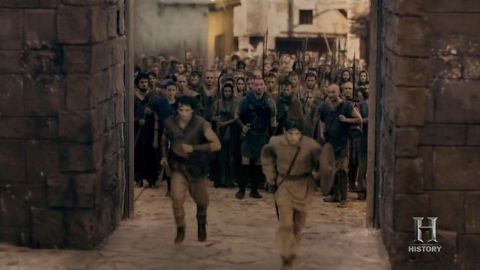
Alaric's Goths sack Rome; Attila the Hun seizes power through chaos and destruction while the barbarians move in for the kill. The Vandal king, Geiseric, masterminds the end of Rome; the Empire falls.

Make a donation

Buy a brother a hot coffee? Or a cold beer?

Hope you're finding these documentaries fascinating and eye-opening. It's just me, working hard behind the scenes to bring you this enriching content.

Running and maintaining a website like this takes time and resources. That's why I'm reaching out to you. If you appreciate what I do and would like to support my efforts, would you consider "buying me a coffee"?

Donation addresses

Buy Me a Coffee at ko-fi.com

patreon.com

BTC: bc1q8ldskxh4x9qnddhcrgcun8rtvddeldm2a07r2v

ETH: 0x5CCAAA1afc5c5D814129d99277dDb5A979672116

With your donation through , you can show your appreciation and help me keep this project going. Every contribution, no matter how small, makes a significant impact. It goes directly towards covering server costs.
Barbarians Rising • 2016 • 4 episodes •

Resistance

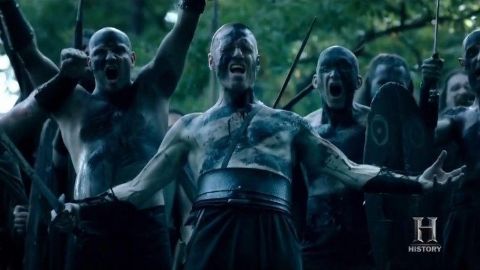
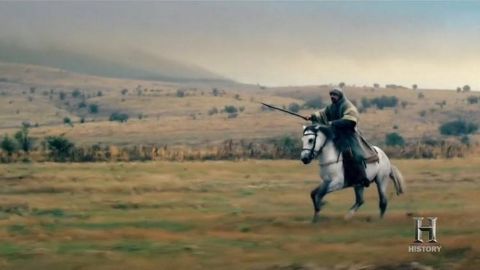
Series premiere of a docudrama that chronicles the rebel tribes that brought down the Roman Empire. In the opener, An epic 700-year battle for freedom begins as the barbarians rise against Rome; Hannibal builds a rebel alliance and conquers the Alps; the shepherd Viriathus unleashes a wave of resistance to save his people from destruction.

2016 • History

Rebellion

Rome brings its enemies inside its borders as the age of Empire begins; Spartacus leads a slave uprising that threatens Rome on its own turf; Arminius, Germania's native son raised as a Roman, must choose a side in the fight for freedom.

2016 • History

Revenge

Arminius unites the tribes and engineers an ambush attack to drive Rome out of Germania; Boudica unleashes bloody vengeance on the Empire; Rome's betrayal of the Goths ends in an apocalyptic clash.

2016 • History

Ruin

Alaric's Goths sack Rome; Attila the Hun seizes power through chaos and destruction while the barbarians move in for the kill. The Vandal king, Geiseric, masterminds the end of Rome; the Empire falls.

2016 • History

You might also like

The March to War

The opening episode tells the story of the outbreak of war in 1914. In the decades since the last European War the world changed.

S01E01The Great War in Numbers • 2017 • History

Part 1

In 1943 the British and Americans plan the opening of a 'Second Front' in Northwest Europe. Huge numbers of troops, aircraft and ships begin to assemble in England for the invasion of France. They train relentlessly for what will prove the largest amphibious operation in military history. Meanwhile across the Channel the Germans also gather their strength. Hitler sends one of his best generals, 'the Desert Fox' himself Field Marshal Erwin Rommel, to supervise the construction of coastal defences known as 'the Atlantic Wall'. But the Allies retain one crucial advantage that even Rommel's genius cannot compensate for – only the Allies know where and when they will strike.

S1E1D-Day: The Soldiers Story • 2012 • History

The Queen and the Coup

It's February 1953, the first anniversary of Queen Elizabeth's reign. Little does the Queen know she is about to be deployed in a US plot to topple Iran's democratic leader in favour of an all-powerful shah. Planned by MI6 and executed by the CIA, the coup destroyed Iran's democracy and had an impact on relations between Iran and the West. Using declassified secret documents, this documentary reveals the truth of what happened in 1953.

2020 • History

The Classical Revolution

Alastair unpicks the reasons behind the dazzling revolution that gave birth to classical Greek art, asking how the Greeks got so good so quickly. He travels to the beautiful Valley of the Temples in Agrigento, and to the island of Mozia to see the astonishing charioteer found there in 1979, and marvels at the athletic bodies of the warriors dragged from the seabed - the Riace Bronzes. It was a creative explosion that covered architecture, sculpting in marble, casting in bronze, even painting on vases. Perhaps the most powerful factor was also its greatest legacy - a fascination with the naked human body.

S1E2Treasures of Ancient Greece • 2015 • History

Henry VIII: Man, Monarch, Monster

Three-part drama-documentary series revealing the truth about England's most infamous King, King Henry VIII. Filming in historic locations including Hampton Court, Windsor Castle and the Vatican and unearthing new documents never seen before on TV, a team of Tudor experts uncover the real Henry, and explore how his complex personality fundamentally shaped the nation. Ch1. Rise of a Tyrant Experts examine how Henry VIII's traumatic childhood affected his personality, from the death of his older brother to the tragic early death of his beloved mother. Narrated by Jason Isaacs. Ch2. Bloodlust and the Boleyns Takes viewers on a journey through the turbulent marriages, affairs and tyrannical politics of King Henry VIII's reign, and explores how Henry's obsession with marrying Anne Boleyn resulted in a cataclysmic and hugely unpopular split with the Roman Catholic Church. The programme also examines Henry's relationship with his new chief advisor and enforcer, Thomas Cromwell, who would come to bear the brunt of the King's increasing unhinged behaviour in the years to come. Narrated by Jason Isaacs. Ch3. Endgame A look at the king's final years, when the pain caused by an infected ulcer on his leg had a detrimental impact on his increasingly angry temperament. Lauren Johnson examines the king's exotic diet, including meat from porpoises and seals, and considers its impact on both his weight and his health. Plus, a look at a Catholic rebellion and the breakdown of Henry's relationship with advisor Thomas Cromwell.

2020 • History

Christians against Christians

Corruption, loose morals, depravity – the German monk Martin Luther had enough of this and demanded a pure church and a pure faith. His goal was nothing less than a revolution: the Reformation of the church and the ousting of the "depraved" popes. Instead, the freedom within every Christian believer was to be expressed. The first example was the Peasants' Wars. Christianity once again became divided after the downfall of Byzantium: there were now Catholics, Lutherans and Reformed, for the rebels soon went their own way. The new longing for a purer Christianity soon led to the biggest catastrophe in Europe, the Thirty Years' War. It was not foremost a religious war, although it was easier to kill more mercilessly without a legitimation than have to worry about "eternal life." Europe lost half of its population during this period. The horror of the roving hordes of soldiers, the plunge into the most terrible atrocities that humans are capable of, caused the educated to doubt the beneficial power of religion. The separation of church and state is the result of the European experience of so-called religious wars. Outlining the provincial causes and ravaging effects of Europe's Thirty Years' War, this program illustrates the ability of religious fervor to inflame nationalism and drive the quest for power. With background on Martin Luther's split with the Catholic Church and the St. Bartholomew's Day Massacre, Dr. Helmut Neuhaus of Friedrich Alexander University offers detailed analysis of the Hapsburg-Bohemian conflict, the shifting alliances of Catholics and Protestants, and the mercenary campaigns of Wallenstein—leading to a comparison with large-scale natural disaster. The program clearly identifies the three-decade inferno as an inspiration for later divisions of church and state.

S1E2The Holy Wars: War and Religion • 2004 • History