DJ and broadcaster Rita Ray travels to South Africa, home to distinctive vocal harmonies that have travelled all over the world. Visiting Johannesburg, Durban and Cape Town, she discovers the extraordinary songs and harmonies that have given this country a voice abroad. They have often carried messages about inequality and injustice at home, resulting in beautiful music with a real sense of purpose. South Africa is a diverse nation, and each tribal group has its own musical traditions.
Hope you're finding these documentaries fascinating and eye-opening. It's just me, working hard behind the scenes to bring you this enriching content.
Running and maintaining a website like this takes time and resources. That's why I'm reaching out to you. If you appreciate what I do and would like to support my efforts, would you consider "buying me a coffee"?
BTC: bc1q8ldskxh4x9qnddhcrgcun8rtvddeldm2a07r2v
ETH: 0x5CCAAA1afc5c5D814129d99277dDb5A979672116
With your donation through , you can show your appreciation and help me keep this project going. Every contribution, no matter how small, makes a significant impact. It goes directly towards covering server costs.
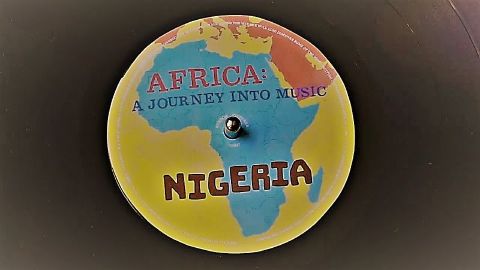
DJ and broadcaster Rita Ray travels to Nigeria, home of some of the most influential African music of the last 60 years. The country's extraordinary polyrhythms have powered highlife, funk and Afrobeat for decades, and can still be heard in modern pop music. Travelling to Lagos and beyond, Rita traces the importance of rhythm in Nigeria's music and discovers the many different musical styles it has created, from Yoruba juju music, to acoustic singer-songwriters and world-class pop.
2018 • Music
DJ and broadcaster Rita Ray travels to South Africa, home to distinctive vocal harmonies that have travelled all over the world. Visiting Johannesburg, Durban and Cape Town, she discovers the extraordinary songs and harmonies that have given this country a voice abroad. They have often carried messages about inequality and injustice at home, resulting in beautiful music with a real sense of purpose. South Africa is a diverse nation, and each tribal group has its own musical traditions.
2018 • Music
DJ and broadcaster Rita Ray travels to Mali in West Africa, home to a deep musical culture and ancient instruments that are the hallmark of their sound. Mali has produced more Grammy-winning artists than any other African country, and this well of talent has drawn in artists and producers from around the world to collaborate with the local musicians. Whilst the country has been rocked by Islamist insurgency, leading to a ban on music in some areas, Rita finds out how a traditional way of life and rich musical culture have endured.
2018 • Music
They defined music and popular culture like no other band ever will. But how did The Beatles make the journey from Merseyside teenagers to international pop stars in the 1960s? The Beatles: Made on Merseyside recounts how American rock ‘n’ roll and rhythm and blues dragged post-war Liverpool into one of the most vibrant music cities ever with the Mersey Sound. Featuring unique archive and revealing interviews from those involved in the early years of The Beatles in Liverpool and Hamburg, we discover the story of The Beatles’ previous band formations and why it took so long for them to achieve success. From school bands to colleges, Hamburg to The Cavern Club, The Beatles moved from skiffle to rock ‘n’ roll before creating their unique sound.
2019 • Music
Behind-the-scenes archive documentary following Queen's Freddie Mercury, Brian May, Roger Taylor and John Deacon as they record their sixth album News of the World and embark on a groundbreaking tour of North America. By 1977, Queen had become a major headlining act in the UK, releasing chart-topping albums and singles as well as playing sell-out concerts in all the country's major venues. However, they were facing an increasingly hostile music press, who had a new favourite in punk and had turned against the elaborate, multi-layered recording techniques that had become the hallmark of the band's previous albums. But an unfazed Queen had their sights set on greater things. As the band announced plans to record their next album, the expectation was it would be another production extravaganza, but Freddie, Brian, Roger and John already had other ideas. News of the World showcased them at their most raw, simple and best, returning to their roots as a live act. With a self-imposed limit on studio time and produced entirely on their own for the first time, this stripped-back album took the fans and press by surprise and demonstrated Queen's ability to transcend fashions. It was to prove a seminal moment in the band's history. At the time, BBC music presenter Bob Harris was given exclusive and extensive access to the band to cover this period. Conducting insightful interviews with all four band members as well as filming them at work in the studio as they were planning and rehearsing their forthcoming North American tour, and then following them as they performed across the US, Bob captured a band attempting to replicate their huge domestic success on the global stage. Curiously, the documentary he set out to make was never completed, and the footage lay unused in the archive until now. To mark the 40th anniversary of the release of the News of the World album, the footage has now been carefully restored and revisited to compile this hour-long portrait of a group setting out to take the next step on their remarkable journey to becoming one of the biggest bands on the planet. Armed with an array of new songs, including the monster hits We Will Rock You and We Are the Champions, Queen dazzled the American audience and laid the foundations of a relationship that endures to this very day. Coming full circle, this film is bookended by footage shot in the summer of 2017 as Brian May and Roger Taylor took Queen back to the US with Adam Lambert as lead singer. Revisiting many of the cities they had performed in 40 years previously and including many of the songs from that 1977 album, they prove that despite the tragic loss of Freddie Mercury over 25 years ago, Queen can still rock the world.
2017 • Music
Scientists are now finally discovering what thinkers, musicians, or even any of us with a Spotify account and a set of headphones could have told you on instinct: music lights up multiple corners of the brain, strengthening our neural networks, firing up memory and emotion, and showing us what it means to be human. In fact, music is as essential to being human as language and may even predate it. Can music also repair broken networks, restore memory, and strengthen the brain?
World Science Festival • 2019 • Music
In episode two, Whole Lotta Shakin', the rock 'n' roll story continues with the boom in the sound across America and its move into mainstream culture thanks to seminal TV appearances from Elvis, who made his small-screen debut with a rendition of Heartbreak Hotel before his notoriously sexualised performance of Hound Dog that caused shockwaves across conservative America. The programme explores the media's failed attempts to suppress the genre before wholesome Buddy Holly calmed the waters, converting geeky looks into chart success, before scandal again in 1958 with Elvis's conscription to the army and Jerry Lee Lewis's career suicide when he married his 13-year-old cousin.
S1E2 • Rock and Roll America • 2015 • Music
Bob Marley's musical (and cultural) shadow is so large that the man clearly needed an authoritative documentary portrait--and Marley steps in with all the right stuff to fill the role. Working with official rights to the music and access to Marley's family and friends, Oscar-winning documentarian Kevin Macdonald (One Day in September) creates a thorough account that hits the major points, not stinting on some of the less admirable aspects of Marley's life (including his brood of children fathered with women other than his patient wife, Rita, whose presence indicates just how much she puts Marley's legacy above his personal infidelities). Especially interesting is the sketch of Bob Marley's youth, as a mixed-race--and thus socially ostracized--kid from the village of Nine Mile who began to put together a reggae sound with a group of like-minded musicians in Jamaica in the late '50s and early '60s. That period comes to life, and the account of Marley's ascent, while familiar from such sagas, has its share of offbeat incidents. His death, at age 36 in 1981, does not dominate the movie, but Macdonald does a good job of getting that story laid out. In the meantime, the music and the concert footage are more than enough to justify the movie's existence, and Macdonald makes time to include thoughts about politics, ganja smoking, and Rastafarianism, too. If it's not the final word on Marley, it's an excellent start.
2012 • Music