Explores various societal issues within South Korea, highlighting aspects that may contribute to a dystopian environment. The content delves into topics such as intense academic pressure, work culture, technological surveillance, and social conformity.
Hope you're finding these documentaries fascinating and eye-opening. It's just me, working hard behind the scenes to bring you this enriching content.
Running and maintaining a website like this takes time and resources. That's why I'm reaching out to you. If you appreciate what I do and would like to support my efforts, would you consider "buying me a coffee"?
BTC: bc1q8ldskxh4x9qnddhcrgcun8rtvddeldm2a07r2v
ETH: 0x5CCAAA1afc5c5D814129d99277dDb5A979672116
With your donation through , you can show your appreciation and help me keep this project going. Every contribution, no matter how small, makes a significant impact. It goes directly towards covering server costs.
Paul Saffo looks at the development of the US economy through the 20th and into the 21st century. What are the trends that have shaped the economy? How are innovations in technology and communications making the 21st century an entirely different landscape for producers and consumers?
S1E6 • Curiosity Retreats: 2015 Lectures • 2015 • Economics
Jan Leeming narrates a look at controversies, scandals and surprises in TV, film, music and politics from 1990, when Mark Fowler rocked Walford with a dramatic return to EastEnders and a sitcom about Adolf Hitler was pulled off air after just one episode. The Poll Tax riots caused chaos on the streets of London and it was the end of the road for Britain's longest serving prime minister when Margaret Thatcher resigned. Heavy metal band Judas Priest were accused of hiding subliminal messages in their songs, and pop duo Milli Vanilli's career came to a dramatic end when it was revealed they were nothing more than a mime act.
S1E5 • Controversially: That Was the Year that Was • 2023 • Economics
Command and Control presents the terrifying, true story of what can happen when the weapons built to protect us threaten to become the very source of our own destruction. Based on The New York Times bestseller by Eric Schlosser the film tells the story of a 1980 accident at a Titan II missile complex in Damascus, Arkansas in minute-by-minute detail through the accounts of Air Force personnel, weapon designers, and first responders who were there, revealing the incredible chain of events that brought America to the brink of nuclear disaster. In so doing, the film explores the great dilemma that the United States has faced since the dawn of the nuclear age: How do you manage weapons of mass destruction without being destroyed by them?
2016 • Economics
Professor Renata Salecl explores the paralysing anxiety and dissatisfaction surrounding limitless choice. Does the freedom to be the architects of our own lives actually hinder rather than help us? Does our preoccupation with choosing and consuming actually obstruct social change?
Bottled water is a big business, selling itself as a tastier and healthier alternative to the tap variety. Is there truth behind the claims?
S2E5 • History 101 • 2022 • Economics
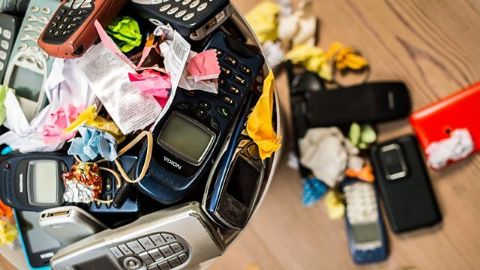
In the first of this three-part series investigating consumer spending, Jacques reveals how the concept of 'product lifespan' holds the key to our ever-churning consumerism. Exploring the historical origin of planned obsolescence, when some of the world biggest electrical manufacturers formed a light bulb cartel in the 1920s, Jacques reveals how products that are essential to our modern lifestyles are still made to break. During his investigation, Jacques uncovers the process by which a crucial transformation happened and attitudes towards spending were transformed. Instead of needing new goods because our old ones were broken, we learned to want them for reasons of fashion and aspiration - awaking a consumer appetite that could never be satisfied. In the US, he visits a recycling centre where brand-new high-tech goods are destroyed before they have even come out of the box. Jacques also meets some of the companies that encourage consumers to be dissatisfied with what they have and encourage purchases as part of an ever-faster cycle of 'upgrades'. He asks a senior IKEA executive why, despite the company's commitment to sustainability, it still encourages repeated discarding and purchasing. Jacques also talks to a former senior Apple employee who reveals how the company's new focus on fashion, with its colourful iPhones, keeps us buying even when technological innovation slows.
S1E1 • The Men Who Made Us Spend • 2014 • Economics