Thirty-five years of relentless propaganda and harsh brutal punishments left the Chinese people living in fear of their country's one-child policy. That rule, which was abandoned in 2015, has left the country with an ageing population and tens of millions more men than women. The documentary's directors, Nanfu Wang and Jialing Zhang, unmask the tightly held, hidden secrets of how the Chinese government enforced its one-child policy and explores its devastating effect. Wang, a new mother now living in the US, travels back to the rural village she was born in and speaks to midwives, village leaders and journalists, revealing chilling stories of forced abortions, sterilisation, abandoned babies and state-sponsored kidnappings. Her own family share the grim choices they were forced to make in order to avoid harsh punishments from the state. With new information on tens of thousands of abandoned and kidnapped children (nearly all of them infant girls), One Child Nation breaks open decades of silence on a vast, unprecedented social experiment that shaped - and destroyed - countless lives.
Hope you're finding these documentaries fascinating and eye-opening. It's just me, working hard behind the scenes to bring you this enriching content.
Running and maintaining a website like this takes time and resources. That's why I'm reaching out to you. If you appreciate what I do and would like to support my efforts, would you consider "buying me a coffee"?
BTC: bc1q8ldskxh4x9qnddhcrgcun8rtvddeldm2a07r2v
ETH: 0x5CCAAA1afc5c5D814129d99277dDb5A979672116
With your donation through , you can show your appreciation and help me keep this project going. Every contribution, no matter how small, makes a significant impact. It goes directly towards covering server costs.

Twelve billion miles away a tiny spaceship is leaving our solar system and entering the void of deep space. It is the first human-made object ever to do so. Slowly dying within its heart is a plutonium generator that will beat for perhaps another decade before the lights on Voyager finally go out. But this little craft will travel on for millions of years, carrying a Golden Record bearing recordings and images of life on Earth. The story of Voyager is an epic of human achievement, personal drama and almost miraculous success. Launched 16 days apart in 1977, the twin Voyager space probes have defied all the odds, survived countless near misses and almost 40 years later continue to beam revolutionary information across unimaginable distances. With less computing power than a modern hearing aid, they have unlocked the stunning secrets of our solar system. This film tells the story of these magnificent machines, the men and women who built them and the vision that propelled them farther than anyone could ever have hoped.
2017 • Astronomy
Pete Postlethwaite as a man living alone in the devastated world of 2055, watching archive footage from 2008 and asking why climate change wasn't stopped before it was too late.
2009 • Environment
In the autumn of 2007, Matthew Lee, a worried accounting executive at Lehman Brothers, began to notice serious financial irregularities in the company's practices. When he refused to approve tens of billions of dollars' worth of suspicious transactions, he was fired. Six months later, Lehman Brothers sank with 631 billion dollars of debt. Lee, who has since emerged as a crucial figure in Lehman's downfall, and other whistleblowers recount their personal stories of fraud and deception that went right to the top of the bank. Ultimately, they paid the price for trying to expose the 2008 subprime mortgage crisis.
2019 • Economics
Thirty-five years of relentless propaganda and harsh brutal punishments left the Chinese people living in fear of their country's one-child policy. That rule, which was abandoned in 2015, has left the country with an ageing population and tens of millions more men than women. The documentary's directors, Nanfu Wang and Jialing Zhang, unmask the tightly held, hidden secrets of how the Chinese government enforced its one-child policy and explores its devastating effect. Wang, a new mother now living in the US, travels back to the rural village she was born in and speaks to midwives, village leaders and journalists, revealing chilling stories of forced abortions, sterilisation, abandoned babies and state-sponsored kidnappings. Her own family share the grim choices they were forced to make in order to avoid harsh punishments from the state. With new information on tens of thousands of abandoned and kidnapped children (nearly all of them infant girls), One Child Nation breaks open decades of silence on a vast, unprecedented social experiment that shaped - and destroyed - countless lives.
2019 • Economics
Investigates a powerful and terrifying spyware called Pegasus, sold to governments around the world by Israeli company NSO Group and used on journalists, activists and others, including both the wife and fiancee of Saudi dissident Jamal Khashoggi.
2023 • Technology
The role of the Federal Reserve’s “easy money” policies in the current economic uncertainty. From the Great Recession to the rise in inflation, FRONTLINE examines the ongoing fragility of the financial system and the widening gap between Wall St. and Main St.
2023 • Economics
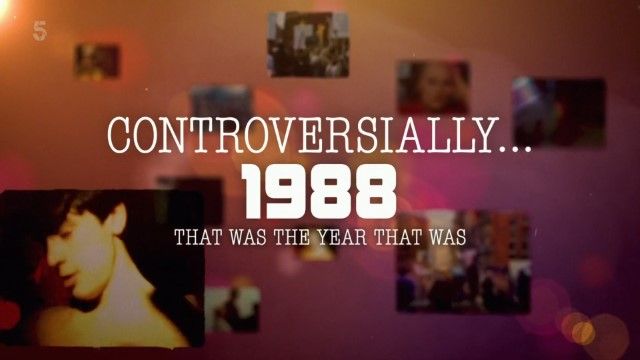
Controversies, scandals and surprises from the year, with Grange Hill tackling the issue of heroin addiction and EastEnders introducing a gay couple to Albert Square. Screenwriter Dennis Potter's drama The Singing Detective won over the critics, but its sex scenes and nudity upset moral campaigner Mary Whitehouse, while cricketer Ian Botham caused a storm after confessing that he'd smoked marijuana. Narrated by Jan Leeming, with contributions from Mark Little, Nick Ferrari, Cheryl Baker, Nick Hewer, Danny John-Jules and Nina Wadia.
S1E3 • Controversially: That Was the Year that Was • 2023 • Economics
The robot revolution is here. It may seem like robots aren’t all that prevalent, but many people already have robot floor cleaners in their homes. Think Roomba. Most factories now leverage countless bots that never get tired or make mistakes. Soon, cars will be completely auto controlled. CGP Grey discusses the future of robots, and how jobs and the economy will change in this new video. What happens to the economy when most traditional jobs have been replaced by robots?
Explores our economic, historical and emotional entanglement with oil, by looking at the conflicting imperatives around North Sea oil. This invisible machine at the core of our economy and society now faces an uncertain future as activists and investors demand change - is this the end of oil? By highlighting the complexities of how oil is embedded in our society - from high finance to cheap consumer goods – this documentary brings together a wide range of voices, from oil company executives and economists, to young activists and pension fund managers, and considers how this machine can be tamed, dismantled or repurposed. We have five to ten years to control our oil addiction, and yet the licensing of new oil fields continues in direct contradiction with the Paris Climate Agreement. This documentary looks at how the drama of global climate action is playing out in the fight over North Sea oil.
2022 • Economics
Ambassador Henry Crumpton, a veteran CIA operative with experiences on the front line of America's initial campaign against the Taliban in Afghanistan, considers the paradigm shift caused by the increased role of non-state actors in the Mid-East and other issues facing that region and the world.
8/10 • Curiosity Retreats: 2014 Lectures • 2014 • Economics
In the first of this three-part series investigating consumer spending, Jacques reveals how the concept of 'product lifespan' holds the key to our ever-churning consumerism. Exploring the historical origin of planned obsolescence, when some of the world biggest electrical manufacturers formed a light bulb cartel in the 1920s, Jacques reveals how products that are essential to our modern lifestyles are still made to break. During his investigation, Jacques uncovers the process by which a crucial transformation happened and attitudes towards spending were transformed. Instead of needing new goods because our old ones were broken, we learned to want them for reasons of fashion and aspiration - awaking a consumer appetite that could never be satisfied. In the US, he visits a recycling centre where brand-new high-tech goods are destroyed before they have even come out of the box. Jacques also meets some of the companies that encourage consumers to be dissatisfied with what they have and encourage purchases as part of an ever-faster cycle of 'upgrades'. He asks a senior IKEA executive why, despite the company's commitment to sustainability, it still encourages repeated discarding and purchasing. Jacques also talks to a former senior Apple employee who reveals how the company's new focus on fashion, with its colourful iPhones, keeps us buying even when technological innovation slows.
S1E1 • The Men Who Made Us Spend • 2014 • Economics