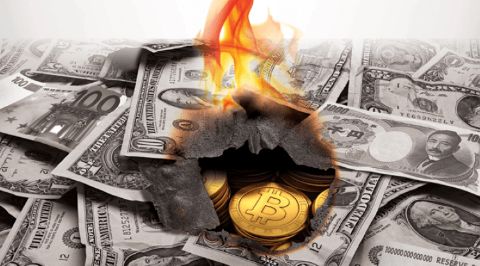
This documentary travels through a world of joblessness, debt, and economic uncertainty to the sovereign nation of the plutocrats, where each crisis seems to offer a new business opportunity. In America, where the 2008 financial meltdown cost $4 trillion in economic output, fortunes were made by the very people who precipitated the disaster while millions lost their homes and their savings. Austerity in Europe, economic stagnation in Asia, a lost generation of the young and unemployed - signs we are living through a fundamental global reorganization, the result of which no-one can predict. The world of the 1% has arrived, and the wealth gap is now greater in many countries than during the Gilded Age, the era of the Rockefellers, Carnegies and Vanderbilts. Can our stressed democracies deal with the fallout? Or have governments simply become instruments of the new elite?
Hope you're finding these documentaries fascinating and eye-opening. It's just me, working hard behind the scenes to bring you this enriching content.
Running and maintaining a website like this takes time and resources. That's why I'm reaching out to you. If you appreciate what I do and would like to support my efforts, would you consider "buying me a coffee"?
BTC: bc1q8ldskxh4x9qnddhcrgcun8rtvddeldm2a07r2v
ETH: 0x5CCAAA1afc5c5D814129d99277dDb5A979672116
With your donation through , you can show your appreciation and help me keep this project going. Every contribution, no matter how small, makes a significant impact. It goes directly towards covering server costs.
Oil has brought great wealth to the Middle East and ignited major wars. Is it a blessing or a curse for the region, as well as the rest of the world?
S1E5 • History 101 • 2020 • Economics
How money works
Ambassador Henry Crumpton, a veteran CIA operative with experiences on the front line of America's initial campaign against the Taliban in Afghanistan, considers the paradigm shift caused by the increased role of non-state actors in the Mid-East and other issues facing that region and the world.
8/10 • Curiosity Retreats: 2014 Lectures • 2014 • Economics
How has Capitalism affected the world? Raj Sisodia, economic analyst, takes us back to pre-Industrial Revolution to show how our standard of living has improved. But now , he feels, it is time for another kind of capitalism - conscious capitalism - based on a value system deeper than profits.
S1E5 • Curiosity Retreats: 2015 Lectures • 2015 • Economics
The people with power in Britain reveal how their decisions shook our politics, transformed our economy and reshaped society in the decade following the 2008 financial crisis. Chapter 1: The Government and the Bank of England took drastic action to save the UK economy in the aftermath of the 2008 financial crisis. Insiders from the world of finance reveal how decisions made to solve the crisis allowed them to 'make out like bandits". From bailing out the banks to pursuing a faster, deeper austerity than any other country, Britain's policymakers shatter the status quo in a desperate bid to save the economy. This first of two programmes features first-hand accounts from key players, reliving the moments when the big decisions were taken. Chapter 2: The government and the Bank of England are forced to react to the economic shocks brought on by Brexit and the Covid-19 pandemic. Theresa May enters office in the aftermath of Brexit, setting her sights on tax-dodgers, bloated executive pay and unethical multi-national companies. But as May struggles to implement Brexit, wealth inequality and executive pay are increasing while average wages are barley growing, sparking anger and protests. After May fails to get her Brexit deal through Parliament, Boris Johnson enters office promising to "level up" the UK economy but his plan is derailed by the Covid-19 pandemic.
2022 • Economics
Why should you care about the well-being of people half a globe away?
In a Nutshell • 2018 • Economics