Dark Energy, Cosmology part 2
The majority of the universe is made up of a currently mysterious entity that pervades space: dark energy. We don’t know exactly what it is, but we…
The majority of the universe is made up of a currently mysterious entity that pervades space: dark energy. We don’t know exactly what it is, but we…
Thanks to observations of galaxy redshifts, we can tell that the universe is EXPANDING! Knowing that the universe is expanding and how quickly its…
No, it is not a planet :)
The only reason life on Earth is possible is because of our stable orbit around the Sun. Elsewhere in the Universe, orbits are chaotic, violent and…
We’ve covered a lot of incredible stuff, but this week we’re talking about the weirdest objects in space: BLACK HOLES. Stellar mass black holes form…
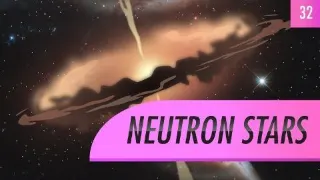
In the aftermath of a 8 – 20 solar mass star’s demise we find a weird little object known as a neutron star. Neutrons stars are incredibly dense…
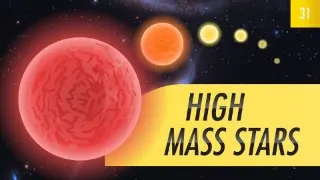
Massive stars fuse heavier elements in their cores than lower mass stars. This leads to the creation of heavier elements up to iron. Iron robs…
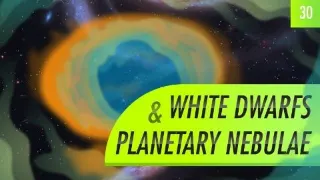
Today Phil follows up last week’s look at the death of low mass stars with what comes next: a white dwarf. White dwarfs are incredibly hot and dense…
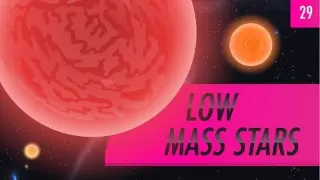
Today we are talking about the life -- and death -- of stars. Low mass stars live a long time, fusing all their hydrogen into helium over a trillion…
While Jupiter is nowhere near massive enough to initiate fusion in its core, there are even more massive objects out there that fall just short of…
Today Phil explains that YES, there are other planets out there and astonomers have a lot of methods for detecting them. Nearly 2000 have been found…
Today Phil’s explaining the stars and how they can be categorized using their spectra. Together with their distance, this provides a wealth of…
How do astronomers make sense out of the vastness of space? How do they study things so far away? Today Phil talks about distances, going back to…
In order to understand how we study the universe, we need to talk a little bit about light. Light is a form of energy. Its wavelength tells us its…
Today Phil helps keep you from ticking off an astronomer in your life by making sure you know the difference between a meteor, meteorite, and…
Now that we’re done with the planets, asteroid belt, and comets, we’re heading to the outskirts of the solar system. Out past Neptune are vast…
Horizon takes the ultimate trip into the unknown, to explore a dizzying world of cosmic bounces, rips and multiple universes, and finds out what…
Black holes! From Stephen Hawking to Interstellar, black holes are mammoths in the world of science AND sci-fi. But what exactly IS a black hole? Do…
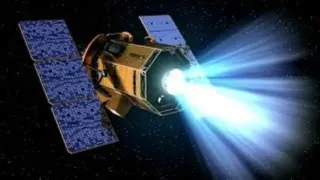
Follow Dr. Ben Longmier and his team into the rugged Alaskan wilderness on a quest to build a whole new type of rocket engine. Their goal is to test…
Today we’re rounding out our planetary tour with ice giants Uranus and Neptune. Both have small rocky cores, thick mantles of ammonia, water, and…
Saturn is the crown jewel of the solar system, beautiful and fascinating. It is a gas giant, and has a broad set of rings made of ice particles…
Before moving on from Jupiter to Saturn, we’re going to linger for a moment on Jupiter’s moons. There are 67 known moons, and 4 huge ones that we…
The fourth planet from the sun and the outermost of the terrestrial planets, Mars has long been a popular spot for missions and imagination. Phil…
Join Phil for a tour of our capital-M Moon, from surface features, inside to the core, and back in time to theories about its formation.
Phil starts the planet-by-planet tour of the solar system right here at home, Earth.
Description of the two Voyager probes sent for interstellar travel. Tyson ends the series by emphasizing Sagan's message on the human condition in…
Degrasse discusses our nearest neighboring planet Venus and its climate, the climate change on Earth and if it is caused by humans.
The Ship of the Imagination travels across the cosmos to discover the possibility of beings that live forever and explain why other civilizations…
Travel to 19th century England and meet Michael Faraday, a child of poverty who grew up to invent the motor and the generator. His ideas about…
The Ship of the Imagination embarks on a journey through space and time to grasp how the autobiography of the Earth is written in its atoms, its…
Explores the violent cosmic phenomenon of supernovas, which on average occur once per galaxy per century or one billion times per year in the…
To determine the true age of the Earth, geochemist Clair Patterson developed the uranium-lead dating method to make an unprecedented discovery…
The Ship of the Imagination ventures on an epic voyage to the bottom of a dewdrop to explore the universe on the smallest scale and observe exotic…
The Ship of the Imagination travels back in time to reveal 11th century Europe and North Africa during the golden age of Islam, when brilliant…
Explores how light, time and gravity affects our perception of the universe.
Neil deGrasse Tyson sets off on the Ship of the Imagination to chase a single comet through its million-year plunge toward Sol. Later, Tyson visits…
Artificial selection is one example, eyes another, of the well-documented and inescapable process of evolution--change in a population of species…
More than three decades after the debut of Carl Sagan's ground-breaking and iconic series, "Cosmos: A Personal Voyage," it's time once again to set…
In today's Crash Course Astronomy, Phil takes a look at the explosive history of our cosmic backyard. We explore how we went from a giant ball of gas…
* Gravity is a Force * Different Types of Orbit * Escape Velocity * Weightless Mass
Today Phil explains how telescopes work and offers up some astronomical shopping advice.
An eclipse is an astronomical event that occurs when an astronomical object is temporarily obscured, either by passing into the shadow of another…
In this episode of Crash Course Astronomy, Phil takes you through the cause and name of the Moon's phases.
This week we build on our naked eye observations from last week and take a look at the cyclical phenomena that we can see at work in the universe.
Today on Crash Course Astronomy, Phil invites you to head outside and take a look at all the incredible things you can see with your naked eye.
Welcome to the first episode of Crash Course Astronomy. Your host for this intergalactic adventure is the Bad Astronomer himself, Phil Plait. We…
Jim Al-Khalili shows how investigation into the atom unravelled the mystery of creation.
NOVA examines how a simple instrument, the telescope, has fundamentally changed our understanding of our place in the universe. What began as a…