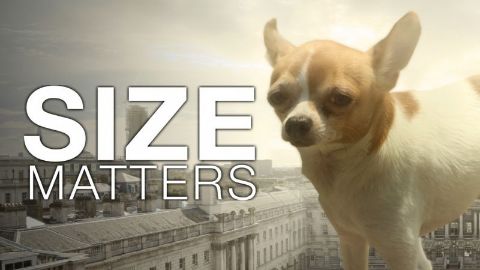
Planet Earth grows to outlandish proportions that causes lying down to become the new standing up, the sun gets big ideas giving us a 20,000-year winter before blowing up in the biggest explosion since the big bang, we meet a dog the size of a dinosaur and Joe himself turns into a 49ft giant.
Hope you're finding these documentaries fascinating and eye-opening. It's just me, working hard behind the scenes to bring you this enriching content.
Running and maintaining a website like this takes time and resources. That's why I'm reaching out to you. If you appreciate what I do and would like to support my efforts, would you consider "buying me a coffee"?
BTC: bc1q8ldskxh4x9qnddhcrgcun8rtvddeldm2a07r2v
ETH: 0x5CCAAA1afc5c5D814129d99277dDb5A979672116
With your donation through , you can show your appreciation and help me keep this project going. Every contribution, no matter how small, makes a significant impact. It goes directly towards covering server costs.
Planet Earth grows to outlandish proportions that causes lying down to become the new standing up, the sun gets big ideas giving us a 20,000-year winter before blowing up in the biggest explosion since the big bang, we meet a dog the size of a dinosaur and Joe himself turns into a 49ft giant.
2019 • Physics
Planet Earth shrinks to half size causing altitude sickness and a cosmic disaster, the sun gets as small as a sun can be, turning Earth into a frozen mud ball. We also see what happens to a man who shrinks to the same size as a wasp.
2019 • Physics
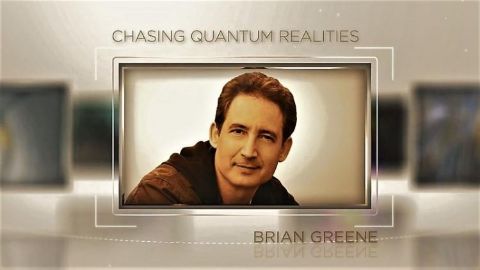
What does quantum mechanics tell us about our world -- or are there many worlds due to probability waves? How does the general theory of relativity mesh with quantum mechanics? If you've wished you understood quantum mechanics (or at least grasped the basics) physicist Brian Greene can help!
S1E1 • Curiosity Retreats: 2015 Lectures • 2015 • Physics
Forget oil, coal and gas - a new set of materials is shaping our world and they're so bizarre they may as well be alien technology. In the first BBC documentary to be filmed entirely on smartphones, materials scientist Prof Mark Miodownik reveals the super elements that underpin our high-tech world. We have become utterly dependent on them, but they are rare and they're already running out. The stuff that makes our smartphones work could be gone in a decade and our ability to feed the world depends mostly on a mineral found in just one country. Mark reveals the magical properties of these extraordinary materials and finds out what we can do to save them.
2017 • Physics
Professor Jim Al-Khalili discovers the intriguing story of how we discovered the rules that drive the universe. (Part 2: The Story of Information) Professor Jim Al-Khalili investigates one of the most important concepts in the world today - information. He discovers how we harnessed the power of symbols, everything from the first alphabet to the electric telegraph through to the modern digital age. But on this journey he learns that information isn't just about human communication, it's woven very profoundly into the fabric of reality.
S1E2 • Order and Disorder • 2012 • Physics
Professor Jim Al-Khalili discovers the intriguing story of how we discovered the rules that drive the universe. (Part 1: The Story of Energy) Energy is vital to us all, but what exactly is energy? In attempting to answer this question Jim investigates a strange set of laws that link together everything from engines to humans to stars. It turns out that energy, so critical to daily existence, actually helps us make sense of the entire universe.
S1E1 • Order and Disorder • 2012 • Physics
Meet Nikola Tesla, the genius engineer and tireless inventor whose technology revolutionized the electrical age of the 20th century. Although eclipsed in fame by Edison and Marconi, it was Tesla's vision that paved the way for today's wireless world. His fertile but undisciplined imagination was the source of his genius but also his downfall, as the image of Tesla as a "mad scientist" came to overshadow his reputation as a brilliant innovator.
American Experience • 2016 • Physics
When you think about Einstein and physics, E=mc^2 is probably the first thing that comes to mind. But one of his greatest contributions to the field actually came in the form of an odd philosophical footnote in a 1935 paper he co-wrote -- which ended up being wrong.