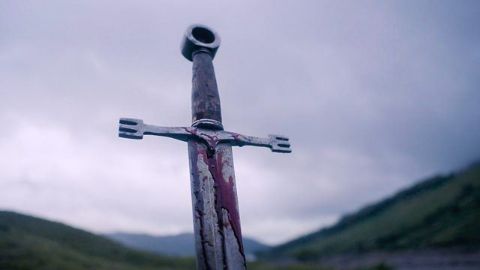
Neil follows the clans as they rallied behind Robert the Bruce in his against-all-odds bid to win Scotland's crown. After their crucial role in crushing the English at Bannockburn in 1314, Bruce rewarded the loyal chiefs with land and titles. They rise to shape the fate of kingdom in the centuries to come.
Hope you're finding these documentaries fascinating and eye-opening. It's just me, working hard behind the scenes to bring you this enriching content.
Running and maintaining a website like this takes time and resources. That's why I'm reaching out to you. If you appreciate what I do and would like to support my efforts, would you consider "buying me a coffee"?
BTC: bc1q8ldskxh4x9qnddhcrgcun8rtvddeldm2a07r2v
ETH: 0x5CCAAA1afc5c5D814129d99277dDb5A979672116
With your donation through , you can show your appreciation and help me keep this project going. Every contribution, no matter how small, makes a significant impact. It goes directly towards covering server costs.
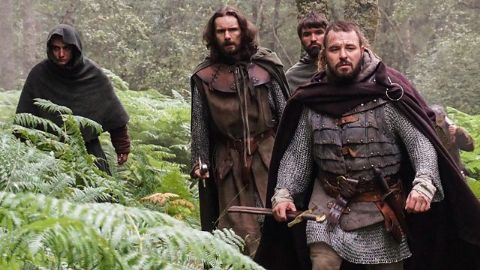
Neil follows the clans as they rallied behind Robert the Bruce in his against-all-odds bid to win Scotland's crown. After their crucial role in crushing the English at Bannockburn in 1314, Bruce rewarded the loyal chiefs with land and titles. They rise to shape the fate of kingdom in the centuries to come.
2018 • History
Neil follows the rise of Clan Stewart to become Scotland’s Royal dynasty. It’s the blood soaked tale of a bitter family feud. In a vicious contest, using clan power to plot, manoeuvre and murder their way to power, the story culminates with the dramatic assassination of King James I below a tennis court in Perth, 1437. Neil traces this family feud through clan combat, royal romances and spectacular Renaissance courts to the brutal torture and execution of the last rival Stewart, Walter Atholl, when the king’s widowed Queen Joan wreaks a terrible revenge for his treachery.
2018 • History
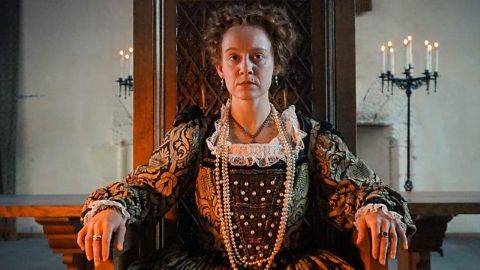
Neil reveals how the clans plotted against Mary Stewart, Queen of Scots, ultimately leading to the beheading of the most charismatic queen in Scottish history. The tale turns on a brother's plot to overthrow his sister in a ruthless bid for power. James Stewart, Earl of Moray, uses clan power to first control and then rid Scotland of his sister Mary. As she battles conspiracies, plots and counterplots, Mary is trapped in the cruel and tumultuous world of clan blood feuds. After they murder her husband Lord Darnley and Mary flees into the arms of the Earl of Bothwell, the most ruthless of Scotland's clan chiefs, civil war breaks out. Mary escapes to England, never to return again.
2018 • History
In these two 2-hour specials, HISTORY channel digs deep beneath the surface of our collective understanding of the Third Reich to unearth what we don't know about the individuals who comprised one of the most fascinating and complex regimes of recent history. Part 2: The Fall How did the Germans experience the Allied victory in WWII? Rarely-and never-before-seen amateur films recount the catastrophic downfall of the Third Reich through the eyes of the people who lived it: the Germans themselves.
S1E2 • Third Reich: The Rise and Fall • 2010 • History
After Egypt brings new purpose, Alexander embarks on a dangerous quest to find an oracle and discover his identity.
S1E4 • Alexander: The Making of a God • 2024 • History
The discovery of a rare mass grave with the bones of nearly 60 people outside Luxor sends archaeologists on a quest to find out who the remains belong to, why they were buried the way they were and what was happening in ancient Egypt that would have led to a mass burial. Could the collapse of the empire’s Old Kingdom provide any clues?
Secrets of the Dead • 2019 • History
Episode five tells how, after 1916 and the hell of the Somme and Verdun, the imperial powers redoubled their efforts to crush their enemies.
S01E05 • The Great War in Numbers • 2017 • History
The Scorpion King was a mythical Egyptian ruler who predated the pharaohs. Recent developments, such as the excavation of the king's tomb, have revealed surprising new details about early Egyptian civilization. This program details the continuing research into the earliest period of Egyptian history that was inspired originally by discoveries such as the Narmer palette and the Scorpion mace head. The combined efforts of a number of archaeologists have pushed the boundaries of Egyptian civilization back into a period previously considered prehistoric. As a result some of the most fundamental beliefs about Egyptian civilization require a re-think. Is there more behind the mythical and violent leader known simply as the Scorpion King? New evidence suggests that his achievements may have layed the foundations of Egypt. Learn more about the king who likely united ancient Egypt, organized the world's earliest phonetic writing system, and inspired the creation of the pyramids.
Part 6 • Egypt Unwrapped • 2008 • History
The times were turbulent around 1100 AD, when West-Roman Christianity was spreading out in all directions. The Crusades were part of it - perhaps the most important, certainly the best known. The advance of the Islamic Selchuks could not be stopped, especially their attacks on the travel routes of the pilgrims, who were on their way to the holy Christian sites. When news of raids mounted, the Patriarch of the Eastern Roman Church Alexios I asked Rome for help. Even then, Christianity was divided - not into Catholics and Protestants, but into the Eastern Roman (Orthodox) and Western Roman Churches. The Crusades took place in the middle of tension between these different interest groups. The expansion of the West Romans cut a swath through the Islamic territories, which had by then reached the climax of their development. The Byzantine realm increasingly lost its importance. It was not a battle of cultures, not a struggle against Islam, but a chaotic confrontation of warlords and princes. The main goal of the crusades – the conquest of Jerusalem – was soon forgotten, and the first conquest ended with bloodbaths among the civilian population that are still notorious today. The following crusades were equally infamous and far from an honor to Christianity. This program examines the forces behind European determination to capture Palestine, linking the belligerence of medieval Crusaders with their piousness. Drs. Klaus Herbers of Friedrich Alexander University and Patrick Franke of Martin Luther University draw surprising parallels between East and West, focusing on martyrdom as a vital component of the Crusader's motivation, interreligious notions of knightly behavior, and cases of negotiation and cultural exchange despite numerous atrocities and military disasters. Without neglecting the harsh realities of the Crusades, In the Name of Christ presents a fresh perspective on the medieval clash of Christian and Islamic powers.
S1E1 • The Holy Wars: War and Religion • 2004 • History