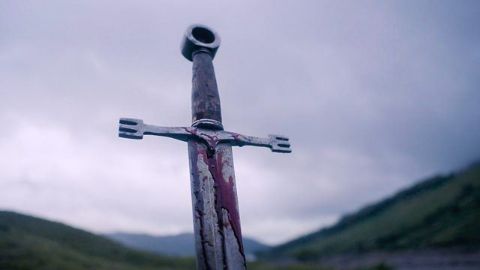
Neil follows the rise of Clan Stewart to become Scotland’s Royal dynasty. It’s the blood soaked tale of a bitter family feud. In a vicious contest, using clan power to plot, manoeuvre and murder their way to power, the story culminates with the dramatic assassination of King James I below a tennis court in Perth, 1437. Neil traces this family feud through clan combat, royal romances and spectacular Renaissance courts to the brutal torture and execution of the last rival Stewart, Walter Atholl, when the king’s widowed Queen Joan wreaks a terrible revenge for his treachery.
Hope you're finding these documentaries fascinating and eye-opening. It's just me, working hard behind the scenes to bring you this enriching content.
Running and maintaining a website like this takes time and resources. That's why I'm reaching out to you. If you appreciate what I do and would like to support my efforts, would you consider "buying me a coffee"?
BTC: bc1q8ldskxh4x9qnddhcrgcun8rtvddeldm2a07r2v
ETH: 0x5CCAAA1afc5c5D814129d99277dDb5A979672116
With your donation through , you can show your appreciation and help me keep this project going. Every contribution, no matter how small, makes a significant impact. It goes directly towards covering server costs.
Neil follows the clans as they rallied behind Robert the Bruce in his against-all-odds bid to win Scotland's crown. After their crucial role in crushing the English at Bannockburn in 1314, Bruce rewarded the loyal chiefs with land and titles. They rise to shape the fate of kingdom in the centuries to come.
2018 • History
Neil follows the rise of Clan Stewart to become Scotland’s Royal dynasty. It’s the blood soaked tale of a bitter family feud. In a vicious contest, using clan power to plot, manoeuvre and murder their way to power, the story culminates with the dramatic assassination of King James I below a tennis court in Perth, 1437. Neil traces this family feud through clan combat, royal romances and spectacular Renaissance courts to the brutal torture and execution of the last rival Stewart, Walter Atholl, when the king’s widowed Queen Joan wreaks a terrible revenge for his treachery.
2018 • History
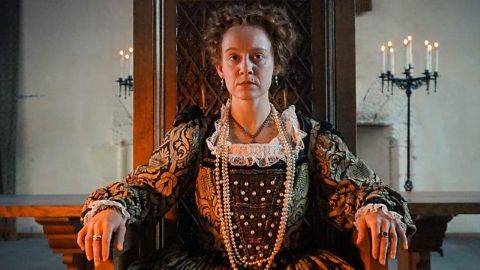
Neil reveals how the clans plotted against Mary Stewart, Queen of Scots, ultimately leading to the beheading of the most charismatic queen in Scottish history. The tale turns on a brother's plot to overthrow his sister in a ruthless bid for power. James Stewart, Earl of Moray, uses clan power to first control and then rid Scotland of his sister Mary. As she battles conspiracies, plots and counterplots, Mary is trapped in the cruel and tumultuous world of clan blood feuds. After they murder her husband Lord Darnley and Mary flees into the arms of the Earl of Bothwell, the most ruthless of Scotland's clan chiefs, civil war breaks out. Mary escapes to England, never to return again.
2018 • History
While the Viking raids have come one after another in the Occident for almost a century, in November 885, hundreds of Scandinavian boats sailing towards Burgundy present themselves before the walls of Paris and besiege the city.
S3E2 • Butterfly Effect • 2018 • History
Bettany Hughes explores the day in 80AD when the Colosseum opened its gates for the first time. For new emperor Titus, the spectacular games and events were an opportunity to win over the people and secure his place on the imperial throne, but why did the Romans - cultured and civilised in so many ways - enjoy witnessing such brutality and bloodletting? Bettany travels across the Roman world in a bid to find answers.
S1E7 • Eight Days That Made Rome • 2017 • History
Andrew Marr sets off on an epic journey through 70,000 years of human history. Using dramatic reconstructions, documentary filming around the world and cutting-edge computer graphics, he reveals the decisive moments that shaped the world we live in today, telling stories we thought we knew and others we were never told. (Part 1: Survival) Starting with our earliest beginnings in Africa, Marr traces the story of our nomadic ancestors as they spread out around the world and settled down to become the first farmers and townspeople. He uncovers extraordinary hand-prints left in European caves nearly 30,000 years ago and shows how human ingenuity led to inventions which are still with us today. He also discovers how the first civilisations were driven to extremes to try to overcome the forces of nature, adapting and surviving against the odds, and reveals how everyday life in ancient Egypt had more in common with today's soap operas than might be imagined.
S1E1 • Andrew Marr's History of the World • 2012 • History
World War II was one of the definitive events of the 20th century, if not all of human history. John Green takes a look at the causes of World War II, the key event, as well as, both the short and long term effects of the war. For those interested in looking at World War II from a world perspective, this video focuses on the war before United States involvement.
2012 • History
For decades, scientists believed that humans were forced to wait until the end of the last Ice Age before they could enter the Americas. Evidence suggests that 11,000 years ago they crossed the Bering Land Bridge by foot, into what is now modern-day Alaska. Those peoples were called the Clovis, and their arrival and hunting practices were blamed for the sudden disappearance of many large mammals, from mastodons and woolly mammoths to giant ground sloths and sabre-toothed tigers. In recent years however, tantalizing – but often frustratingly inconclusive – evidence of an earlier human migration into the Americas has begun to emerge. It is an incredible revelation – to think that ancient humans could somehow have managed to get past a sheet of ice four kilometres thick. In this fascinating documentary, Canadian anthropologist and adventurer Niobe Thompson takes us inside the incredible scientific discoveries that are finally unraveling these mysteries
S50E10 • The Nature of Things • 2011 • History
Professor Robert Bartlett explores the impact of the Normans on southern Europe and the Middle East. The Normans spread south in the 11th century, winning control of southern Italy and the island of Sicily. There they created their most prosperous kingdom, where Christianity and Islam co-existed in relative harmony and mutual tolerance. It became a great centre of medieval culture and learning. But events in the Middle East provoked the more aggressive side of the Norman character. In 1095, the Normans enthusiastically answered the Pope's call for holy war against Islam and joined the first crusade. They lay siege to Jerusalem and eventually helped win back the holy city from the muslims. This bloody conquest left a deep rift between Christianity and Islam which is still being felt to this day.
S1E2 • The Normans • 2010 • History