Killer, drug smuggler, folk hero, Houdini of jailhouse escapes--the legend of Joaquin "El Chapo" Guzman is well known. But now this two-hour documentary special reveals an unprecedented look at the man behind the myth and how his international drug cartel impacts us right here at home.
Hope you're finding these documentaries fascinating and eye-opening. It's just me, working hard behind the scenes to bring you this enriching content.
Running and maintaining a website like this takes time and resources. That's why I'm reaching out to you. If you appreciate what I do and would like to support my efforts, would you consider "buying me a coffee"?
BTC: bc1q8ldskxh4x9qnddhcrgcun8rtvddeldm2a07r2v
ETH: 0x5CCAAA1afc5c5D814129d99277dDb5A979672116
With your donation through , you can show your appreciation and help me keep this project going. Every contribution, no matter how small, makes a significant impact. It goes directly towards covering server costs.
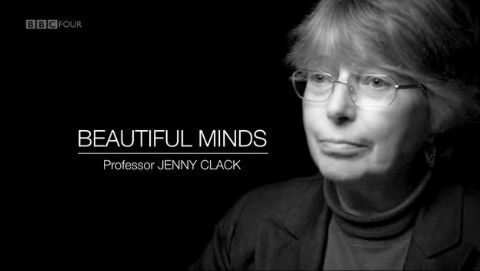
Jenny Clack recounts how she overcame setbacks before she found and described a fossil which offered new evidence of how fish made the transition onto land. For paleontologist Professor Jenny Clack, who solved one of the greatest mysteries in the history of life on Earth, success was far from inevitable. A chance discovery in 1986 in the earth sciences department of Cambridge University, of long-forgotten fossils collected from the Devonian rocks of East Greenland in 1970, was to shape the rest of her career. She recounts how she had to overcome a series of setbacks before she found and described the fossil Acanthostega, a 365 million-year-old creature that offered dramatic new evidence of how fish made the transition onto land. She authored or co-authored more than 120 research papers as well as numerous popular articles and book reviews. A measure of the significance of her work is that 15 of her research papers were published in the journal Nature. Her one book, "Gaining Ground, The Origin and Evolution of Tetrapods" (2002), summarises the results of research on early tetrapods over the previous 25 years.
S2E1 • Beautiful Minds • 2012 • People
The second episode delves into the moral framework that religions are often cited as providing and argues against the indoctrination of children. Dawkins compares religious faith to a virus, being passed from parents to offspring and teachers to pupils. He visits a London Hasidic Jewish school, where students are largely isolated from outside ideas, and Phoenix Academy, a semi-independent city academy following the American Accelerated Christian Learning curriculum. Dawkins interviews the headteacher about the integration of biblical stories into various academic subjects and explores the differences between secular ethics and morality based on religious law. He also discusses concepts from evolutionary biology, such as reciprocal altruism and kin selection, as explanations for morality.
S1E2 • The Root of All Evil • 2006 • People
"Richard Feynman is one of the most iconic, influential and inspiring scientists of the 20th century. He helped design the atomic bomb, solved the mystery of the Challenger Shuttle catastrophe and won a Nobel Prize. Now, 25 years after his death - in his own words and those of his friends and family - this is the story of the most captivating communicator in the history of science"
2013 • People
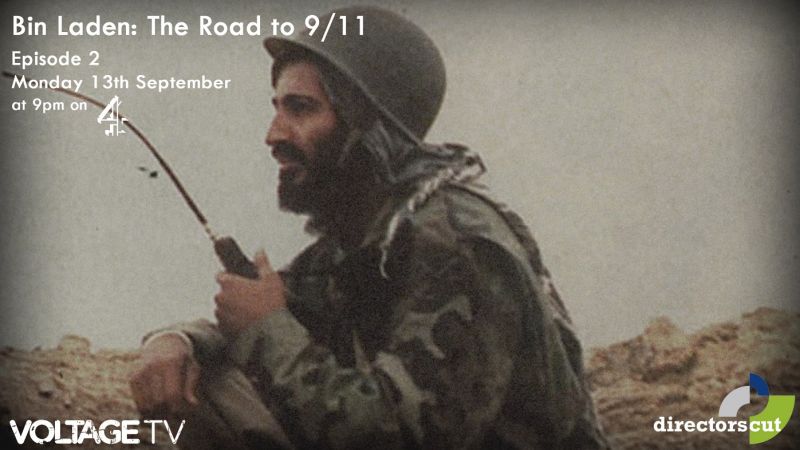
Bin Laden's on the run and plotting an audacious plan to strike at the US. Bin Laden returns to Saudi Arabia from Afghanistan, where he is hailed as a war hero after the Soviets left because he believes he made a significant contribution to the military victory. 18 months later, Saddam Hussein invades Kuwait, prompting worried Saudi authorities to turn to the US for protection. Horrified by what he perceives as an invasion of the holy places by the American army, bin Laden publicly opposes the Saudi royal family declaring Jihad against the US and is eventually forced to flee to Sudan. There he reinvents himself as a major agricultural producer of sunflowers and watermelons, while expanding al-Qaeda's work and setting up training camps that attract recruits from across the region. Under pressure from Saudi Arabia and the United States, bin Laden finally has to give up his refuge in Sudan. Stateless and without much prospect of alternative quarters, he returns to Afghanistan in 1996. Just a few months later, he issued a 30-page fatwa declaring holy war against the Americans who occupied the Arabian Peninsula. He surrounded himself with increasingly radical extremists, and in the summer of 1996 finally suggested piloting planes to American targets. The plan to attack the Twin Towers is born. This compelling history documentary looks at the factors that transformed Bin Laden from a renowned freedom fighter to a devoted enemy of America and the West. What drove him to plot his most audacious attack?
S1E2 • Bin Laden: The Road to 9.11 • 2021 • People
Richard Turner is renowned as one of the world's greatest card magicians, yet he is completely blind. This is an in-depth look at a complex character who is one of magic's greatest hidden treasures.
2017 • People