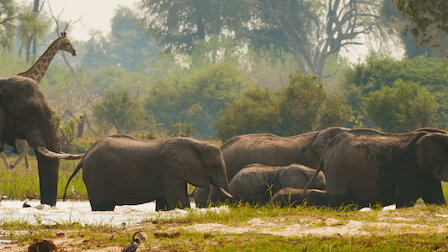
The story of water's miraculous arrival onto our planet and its pivotal role in the survival — and amusement — of a herd of elephants.
Hope you're finding these documentaries fascinating and eye-opening. It's just me, working hard behind the scenes to bring you this enriching content.
Running and maintaining a website like this takes time and resources. That's why I'm reaching out to you. If you appreciate what I do and would like to support my efforts, would you consider "buying me a coffee"?
BTC: bc1q8ldskxh4x9qnddhcrgcun8rtvddeldm2a07r2v
ETH: 0x5CCAAA1afc5c5D814129d99277dDb5A979672116
With your donation through , you can show your appreciation and help me keep this project going. Every contribution, no matter how small, makes a significant impact. It goes directly towards covering server costs.
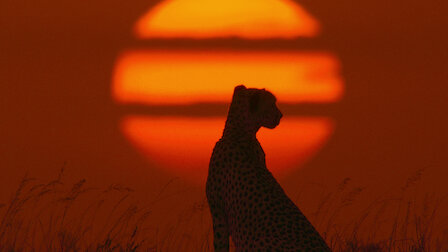
A penetrating look at the sun as a vital source of energy and its impact on one cheetah’s search for food in the sprawling plains of the Serengeti.
2022 • Nature
From the womb to a final moment of peace, witness the steady ticking of the universe’s clock through the eyes of the chimpanzee.
2022 • Nature
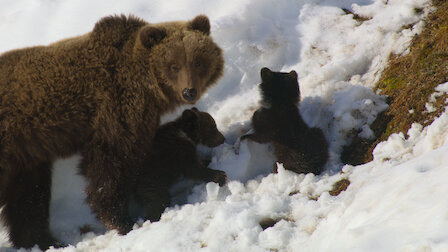
Dive into the long year of the Alaskan brown bear through the Earth's seasonal cycle amid the frigid winter months and into the warmth of summer.
2022 • Nature
The story of water's miraculous arrival onto our planet and its pivotal role in the survival — and amusement — of a herd of elephants.
2022 • Nature
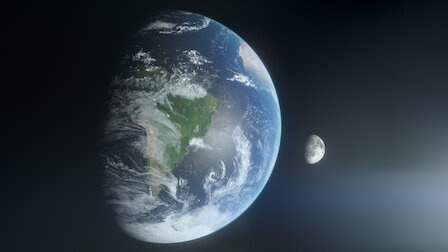
Shaping our entire universe, gravity has set the stage for life. For two king penguins, it steered them toward their soulmates.
2022 • Nature
Today Earth is a human world, home to eight billion people and counting. Humans now have a greater effect in shaping Earth’s surface than many natural processes. In this episode, Chris Packham explores how dramatic twists in Earth’s story enabled humans to go from being part of nature to controlling it, and what we can learn from this epic tale before it’s too late. The story begins 66 million years ago with the catastrophic impact of the asteroid that wiped out the (Non-avian) dinosaurs. From the ashes of the desolation that followed, a new animal family rose to power. This was adaptable and inventive enough to emerge out of the harsh new world – the mammals. It began with a distant ancestor that shared many traits of the much maligned, but evolutionarily brilliant, rat. Due to a series of extreme geological and climatic events, mammals evolved into early primates feasting in the newly formed tropical rainforests, and then to early humans travelling vast distances between forests in places like East Africa’s Rift Valley. Earth’s story is a saga spanning 4.5 billion years, but it’s only in the last 11,000 years - with the rise of farming - that our species has started to dramatically impact our planet and its ecosystems. The human chapter of Earth’s story might end in disaster, but Chris is keen to argue for a different ending, where all of humanity’s achievements to date “…were just our dress rehearsals, because in the very near future our species will need to reach the zenith of its achievements and… all humanity will have to learn to put our Earth first.”
S1E5 • Earth: One Planet, Many Lives • 2023 • Nature
As summer spreads across our solar-powered planet, honey bees toil, snow geese breed, tadpoles awaken and lions stalk wildebeest in search of lush grass.
S2E2 • Our Planet • 2023 • Nature
Can animals count? This is a question that has intrigued and fooled investigators for a long time. Just over 100 years ago, a German horse called Hans was declared a mathematical genius but all was not as it seemed. And strangely, some bamboos around the world flower exactly at the same no matter where they are. Are they counting down the years?
S4E4 • Natural Curiosities • 2018 • Nature
In Madagascar, the travellers encounter the biggest and the smallest lemurs on earth. But they are searching for the aye-aye, a peculiar lemur which, according to local legend, brings death to those who encounter it.
S1E3 • Last Chance to See • 2009 • Nature
David Attenborough reveals that the animal inhabitants of this vast wilderness are every bit as extraordinary as they are bizarre. Unearthly calls of the notorious Tasmanian devil echo through the land, but following them over the course of a year reveals a surprisingly gentle side. In the dry east, rare white wallabies graze on the plains and jack jumper ants build huge nests – these venomous ants are amongst the most dangerous on earth. In the west, where it can rain nearly every day of the year, caves light up with the magical spectacle of thousands of glow-worms, and the trees are 100-metre towering monsters. Rivers are home to the peculiar platypus, and world’s largest freshwater invertebrate, the Tasmanian giant lobster. Miniature penguins come ashore to breed, and as winter approaches, the southern lights dance in the sky. Tasmania’s isolation and unique climate has created a world that is as weird as it is wonderful.
Natural World • 2019 • Nature
See how life adapts to explosive change in the untamed Patagonian Andes.
S1E1 • The Wild Andes • 2019 • Nature