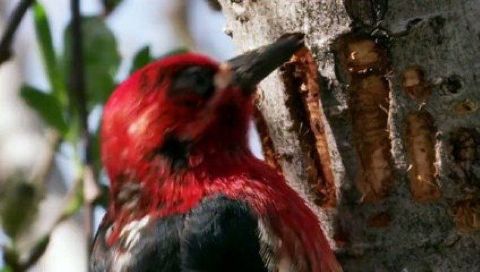
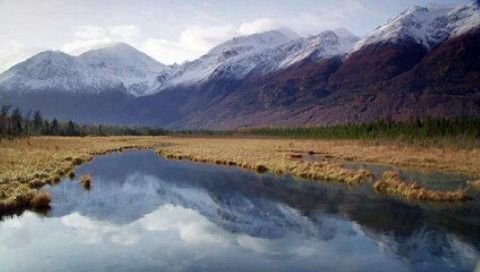
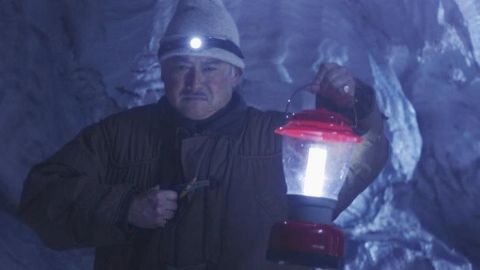
Surviving the bone-chilling cold, deadly blizzards and darkness of an Alaskan winter takes courage, cunning and remarkable endurance. In the raw beauty of windswept mountain peaks, icy tundra and snowbound forests, this is the story of the tough and resourceful characters that face up to the ultimate challenges of this untameable land.
Hope you're finding these documentaries fascinating and eye-opening. It's just me, working hard behind the scenes to bring you this enriching content.
Running and maintaining a website like this takes time and resources. That's why I'm reaching out to you. If you appreciate what I do and would like to support my efforts, would you consider "buying me a coffee"?
BTC: bc1q8ldskxh4x9qnddhcrgcun8rtvddeldm2a07r2v
ETH: 0x5CCAAA1afc5c5D814129d99277dDb5A979672116
With your donation through , you can show your appreciation and help me keep this project going. Every contribution, no matter how small, makes a significant impact. It goes directly towards covering server costs.
As spring lights up the land, Alaska faces one of the greatest transformations on earth. Temperatures soar, and as the sun's rays hit the snow and ice, water, light and warmth return. Alaska's transition to spring may look magical, but for those animals emerging from a long winter's sleep, it's a time of intense competition, as everything is in a rush to cash in on Alaska's riches.
No season brings more surprises than an Alaskan summer. It lures hummingbirds up from the tropics, exposes deserts in the Arctic and relies on parachuting firefighters to tackle forest fires in its vast wilderness. Summer is a narrow window of plenty, when the land is bathed in 24-hour sunlight - but in this land of extremes, you can have too much of a good thing.
Surviving the bone-chilling cold, deadly blizzards and darkness of an Alaskan winter takes courage, cunning and remarkable endurance. In the raw beauty of windswept mountain peaks, icy tundra and snowbound forests, this is the story of the tough and resourceful characters that face up to the ultimate challenges of this untameable land.
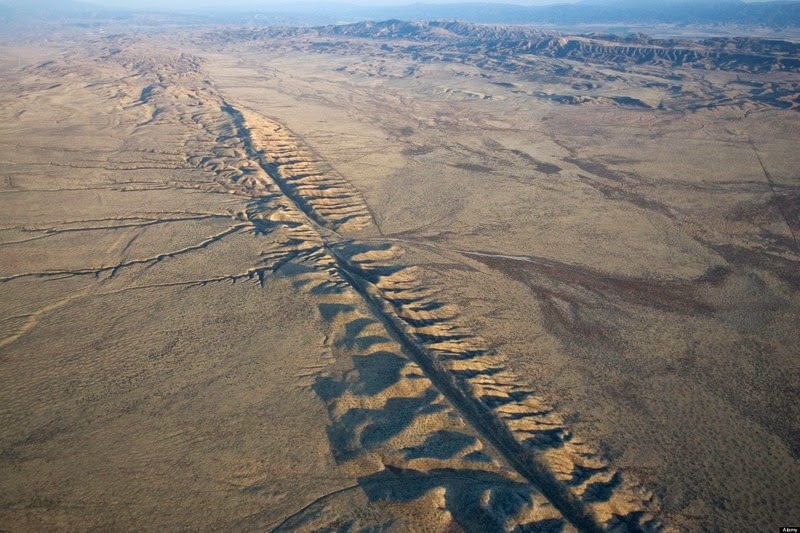
Earthquakes have always been a terrifying phenomenon, and they’ve become more deadly as our cities have grown — with collapsing buildings posing one of the largest risks. But why do buildings collapse in an earthquake? And how can it be prevented? Vicki V. May explains the physics of why it is not the sturdiest buildings, but the smartest, that will remain standing.
"Eighty percent of us now live in an urban setting, and I think that the solution to our environmental problems is not to say 'we've got break down cities and get everybody back to the land' – that would be disastrous – but we have to make cities our major habitat…we have to make them more in balance, I think, with the rest of the things that keep us alive." David Suzuki Cities are where most Canadians live. And, as we head into the future, how we adapt to the needs of expanding cities will have a huge impact on their livability. Food, land use, housing, energy, waste – how we tackle these issues will determine whether our cities evolve, or whether they decline. In a new instalment of Suzuki Diaries, David and his daughter, Sarika, set out to discover whether some of Canada's biggest cities are ready for the challenges of the future.
S51E14 • The Nature of Things • 2012 • Environment
In February 2013, a hole opened up beneath a home in Florida, and swallowed a man. Jeff Bush was asleep when a sinkhole opened up beneath his bedroom. Despite the efforts of his brother to rescue him, Jeff was never seen again and his body was never recovered. Professor Iain Stewart travels to Florida to try and understand what killed Jeff, and why the geology of this state makes it the sinkhole capital of the world.
Over three decades after the world's most devastating nuclear accident, Ben Fogle spends a week living alone inside the Chernobyl exclusion zone. Throughout the expedition, Ben ventures inside the ruins of a nearby hospital, explores the deserted radioactive remains of the ghost town of Pripyat, and goes deep inside the Chernobyl nuclear power plant.
2021 • Environment
No music. No commentary. HOMO SAPIENS is a film about the finiteness and fragility of human existence and the end of the industrial age, and what it means to be a human being. What will remain of our lives after we’re gone? Empty spaces, ruins, cities increasingly overgrown with vegetation, crumbling asphalt: the areas we currently inhabit, though humanity has disappeared. Now abandoned and decaying, gradually reclaimed by nature after being taken from it so long ago.
2016 • Environment
Renowned marine biologist Dr. Sylvia Earle reveals why the dual threats of ocean pollution and overfishing could have a devastating impact on mankind.
2017 • Environment