A unique and compelling documentary examining the events of September 11th 2001, featuring never-before-seen footage captured by those on the ground on that fateful day. Told in the moment without interview, commentary, or narration, this riveting documentary weaves together the personal video of a dozen people whose accounts provide a raw and unfiltered telling of 9/11.
Hope you're finding these documentaries fascinating and eye-opening. It's just me, working hard behind the scenes to bring you this enriching content.
Running and maintaining a website like this takes time and resources. That's why I'm reaching out to you. If you appreciate what I do and would like to support my efforts, would you consider "buying me a coffee"?
BTC: bc1q8ldskxh4x9qnddhcrgcun8rtvddeldm2a07r2v
ETH: 0x5CCAAA1afc5c5D814129d99277dDb5A979672116
With your donation through , you can show your appreciation and help me keep this project going. Every contribution, no matter how small, makes a significant impact. It goes directly towards covering server costs.
In the opening episode of the series, Professor Andrew Wallace-Hadrill takes us on a journey across stunning locations in Greece and Italy to find out how Athens gave birth to the idea of a city run by free citizens 2,500 years ago. Every aspect of daily life from defence to waste disposal was controlled not by a king, but by the Athenians themselves. Ultimately, this radical new system would define a way of life and the Athenians would give it a name.
S1E1 • Building the Ancient City: Athens and Rome • 2015 • History
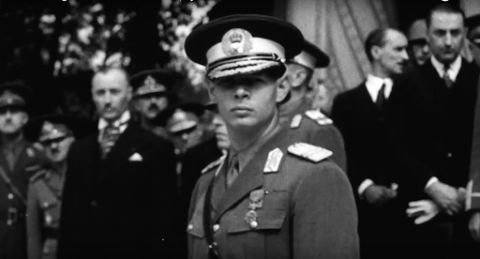
This is one of the last and greatest untold stories of the Second World War, revealed by the last surviving Chief of State, King Michael I of Romania. “We took the train to Berlin to see the other side of the coin and we had lunch with Hitler. It wasn’t an enjoyable meeting.” It is the story of a King’s decision who, in a critical moment of the Second World War, relinquished Germany’s support, guiding Romania towards the Allies, thus bringing about a quicker end to the war. It is a story of palatial intrigues. And a story of deceptions. From Buckingham Palace to Bucharest. From Moscow to Washington. Lost diplomatic signals, aristocrat spies and blackmail at gun point. And the courage of a young king who dared. Romania, at the outbreak of the Second World War, was a very young nation, with an age of only 20 years.
2017 • History
With the help of a team of experts and the latest in 3D scanning technology, Alexander Armstrong, along with Dr Michael Scott, explores the hidden underground treasures that made Rome the powerhouse of the ancient world. In his favourite city, he uncovers a lost subterranean world that helped build and run the world's first metropolis and its empire. From the secret underground world of the Colosseum to the aqueducts and sewers that supplied and cleansed it, and from the mysterious cults that sustained it spiritually to the final resting places of Rome's dead, Xander discovers the underground networks that serviced the remarkable world above.
2015 • History
The Romans were brilliant engineers and soldiers, but what isn't as well known is that they also gave us wonderful artistic treasures. In this three-part series, Alastair Sooke argues that the old-fashioned view that the Romans didn't do art is nonsense. He traces how the Romans during the Republic went from being art thieves and copycats to pioneering a new artistic style - warts 'n' all realism. Roman portraits reveal what the great names from history, men like Julius Caesar and Cicero, actually looked like. Modern-day artists demonstrate the ingenious techniques used to create these true to life masterpieces in marble, bronze and paint. We can step back into the Roman world thanks to their invention of the documentary-style marble relief and to a volcano called Vesuvius. Sooke explores the remarkable artistic legacy of Pompeii before showing how Rome's first emperor, Augustus, used the power of art to help forge an empire.
S1E1 • The Treasures of Ancient Rome • 2012 • History
What is the future of the human presence in space? How might things be different if there had not been a Cold War and a Space Race? What does humanity gain by venturing into our solar system...and beyond?
S1E2 • Butterfly Effect • 2016 • History
Examine the process of "destructive creation"-the idea that fear, rivalry and conflict strengthen community bonds while stimulating an arms race of technological progress. The result is civilization. Ancient Mesoamerica exemplifies this development.
Part 1 • First Civilizations • 2018 • History