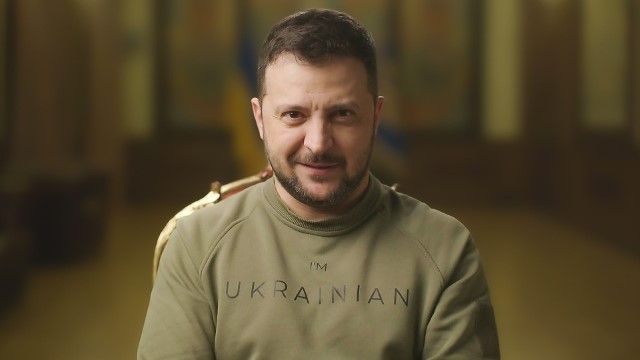
Bill Gates talks to Amol Rajan about wealth, conspiracy theories and recent controversies. They visit a remote region outside Nairobi in Kenya, where Gates supports local farms and hospitals through his charitable foundation, for a rare, in-depth interview with the tech entrepreneur. Gates has spent much of his life being the richest man on earth. He excelled at school, founded Microsoft and helped to realise his vision of having a computer on every desk in every home. His public image has changed over the years, from geek to business titan and philanthropist. In recent years, he has become the subject of endless conspiracy theories and has attracted unfavourable headlines on the subject of his divorce and his association with Jeffrey Epstein. In this challenging and personal interview, Rajan tackles these issues head-on, talking to Gates about his early success, his wealth, how he uses it now, and the controversies that have arisen over the years. In this unusually candid interview, Gates is often revealing in his responses.
Hope you're finding these documentaries fascinating and eye-opening. It's just me, working hard behind the scenes to bring you this enriching content.
Running and maintaining a website like this takes time and resources. That's why I'm reaching out to you. If you appreciate what I do and would like to support my efforts, would you consider "buying me a coffee"?
BTC: bc1q8ldskxh4x9qnddhcrgcun8rtvddeldm2a07r2v
ETH: 0x5CCAAA1afc5c5D814129d99277dDb5A979672116
With your donation through , you can show your appreciation and help me keep this project going. Every contribution, no matter how small, makes a significant impact. It goes directly towards covering server costs.
How did we become our planet's only global species, at home in every environment on Earth. Learn how our ancestors found a way through the deserts and out of Africa. Explore the meeting of Neanderthals and humans. And discover how we survived the Ice Age.
S1E2 • The Great Human Odyssey • 2015 • People
Professor Marcus du Sautoy goes in search of answers to one of science's greatest mysteries: how do we know who we are? While the thoughts that make us feel as though we know ourselves are easy to experience, they are notoriously difficult to explain. So, in order to find out where they come from, Marcus subjects himself to a series of probing experiments.
From his wardrobe to his secret tunnels to his private pimps, discover the true story of Charles II.
S1E5 • Private Lives of the Monarchs • 2017 • People
In the first episode, Dawkins examines the unproven beliefs held as facts by many religions and the extremes to which some followers take them. He argues that faith is not a way of understanding the world but is fundamentally opposed to modern science, which tests hypotheses and builds theories to describe the world. Dawkins visits the United States to interview Pastor Ted Haggard, president of the National Association of Evangelicals, and travels to Jerusalem to interview Yousef al-Khattab, an American-born Jew who settled in Israel before converting to Islam. He uses Bertrand Russell's celestial teapot analogy to respond to charges that scientific understanding does not entitle one to reject religion.
S1E1 • The Root of All Evil • 2006 • People
From the creators of the worlds first super hero to the most successful female pop artist of the 20th century, peacemakers’ warmongers and athletes all claim a place in this episode.
S1E2 • The 101 People who Made the 20th Century • 2016 • People
From Luke Skywalker's light sabre to Darth Vader's Death Star, the Star Wars franchise is one of the defining science fiction works of the later 20th century. George Lucas' prolific imagination has already inspired two generations of scientists and engineers to push the envelope of technology. By introducing computers into the filmmaking process, he changed the way movies are made, and the way we all see the future.
S1E8 • Prophets of Science Fiction • 2011 • People