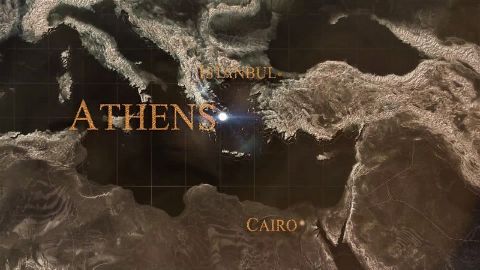
Professor Darius Arya uses scanning technology to reveal the hidden secrets of ancient Athens. From the buildings on the Acropolis to the silver mines and quarries beyond the city, he investigates the story of the city that gave the world democracy.
Hope you're finding these documentaries fascinating and eye-opening. It's just me, working hard behind the scenes to bring you this enriching content.
Running and maintaining a website like this takes time and resources. That's why I'm reaching out to you. If you appreciate what I do and would like to support my efforts, would you consider "buying me a coffee"?
BTC: bc1q8ldskxh4x9qnddhcrgcun8rtvddeldm2a07r2v
ETH: 0x5CCAAA1afc5c5D814129d99277dDb5A979672116
With your donation through , you can show your appreciation and help me keep this project going. Every contribution, no matter how small, makes a significant impact. It goes directly towards covering server costs.
What would the Civil Rights movement in the USA have been like if Martin Luther King, Jr. had not been motivating change? How does the legacy of the American Civil War still affect the American democracy?
S1E3 • Butterfly Effect • 2016 • History
Harald Sandner continues his study of Adolf Hitler as he seizes control of Germany and plunges the European continent into the bloodiest conflict the world has ever seen. Harald meticulously notes every success and failure as the world's powers come together to put an end to this chapter in history.
S1E2 • Adolf Hitler The Itinerary • 2018 • History
Get the inside track on five of the greatest heists in history. These are not petty robberies, but high-stakes operations meticulously planned and audaciously executed, with a cast of colorful characters from the mastermind to the snitch. Find out who gets away with the loot, and who doesn't.
S1E4 • History By The Numbers • 2021 • History
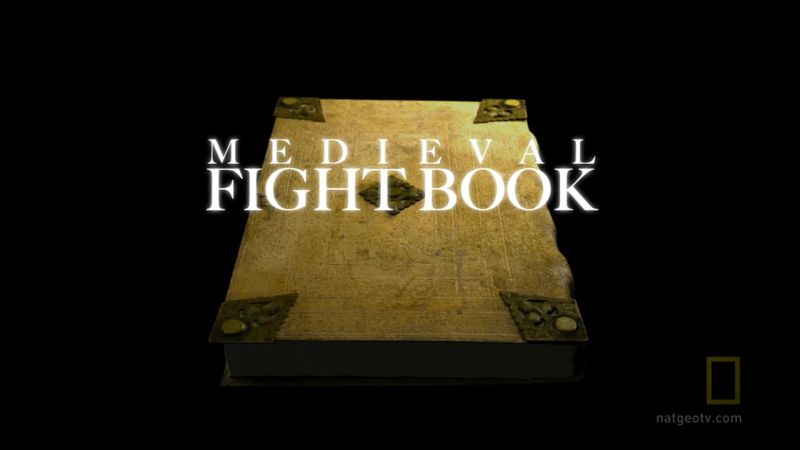
In year 1459 a book was written which contained images so bizarre that even 500 years later their meaning is still shrouded in mystery. Violent, secretive, and packed full of knowledge, Medieval Fight Book uncovers the real story of Europe in the Middle Ages. Its 150 beautifully illustrated paper folios depicts a unique imagery of bloody, highly sophisticated combat, strange futuristic designs and inventions, ingenious engineering and judicial duels. Its timeworn leather cover bears one simple inscription: Talhoffer. The mysterious fightmaster of the middle ages and the author of the mysterious medieval fight book. Hans Talhoffer's 1459 Fightbook (Fechtbuch) is one of medieval worlds' most mysterious manuscripts, challenging the legends and myths that surrounded this so often misunderstood period of our history. Today, the manuscript is located deep in the vaults of the Danish Royal Library. Using historical recreations, amazing CGI and leading historians, Medieval Fight Book reveals that medieval society was far more sophisticated and peculiar than we realized. Hidden in a dusty library, this obscure and strange manuscript contains unique imagery of bloody but highly sophisticated combat, futuristic designs and inventions, ingenious engineering and judicial duels. Hans Talhoffer's 1459 fightbook is one of the medieval worlds' most mysterious manuscripts, challenging the legends and myths that surrounded this often misunderstood period of our history. In Medieval Fight Book we'll join a documentary film crew and a team of historians as they test out most of the designs and inventions within Talhoffer's book. Will the inventions live up to being usable?
2010 • History
How did the events of his childhood shape the man who would become Genghis Khan? What impact did the Mongol invasions have on the history of Asia and on the psyche of Europe?
S1E6 • Butterfly Effect • 2016 • History
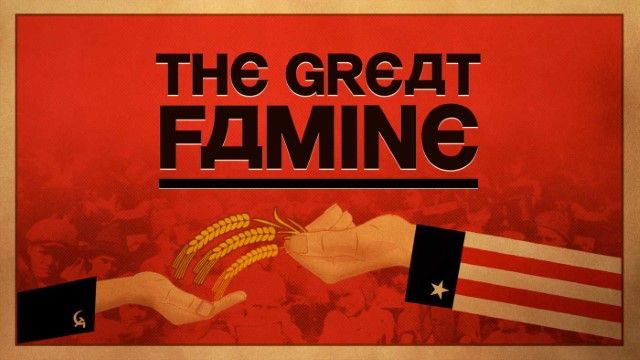
The little-known story of the American effort to relieve starvation in the new Soviet Russia in 1921, The Great Famine is a documentary about the worst natural disaster in Europe since the Black Plague in the Middle Ages. Five million Russians died. Half a world away, Americans responded with a massive two-year relief campaign, championed by Herbert Hoover, director of the American Relief Administration known as the ARA. In July of 1921, Herbert Hoover, received a plea for international aid by Russian novelist Maxim Gorky. "Gloomy days have come for the country of Tolstoy, Dostoyevsky, Mendeleyev," Gorky warned. He made a similar request to other Western nations, but it was Hoover who responded immediately with a promise of support. The first American relief ships arrived in Petrograd in September 1921, as the embers of the 1917 Russian revolution still smoldered. American relief workers were among the first outsiders to break through Russia's isolation and to witness and record the impact of the Bolshevik Revolution. They would be tested by a railroad system in disarray, a forbidding climate, a ruthless government suspicious of their motives, and the enormous scale of death and starvation. The initial plan called for feeding one million children by delivering bread, rice, grits, sugar, corn and milk to the most hard hit regions. Almost immediately, Hoover encountered formidable obstacles. Vladimir Lenin's new communist government was skeptical of American aid and sabotaged the relief effort by planting spies in local American Relief Administration offices. When trains stuck on the tracks prevented food from being transported, Russian officials were uncooperative, resulting in delays that contributed to an estimated 50,000 deaths. New estimates in the fall of 1921 revealed that at least 16 million Russians would be impacted by the famine. Hoover's initial plan to feed just the children would not be sufficient. That winter, cannibalism became widespread across Russia as the people continued to starve. In the U.S., Hoover managed to double the project's funding, arguing that by providing food famine relief, Americans could demonstrate the strength, kindness and efficiency of American society to a Communist culture. After a spring thaw, hundreds of American relief workers — nicknamed "Hoover's boys" — were finally able to deliver food. In August 1922, a full five months after the initial shipments of corn were sent to Russia, American Relief Administration officials were still feeding almost 11 million Soviet citizens each day in 19,000 kitchens. By the end of the famine that fall, five million Russians had starved to death, but the toll would have been significantly higher without Hoover's unprecedented humanitarian commitment. Known as "the Great Humanitarian" for his relief work during and after World War I, Hoover is said to have saved more lives than any person in history. "Lenin's government never recognized America's humanitarian motives," says producer Austin Hoyt (George H. W. Bush, Victory in the Pacific, Reagan). The Soviets always saw the relief workers as exploiters and spies." The Cheka, Lenin's secret police, kept a watchful eye on the Americans and especially on the 120,000 Russians the ARA hired to do the work. White Russians and aristocrats, the losers in Russia's brutal civil war, were hired because they were educated. The Bolsheviks feared the ARA was training them as counter-revolutionaries. The tensions the Americans experienced in the early 1920s would come to dominate U.S. Soviet relations for much of the century.
2011 • History