The city is built to keep untamed nature out, but nature cannot be pushed away.
Hope you're finding these documentaries fascinating and eye-opening. It's just me, working hard behind the scenes to bring you this enriching content.
Running and maintaining a website like this takes time and resources. That's why I'm reaching out to you. If you appreciate what I do and would like to support my efforts, would you consider "buying me a coffee"?
BTC: bc1q8ldskxh4x9qnddhcrgcun8rtvddeldm2a07r2v
ETH: 0x5CCAAA1afc5c5D814129d99277dDb5A979672116
With your donation through , you can show your appreciation and help me keep this project going. Every contribution, no matter how small, makes a significant impact. It goes directly towards covering server costs.
Documentary about how humans exploit the sea's riches with great ingenuity and bravery.
A look at how the eternal quest for water brings huge challenges and ingenious solutions.
Human Planet tells remarkable stories of people who make their homes in the Arctic.
A look at humans who live in the depths of the rainforest, a perilous environment.
Film which explores the extraordinary ways in which people survive at extreme altitudes.
A gallop across the Steppe with extraordinary 'born in the saddle' Mongolian horsemen.
Human Planet meets people for whom rivers can be both a risk to life and a lifeline.
The city is built to keep untamed nature out, but nature cannot be pushed away.
In May 2018, Kilauea volcano erupted, obliterating neighborhoods with devastating force and uprooting thousands of local residents. It is Hawaii's most destructive volcanic eruption in generations. How can one of the most beautiful places on Earth suddenly transform into a roaring inferno, sputtering molten lava and bombs of volcanic rock the size of refrigerators? On the ground in the early days of the eruption, NOVA joins scientists and residents alike on a breathtaking journey to investigate Kilauea's recent spike in activity. Along the way, some of Hawaii's biggest secrets are revealed: Why did these geologically distinctive volcanoes form in the middle of the Pacific? How did life establish itself on the remote islands? What does this tell us about the future of Hawaii? And what dangers yet lurk for the inhabitants of the island paradise?
NOVA PBS • 2019 • Environment
Something exceptional is happening in the north of the Republic of the Congo: here loggers are not destroying the environment but are helping through their work to preserve the tropical foresters.
S1E1 • Paradise Preserved • 2019 • Environment
HBO Original, Chernobyl: The Lost Tapes takes a deep-dive behind the 1986 disaster of the Chernobyl nuclear power plant. Watch never before seen footage and get real-life accounts of the horrific accident. The story of Chernobyl told through a newly discovered hoard of dramatic footage filmed at the nuclear plant during the disaster and newly-recorded, deeply personal interviews of those who were there, directed by Emmy Award-winner and Russian-speaker James Jones. This gripping film tells the story of the disaster and its consequences entirely through extraordinary and immersive archive, shot at great risk in the hours, days, weeks and months after the accident by a handful of cameramen given access to the plant. These cameramen lived side by side with the "liquidators" who went to incredible and often fatal lengths to try to prevent another explosion and make the reactor safe. The reality of their bravery and heroism is more harrowing than any drama can portray. The footage, most of it never seen before in the West, has only now come to light after an extensive trawl by director James Jones and his colleagues of the state archives and other sources in Ukraine and Russia. For thirty-five years the story of what happened in April 1986 when the Chernobyl Nuclear Power Plant melted down has enthralled and horrified. Radio programmes and scripted dramas have all told their version of events. But no-one has made a documentary that reveals the full, shocking reality of this cataclysmic, world changing event – until now. Though many of the rescue workers died, a surprising number who appear prominently in the footage are still alive today. The film features newly recorded audio interviews with people involved in the original key moments of the footage – their memories of that fateful night and the aftermath haunting but also deeply humane. Amongst those interviews is Lyudmila Ihnatenko, whose firefighter husband Vasily died days after the accident, and who was pregnant at the time. She went onto lose her baby hours after she was born. "All the radiation I was inhaling, she absorbed it." From a ten-year-old schoolboy to a Russian general, we see how events at Chernobyl transformed the lives of millions of people. Soviet propaganda plays out as a backdrop, initially saying nothing of the disaster, Gorbachev eventually appearing to downplay what happened, putting his own citizens and the rest of the world at great risk. The film reveals how many people suffering from radiation poisoning, cancer and other illnesses were told that it had no connection to the accident. The state was in denial and was willing to lie to its own citizens to prevent the truth getting out. This film witnesses the incredible physical suffering of men who had sacrificed themselves for the greater good. The film shows how Chernobyl and the cover-up that followed sparked unprecedented distrust in the authorities, giving birth to a protest movement in Ukraine which would eventually lead to the collapse of the Soviet Union. The modern resonance of a disaster which threatened millions of lives but was tragically mishandled by those in authority will have an obvious resonance to the contemporary audience. Chernobyl: The Lost Tapes is the full, unadulterated true story of what happened in one of the most iconic but least understood tragedies of the twentieth century.
2022 • Environment
"Eighty percent of us now live in an urban setting, and I think that the solution to our environmental problems is not to say 'we've got break down cities and get everybody back to the land' – that would be disastrous – but we have to make cities our major habitat…we have to make them more in balance, I think, with the rest of the things that keep us alive." David Suzuki Cities are where most Canadians live. And, as we head into the future, how we adapt to the needs of expanding cities will have a huge impact on their livability. Food, land use, housing, energy, waste – how we tackle these issues will determine whether our cities evolve, or whether they decline. In a new instalment of Suzuki Diaries, David and his daughter, Sarika, set out to discover whether some of Canada's biggest cities are ready for the challenges of the future.
S51E14 • The Nature of Things • 2012 • Environment
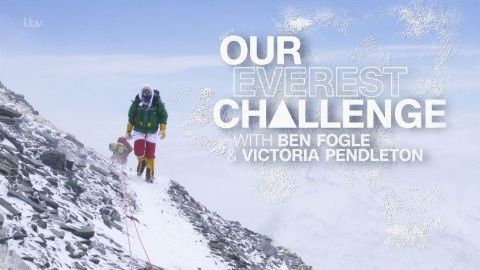
Ben Fogle and Victoria Pendleton are guided by professional mountaineer Kenton Cool, a veteran of twelve Everest summits. As they head up the mountain, into the notorious "death zone", physical exhaustion, extreme conditions and misfortune will test the pair to their limits, 65 years after Edmund Hillary and Tenzing Norgay became the first climbers known to have reached the summit. Since that day in 1953, more than 4000 people have successfully climbed Everest but nearly 300 climbers have died on her icy slopes. As Ben and Victoria begin their expedition and face their fears, they know Everest will be life-changing.
2018 • Environment